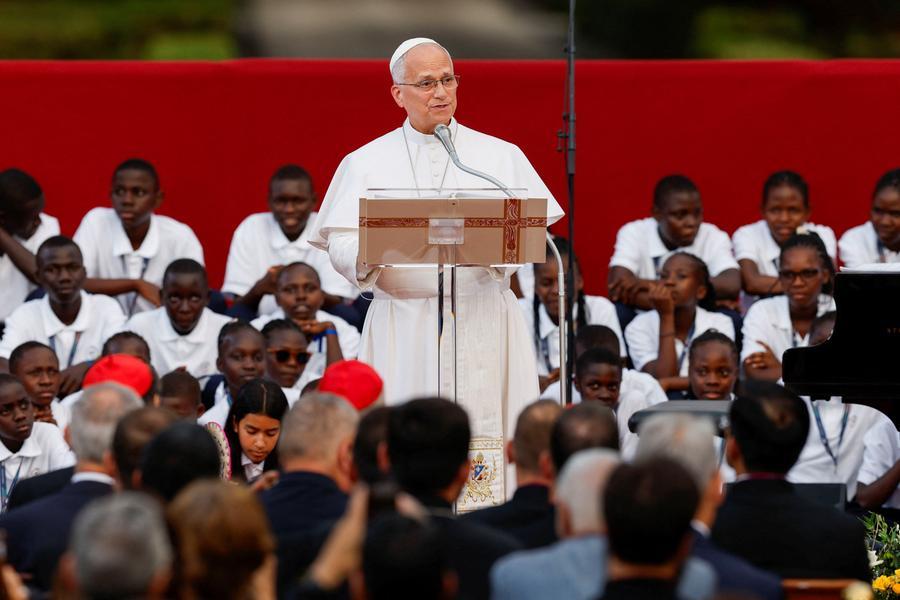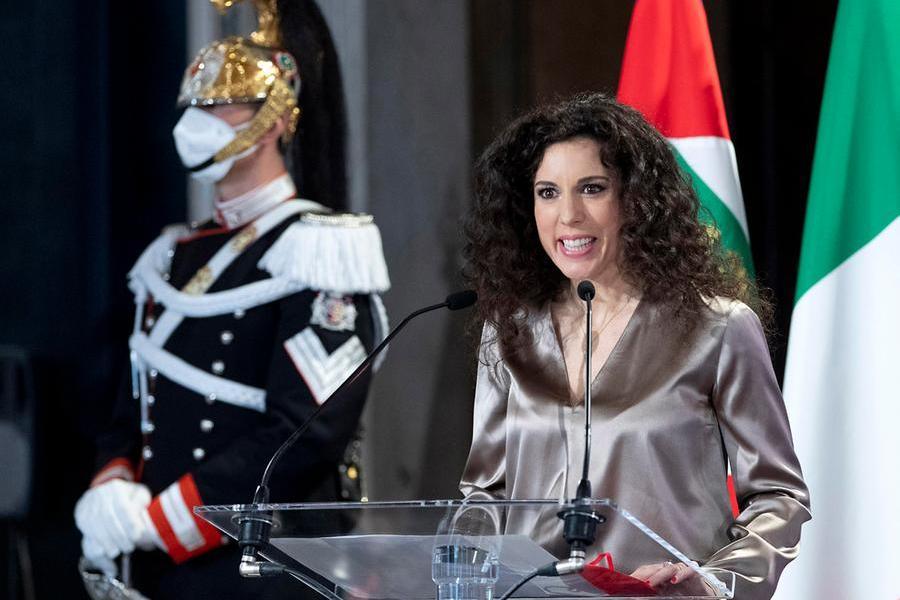






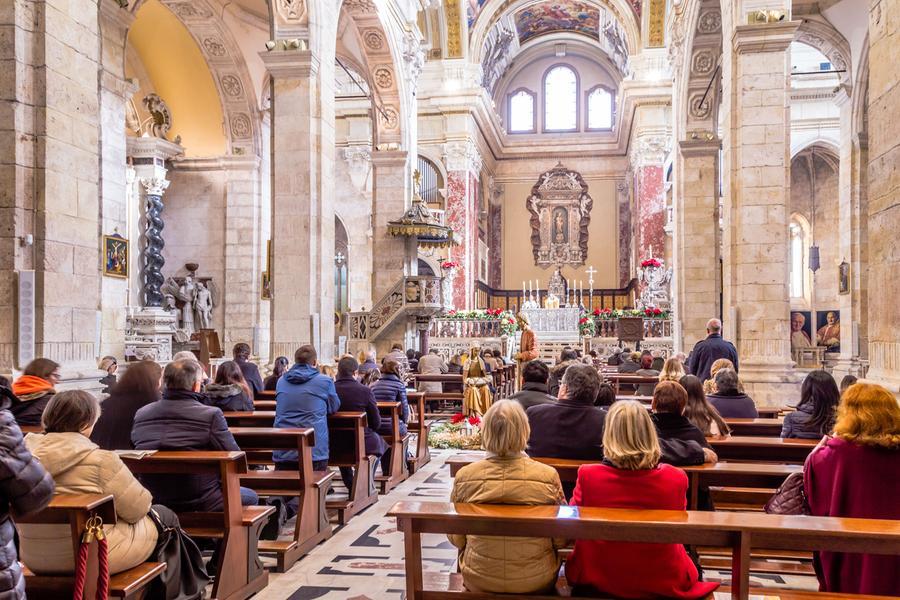
The new guidelines of the CEI, published on 10 June for the concrete implementation of the requests emerging from the Synodal Path of the Churches in Italy, indicate priorities and prospects for ecclesial communities. The text, significantly titled “Rooted and built in Christ”, recalls the need for a Church capable of inhabiting the social challenges of our time, but at the same time rooted in its own spiritual identity. On the one hand, the commitment to peace, justice, the poor and brotherhood; on the other, the awareness that ecclesial action draws strength from the encounter with Christ. In the background, the prospect of more co-responsible communities, with greater protagonism of the laity and an open reflection on the territorial organization of dioceses and parishes. A challenge that concerns not only the future of the Italian Church, but also the contribution that it can offer to the cohesion of society. We talk about it with the journalist and essayist Alberto Chiaraformer editor-in-chief of Christian family as well as one of the over 800 delegates who participated in the synod assemblies.
Chiara, what significance does this document have in the journey underway?
«One really gets the impression that the document does not replace but in some way makes it its own, synthesizing and relaunching it, deepening in some of its parts, the rich and varied debate that between 2021 and 2025 characterized the synodal path of the Churches in Italy».
What are the themes that the CEI indicates as priorities for the testimony of believers in today’s society?
«There are many and it is no coincidence that on page 7 the various facets of the vast social charitable commitment to which believers are called are listed: peace, justice and common home, political social friendship, attention to the poor, emotional and relational life and digital worlds are recalled as some of the issues that challenge the Italian Church wanting to be “seed and beginning from the Kingdom of God, tracing signs of the presence of the Kingdom wherever they appear”».
The document, however, does not limit itself to calling for social commitment. What balance does he propose?
«It reiterates the need to weld the horizontal dimension – the social and charitable one which leads to sharing long stretches of the road even with non-believers or followers of other religions – with a vertical dimension which explains the faith in God of each individual and of the communities. It is no coincidence that, on page 2, we read: “Christians live and are vital if they are firm in their faith in Christ. They can prolong Christ’s mission in the world only if they are constantly anchored to him, if they participate in his life, if faith is never reduced to formality, but an existence lived in the company of the risen Lord and immersed in his life”. It is understood that all the various groups of political and social commitment, from Caritas to the Conferences of San Vincenzo, just to mention just a few of the many possible examples, must monitor their own nature, their own soul and their own mission so as not to limit themselves to even a meritorious humanitarian action. Communities of believers engaged in the world, in short, and not NGOs, with all due respect for non-governmental organizations that spare no effort in alleviating the suffering of painful humanity.”
Among the operational indications, possible changes in community life also emerge. Which?
«The greater involvement of lay people – men and women also in leadership roles of the communities – and the need to review the methods of presence of the Church in the territory by rethinking the parishes and possibly merging the dioceses».
Unification is a theme that periodically returns to ecclesial debate.
«Today, according to official data reported on the CEI website, there are 226 dioceses and 25,419 parishes. The debate regarding the merging of dioceses dates back almost a century. A first hypothesis of reform arose in the years that led to the Concordat of 1929. Saint Paul VI, in 1964, took up the topic again. On 14 April of that year, speaking at the assembly of Italian bishops, he spoke of “an excessive number of dioceses”. At the beginning of the 1980s there were still over 300 dioceses. The last reorganization dates back to 1986. During the pontificate of Saint John Paul II, giving voice to the congregation for bishops, the Osservatore Romano wrote at one point that 119 was the number “considered very close to ideal” as regards dioceses in Italy. It is not certain that the figure is still valid.”
What picture of Italian society emerges from the CEI’s new guidelines?
«There is a passage in the document which is an alarm and a declaration of intent. The bishops observe that today “the context is characterized by a climate of hostility and opposition, of social exclusion of the poorest, of marked loneliness (among the elderly as well as young people), of growing violence. Christian communities are therefore called to bear witness to the prophecy of different relationships, which show the strength of acceptance and reconciliation. For this reason, evangelizing”. “One of the deepest problems of our time”, we read further, “is the progressive weakening of everything that leads to socialization and the formation of a shared culture, with serious damage to people’s lives. The Christian community can represent, precisely today, an alternative reality and offer great help to civil society itself”. As if to say that parishes, associations, movements, ecclesial groups can and must be training grounds for listening, dialogue, mutual respect, welcome, co-responsibility and sharing. A bastion of democracy.”