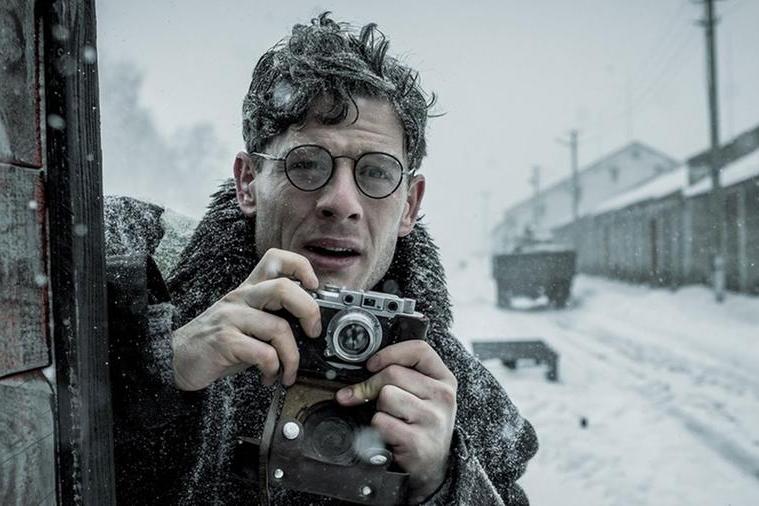
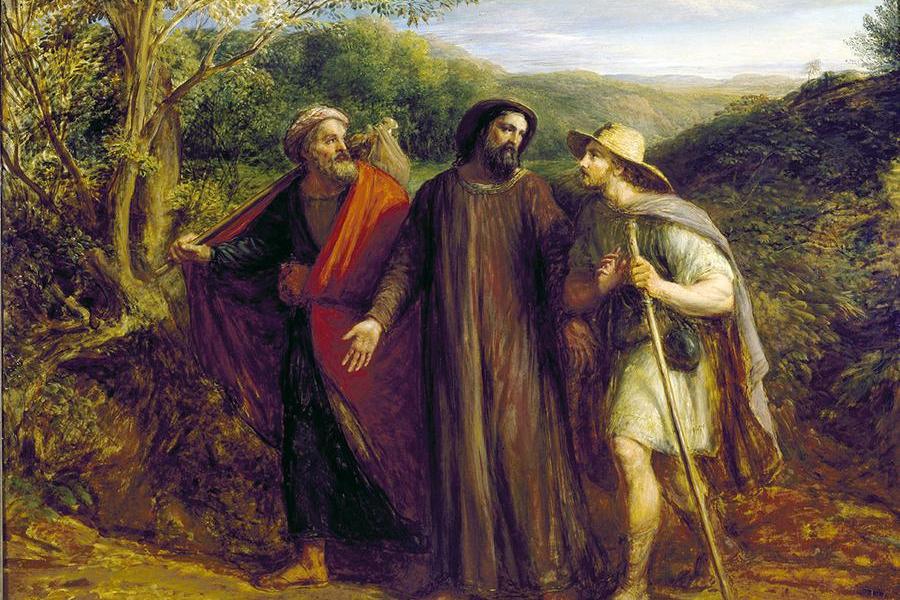


There have been, and still are, journalists who interpret their profession as a tool to reveal uncomfortable truths to the world at the cost of putting their lives at risk. Less known than others, but brought to light by the film Stalin’s shadow (2019) by Polish director Agnieszka Holland (tonight on Rai Movie), the story of Gareth Richard Vaughan Jones, a young Welsh journalist who managed to enter the Soviet Union and, through a dangerous and clandestine journey to the Ukrainian countryside, document the Great Famine orchestrated by Stalin which caused the death of millions of farmers.
Gareth Jones (in the film played by James Norton) was born on 13 August 1905 in Barry, Glamorgan, the youngest of three children of Edgar William Jones, a teacher, and Ann Gwenllian Jones. He was initially home-schooled by his mother and later attended Barry County School, where his father was principal. His mother had previously worked in Ukraine as a governess for the family of industrialist John Hughes, an experience that probably influenced Jones’ later interest in the Soviet area.

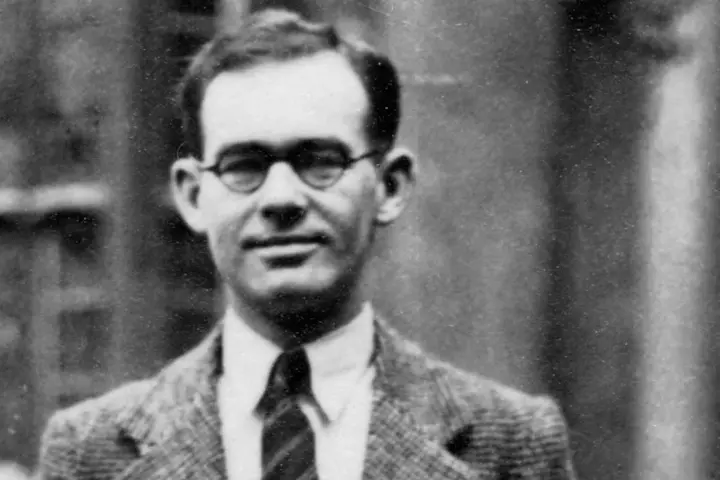
Jones proved to be an exceptionally gifted linguist. He studied French at the University College of Wales in Aberystwyth (1922–1926) and then went on to Trinity College, Cambridge, where in 1929 he graduated with honors in French, German and Russian. He was fluent in several languages, including Welsh and English, and showed a strong interest in international affairs and journalism from a young age.
After completing his studies, he worked briefly for The Times, but he was advised to gain more experience before obtaining a stable position. In January 1930 he became foreign affairs advisor to former British Prime Minister David Lloyd George. In this role he prepared reports on international developments, including the British Empire, the League of Nations and the Soviet Union, while also traveling extensively in Europe.
In 1931 he worked in the United States for a public relations firm and later was sent to study the Soviet Five Year Plans. During his visits he observed worsening economic conditions and food shortages. He also interviewed notable figures, including Nadezhda Krupskaya, Lenin’s widow.
Returning to Great Britain, he resumed his collaboration with Lloyd George and began writing for the Western Mail. In 1933 he traveled to Germany, where he witnessed Adolf Hitler’s rise to power and flew with him to a rally in Frankfurt, an experience he described in his articles.
The trip to the Soviet Union and his reportage on the famine


That same year he undertook a crucial trip to the Soviet Union to verify reports of a famine. After leaving Moscow, he traveled on foot through the Ukrainian countrysidewhere he directly observed widespread starvation and recorded his observations in detailed notes. March 29, 1933 his reports were published in British and American newspapers, including The Manchester Guardian And New York Evening Post revealing the severity of the famine and contradicting official Soviet propaganda: «I passed through villages and twelve collective farms. Everywhere there was the cry: «There is no bread. We are dying,” he wrote. His work was controversial and contested by some journalists of the time. On March 31st, the New York Times published an italics by Walter Duranty, under the title “Starving Russians, but they are not starving”, which denied Jones’s theses; Duranty called the Jones report “a big scary story.” On May 13, the newspaper published a response from Jones, which refuted Duranty’s article and continued to support his dossier, which is today considered one of the first key accounts of the Holodomor.
The new journeys and death
Between 1933 and 1934 he worked as a journalist for the Western Mail in Cardiff. In October 1934 he embarked on a round-the-world trip that took him to the United States, Japan, Southeast Asia, and China. During his stay in Inner Mongolia he was captured by bandits and held captive for over two weeks. He was killed on August 12, 1935, one day before his 30th birthday.
After his death, suspicions arose about the possible involvement of Soviet or Japanese authorities, although nothing was ever conclusively proven. He was buried in Barry, Wales. His legacy lives on in his journalistic work, particularly his courageous reporting on the Soviet famine, and his personal diaries and papers are today held by the National Library of Wales.
Read more about the Holodomor, the starvation genocide of the Ukrainian people

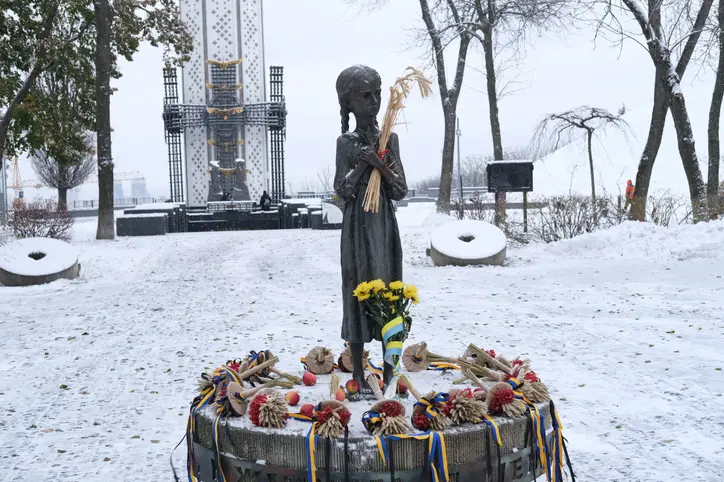
The “Great Famine” (Holodomor is Ukrainian for “inflicting death by starvation”)intentionally organized by the Soviet regime, hit Ukraine in the years 1932-1933. It was the consequence of the forced collectivization of the countryside, to which farmers tried to respond with strikes and sabotage, which triggered a ruthless punitive operation by the Soviet regime. Huge portions of the grain harvest, including that for sowing, were requisitioned by the state; food items seized; the sale of food is prohibited. All aggravated by the deployment of internal and border troops to prevent the hungry from moving to other regions of the USSR in search of food.
On December 27, 1932 he cameimposed the obligation of the “passport”, the passport intended for internal travel, to block desperate escapes from the areas affected by famine and on January 22, 1933, another circular, signed by Stalin and Molotov, prevented by all means the Ukrainian and North Caucasian peasants from leaving the districts where there was no longer anything to eat. The regime’s excuse was that the mass exodus of peasants was organized by enemies of Soviet power, counter-revolutionaries and Polish agents. The bodies lay in the street without the relatives, who were also now dying, having the strength to bury them. The famine determined, together with the annihilation of the peasants, the extermination of the Ukrainian cultural, religious and intellectual elites, all categories considered “enemies of socialism”.
Despite this, in 1933 the Soviet government exported 18 million quintals of grain and other products, continuing to officially deny the famine. Only on 15 March 1933 were grain requisitions suspended and in April grain from army depots was distributed in the villages. In 1932, 32,680,000 people lived in Ukraine, and it is estimated that the victims of starvation were from 4.5 to 6 or 7 million.
From the 1933 census compared with that of 1926, it can be seen that the population of the USSR, which had grown by 15.7%, had instead fallen by 9.9% in Ukraine. The archives of the time, accessible only recently, testify to the intentional exploitation of the famine by the Soviet regime to attack the peasants. Simply put, a genocide.