Researchers have analyzed the microscopic ecosystem of our kitchen sponges and discovered the presence of bacteria dangerous to health. Here’s how to effectively eliminate them according to their discovery.
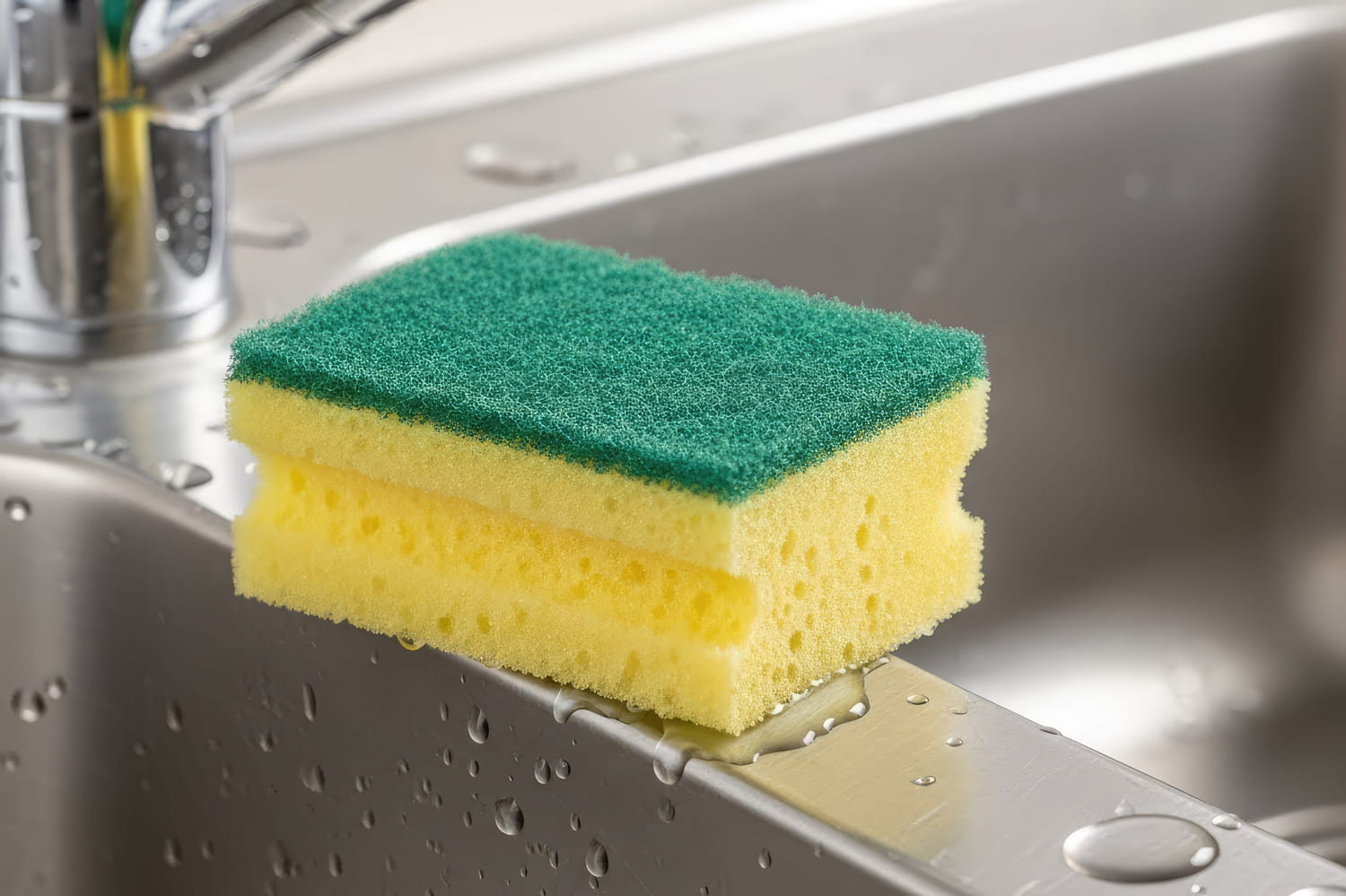
It is present on the edge of every sink. Used to wash dishes, the kitchen sponge is much less clean than you think. A new study confirms that this household essential is a breeding ground for bacteria, even when dry. “Kitchen sponges promote the long-term survival of Escherichia coli, Salmonella and Staphylococcus aureus (Staphylococcus aureus Editor’s note)“warn the authors. To eliminate them, researchers are proposing a method that drastically reduces the bacterial load in two minutes.
To conduct their study, these scientists inoculated new kitchen sponges with pathogens mixed with nutrients to simulate food residue. They then scientifically analyzed the rate of multiplication of bacteria in the pores of the sponge, as well as their ability to survive phases of complete drying. Finally, the team measured the rate of germ transfer across different kitchen surfaces during standardized scrubbing.
Conclusions: in a few days, bacteria Escherichia coli And Salmonella Enteritidis multiply massively in sponges, while Staphylococcus aureus survives there for a long time. These bacteria enter our kitchens through raw foods, such as raw meat, eggs or vegetables. The researchers also found that Escherichia coli and salmonella persist even if the sponge remains completely dry for several days. If they end up on our plates, these bacteria cause violent gastroenteritis with stomach cramps, fever, vomiting and bloody diarrhea. Staphylococcus releases toxins which trigger sudden food poisoning with nausea and vomiting in just a few hours. How to neutralize them?
It’s simple. According to scientists, the best thing to do is to immerse the sponge in water heated to more than 70°C for at least two minutes (by boiling it, for example). This destroys a very large proportion of heat-sensitive bacteria and significantly reduces the risk of immediate contamination. It’s a bit the same thing with pajamas, sometimes contaminated by fecal bacteria.
This rapid disinfection is essential, as the appearance of the sponge is deceptive. “Sensory changes such as odor or discoloration were not correlated with microbial load”confirm the authors. An odorless, visually clean sponge can harbor billions of germs. At the slightest pressure, these microbes migrate to your plates or work surfaces. This transfer, called cross-contamination, is particularly dangerous for vulnerable people (pregnant women, young children, elderly or immunocompromised people) in whom a low dose of bacteria is enough to cause a serious infection.
In addition to this cleaning with boiling water, you must replace your sponges at very regular intervals (every week), without waiting for them to show signs of wear or bad odor. And they must be changed immediately in case of contact with raw poultry or other potentially contaminated foods. Wooden dish brushes with interchangeable heads and reusable sponges are also great options. The brushes dry very quickly and the sponges, made of microfiber fabric, can simply be put in the washing machine at 60°C. Without stagnant humidity, bacteria find it more difficult to take hold.