




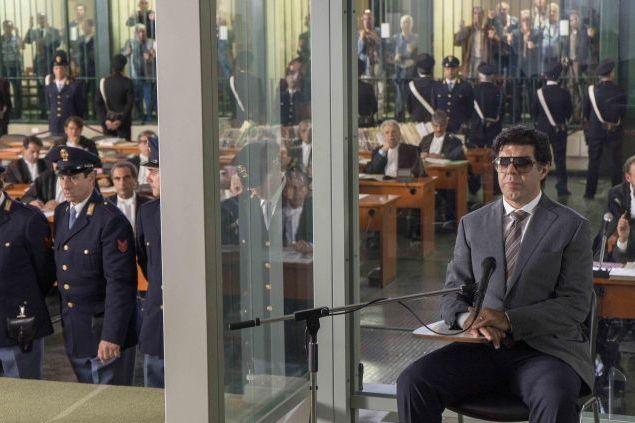
After seeing it it is fair to say: The traitor by Marco Bellocchio, which reconstructs the story of Tommaso Buscetta, does not betray historydespite a trailer, of the film which, due to the way it was prepared, could lead to sitting in the theater a little prejudiced. Judging by the few images chosen as “wise” it was easy to fear that The traitor betrayed reality precisely at the most delicate point: giving rise to the slanderous suspicion that judge Giovanni Falcone had an improper “friendly” relationship with the justice collaborator who revealed the unitary structure of Cosa Nostra. It would have been a double betrayal, in making the release coincide with the anniversary of the Capaci massacre.
The historical fidelity of the story
In reality, however, in its unfolding The Traitorseen in its entirety, is a film that scrupulously sticks to historical documentation: the reconstruction of the meetings between Giovanni Falcone and Tommaso Buscetta is faithful to the story of Things from Cosa Nostrathe sort of will that Falcone entrusted to the pen of Marcelle Padovani, correspondent of Le Nouvel observateur, in the last months of his life: always the “Lei” between judge and collaborator to mark the recognition of the dignity of man even if criminal and the gap that prevents confidence; always a table between the two to physically mark the incompressible distance between the roles. Signs that correspond, cinematically, to Falcone’s working style. The same word “traitor”, chosen as the title of the film, is found, in quotation marks to indicate the point of view of the Corleonesi, in that book by Giovanni Falcone.
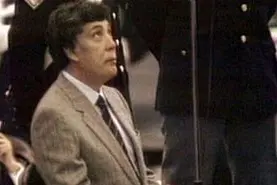
Tommaso Buscetta during a deposition at the maxi trial against Cosa Nostra
The maxi-trial rigorously reconstructed
Whoever wrote and shot this film has evidently accomplished it the effort to stick to reality, and not just the atmosphere, starting from the so-called “spaceship”: the bunker courtroom in Palermo in which the very difficult and historic first instance of the maxi-trial was held. In the scenes that concern him (Buscetta’s testimony in the photo) – now comparable for all to reality thanks to YouTube – there was a successful, philological intent to convey the substance of what happened in there, in words and deeds: from the polite and complicated but authoritative conduct of the President of the Court of Assizes Alfonso Giordano; to the arrogance of the mafiosi behind the cages.
A film that avoids hagiography
Even with cinematographic licenses, which are inevitable for a film that wants to remain such without bordering on documentary; albeit with some baroqueness which has always been Bellocchio’s stylistic feature but which here manages to convey a certain rhetoric of mafia culture, The traitor it is a film that respects the substance, which portrays a complex and controversial man without ever idealizing him, which leaves the “moral” question of so-called repentism suspended without denying it. A film which as such cannot claim to exhaust the historical complexity of the “Buscetta” phenomenon but which, in chiaroscuro, is not the hagiography of a mafioso.
The emotional weight of memory
Even though, seeing it on May 23rd, when it came out, it wasn’t difficult to understand how much salt the crudest scenes can represent on the wounds of those who have experienced first-hand the desperation for the death of Giovanni Falcone, Francesca Morvillo, Rocco Dicillo, Antonio Montinaro and Vito Schifani. Perhaps more so because they really resemble the reality they have known.