




You don’t need to wear a blazer to know if it’s quality: one look is enough. But you still need to know what to look for… The production director at Rouje guides us.
It is one of those essential pieces of any wardrobe. Summer or winter, the blazer jacket has everything to please. Every year, when mid-season and spring days come, it inevitably invades the silhouettes of the modosphere. Her fashion assets? It keeps you warm when cool temperatures reach the atmosphere, but is light enough for the mildness of spring days. Essential for a Parisian’s wardrobe, the blazer is worn by all the trendy girls of the “city of lights”. While some fashionistas prefer it vintage, others buy it brand new from popular fashion labels. Except that, eager to be stylish, lured by aesthetics beyond quality, they sometimes opt for models from ready-to-wear brands that resemble ready-to-throw items. Lacking expertise in sewing and pattern making, they do not know how to recognize a well-cut blazer. So how do you recognize a quality blazer?
A true stylistic allegory of the Parisienne, the fashion brand Roujecreated by Jeanne Damas in 2016, has incorporated more than a dozen blazers into its collections. Its production director Nadia Chalal has therefore spent a large part of her career checking the quality of the blazers manufactured in their partner factories. An expert in the field, she gives us exclusive advice on how to spot a good blazer at first glance.
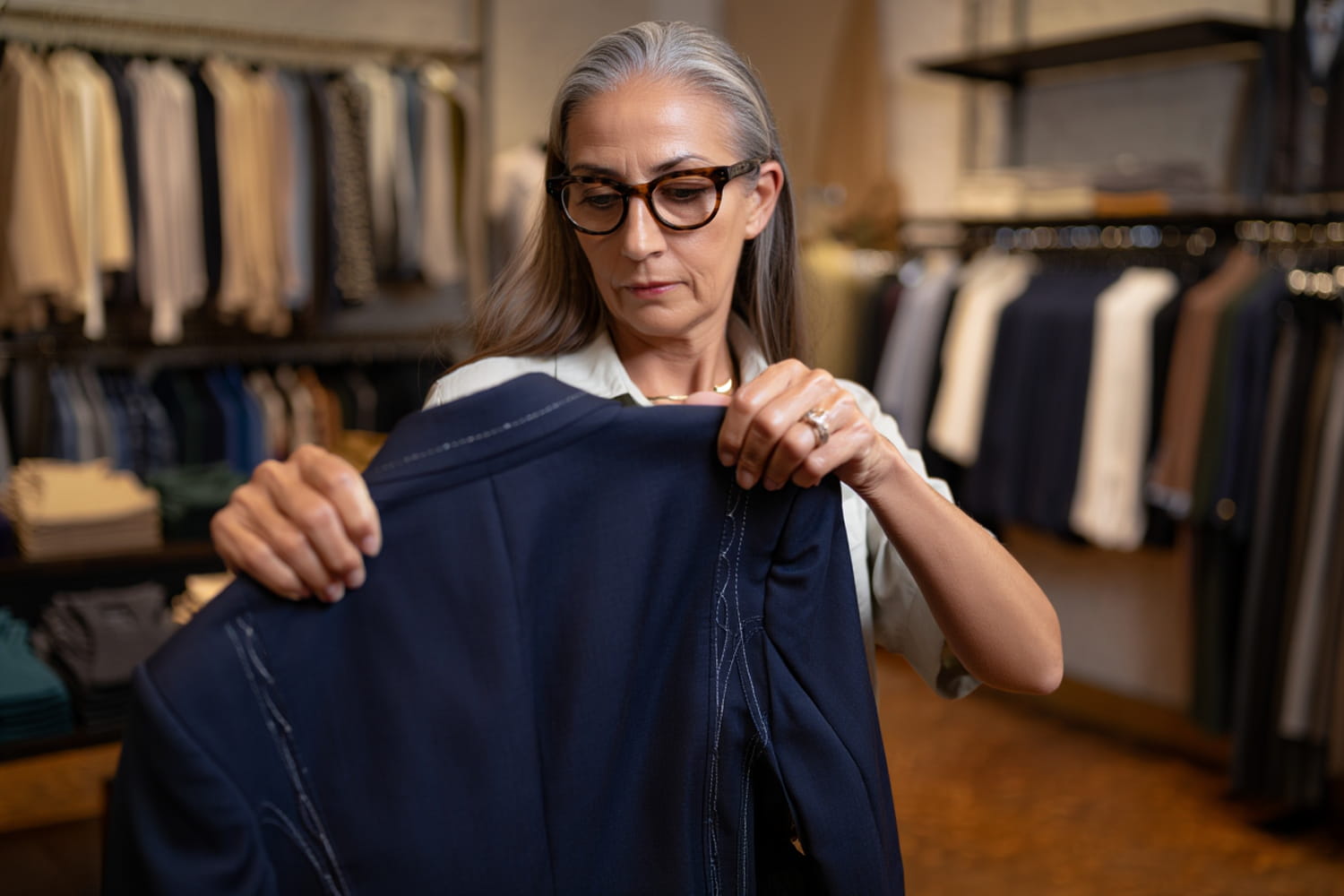
Contrary to what one might think, there is no need to try it on and/or wear it to know if said blazer fits well. To do this, simply observe “holding clothes on a hanger”… “Especially for a blazer it’s a very good example.” So, if the blazer is poorly cut, it will be seen immediately.
But while it’s important to look at the whole, there’s only one detail to focus on first: the sleeve.
The production director at Rouje hammers him: “A sleeve is the first thing you need to look at on a blazer.” During her quality control visits to manufacturing plants, Nadia Chalal always looks “if the sleeve is well fitted”. “A factory that knows how to make the collar and a beautiful sleeve head, with the really beautiful sleeve, angled, on a hanger, we want to go and take the jacket,” she explains. The second element to observe is therefore the collar.
Another false belief to dismantle: the composition label is not the first element to look at. Indeed, for this piece of clothing which focuses everything on structure, it is above all the assembly which makes the difference. Nadia Chalal explains it this way: “There are some compositions that are not very flattering, but the editing is very beautiful. On the other hand, you can see it straight away with bad editing.”
Far from encouraging us to consume less well-sourced materials, it only explains that this element is not enough to judge the quality of this piece. This is well noted.