






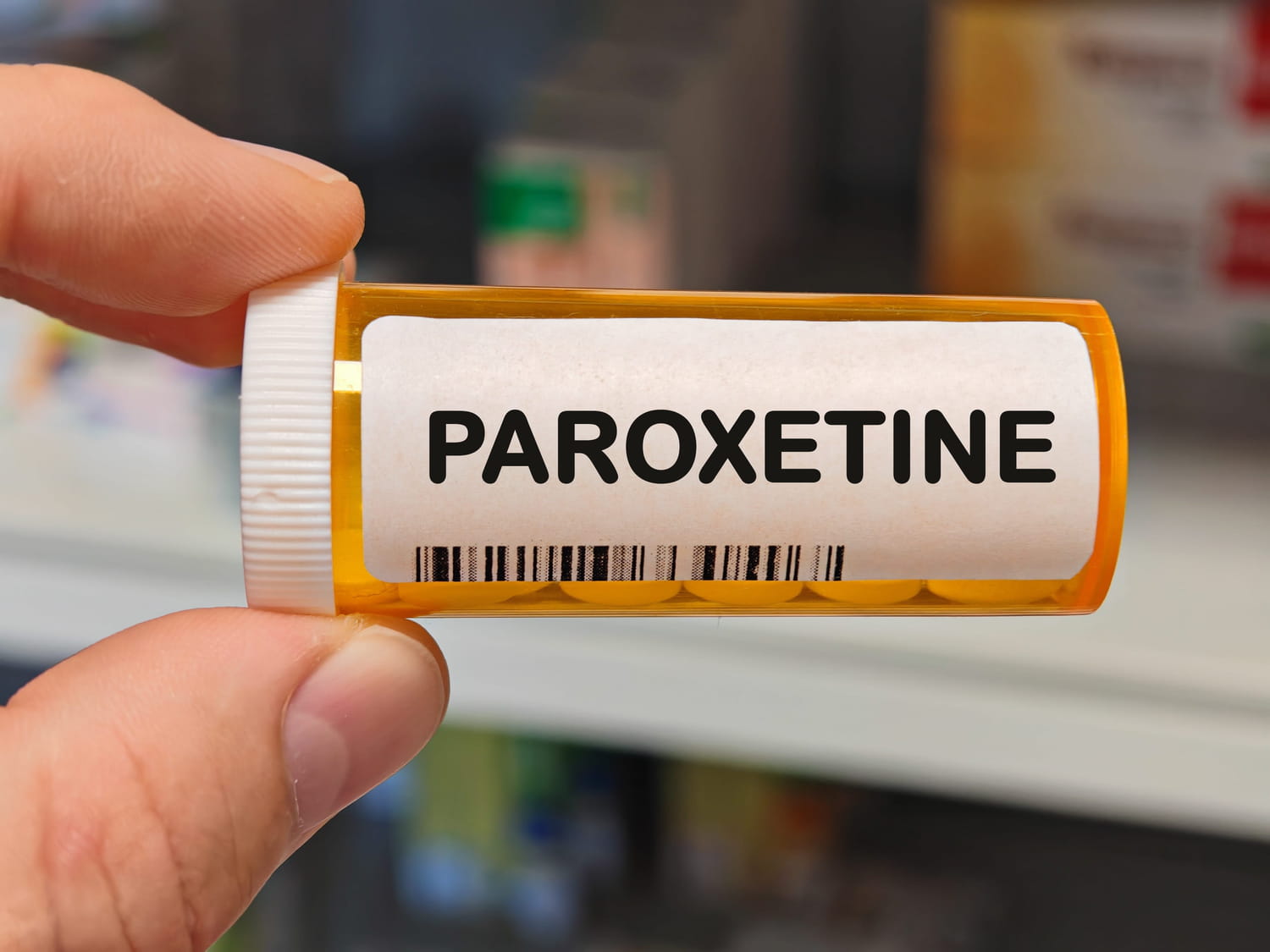
An SSRI antidepressant, paroxetine treats depression and anxiety. Indications, side effects, sleep, risks and precautions: the essentials to know.
An antidepressant widely prescribed for more than 30 years, paroxetine is one of the standard treatments for depression and certain anxiety disorders. Paroxetine was put on the market in the early 1990s by the GlaxoSmithKline laboratory. Indications, expected effects, risks, precautions for use: its use remains regulated (risk of suicide before 18 years of age) and requires careful medical monitoring. Here’s what you need to know before considering or starting treatment with paroxetine.
Definition: what is paroxetine?
Paroxetine is a molecule derived from phenylpiperidine, and is used as an antidepressant. Due to its mode of action, this medication belongs to the selective serotonin reuptake inhibitors (SSRIs). Paroxetine-based medications are found under the generic name paroxetine or under the trade names Deroxat® and Divarius®.
How does paroxetine work?
This medication acts directly on serotonin, a key neurotransmitter in the regulation of mood, stress and sleep. Paroxetine is therefore one of the “selective serotonin reuptake inhibitors”. States of depression or anxiety can be explained by a reduced level of serotonin in individuals who suffer from them. By preventing the reuptake of serotonin, paroxetine helps increase the level of this neurotransmitter in neurons in the brain, which improves mood and reduces anxiety, phobias, stress and panic disorders.
When to take paroxetine?
Paroxetine is indicated in cases of major depressive episodes, post-traumatic stress disorders, social phobias, generalized anxiety disorders, obsessive-compulsive disorders, or panic disorders. It is a medication that requires a medical prescription to be dispensed. Only the doctor is authorized to determine in which cases this treatment is justified, as well as the dosage and duration of treatment.
Does paroxetine make you sleep?
Drowsiness is frequently observed when taking this medication, although this effect is not systematic since paroxetine can also cause insomnia. However, due to the positive therapeutic effect on mood, stress, anxiety and panic attacks, serotonin generally helps improve sleep.
Can you take paroxetine for anxiety?
Yes, paroxetine can be indicated for certain forms of anxiety (panic disorders).
What are the side effects of paroxetine?
The side effects of paroxetine can be numerous but are more common during the first weeks of treatment and generally fade away afterward.
► Frequently observed are nausea, sexual dysfunction, loss of appetite, drowsiness or on the contrary insomnia, abnormal dreams or nightmares, dizziness, tremors, headaches, decreased attention, blurred vision, yawning, vomiting, constipation, diarrhea, dry mouth, excessive sweating, fatigue, weight gain or even increased cholesterol levels.
► More rarely, confusion, hallucinations, anxiety, suicidal thoughts, convulsions, joint or muscle pain, involuntary movements, difficulty urinating or, on the contrary, urinary incontinence, ringing in the ears, dilation of the pupil, a skin rash, a change in blood pressure, a flow of milk, priapism, an allergic reaction, a drop in the sodium level in the body may be observed. blood, an increase in liver enzymes.
► Antidepressants that inhibit serotonin reuptake can also cause agitation and an irrepressible urge to move, bleeding (bruising, nosebleeds, genital or digestive hemorrhages) or, more rarely, serotonin syndrome (tremors, confusion, agitation, muscle rigidity, dizziness, unexplained fever, sweating). Sometimes, a withdrawal syndrome with the appearance of certain symptoms may be observed when stopping paroxetine.
What are the contraindications to paroxetine?
Paroxetine should not be used if allergic to paroxetine, nor in combination with monoamine oxidase inhibitor (MAOI) medicines, including if taken within the last two weeks, and medicines containing thioridazine or pimozide (due to the risk of heart rhythm disturbances). In addition, paroxetine is not recommended for children or adolescents suffering from depression, before the age of 18 because it could increase the risk of suicide. It is reserved for adolescents in certain serious cases, under increased medical supervision and those close to them. In the event of a manic episode resulting in euphoria, a state of excitement or abnormal behavior, emergency medical consultation is required. Also, be careful if you have a history of epilepsy, angle-closure glaucoma, diabetes, hemorrhages or heart disease. Paroxetine may interact with tamoxifen and metoprolol, certain migraine medications (triptans), lithium-based medications, tramadol or St. John’s wort and could lead to serotonin syndrome. Caution is necessary when taking an oral anticoagulant, aspirin, an anti-inflammatory (NSAID), an antiarrhythmic, an imipramine antidepressant or risperidone concomitantly. Drinking alcohol is not recommended during treatment with paroxetine.
Can you drive after taking paroxetine?
It is entirely possible to drive after taking paroxetine, provided you ensure that alertness is not impaired.