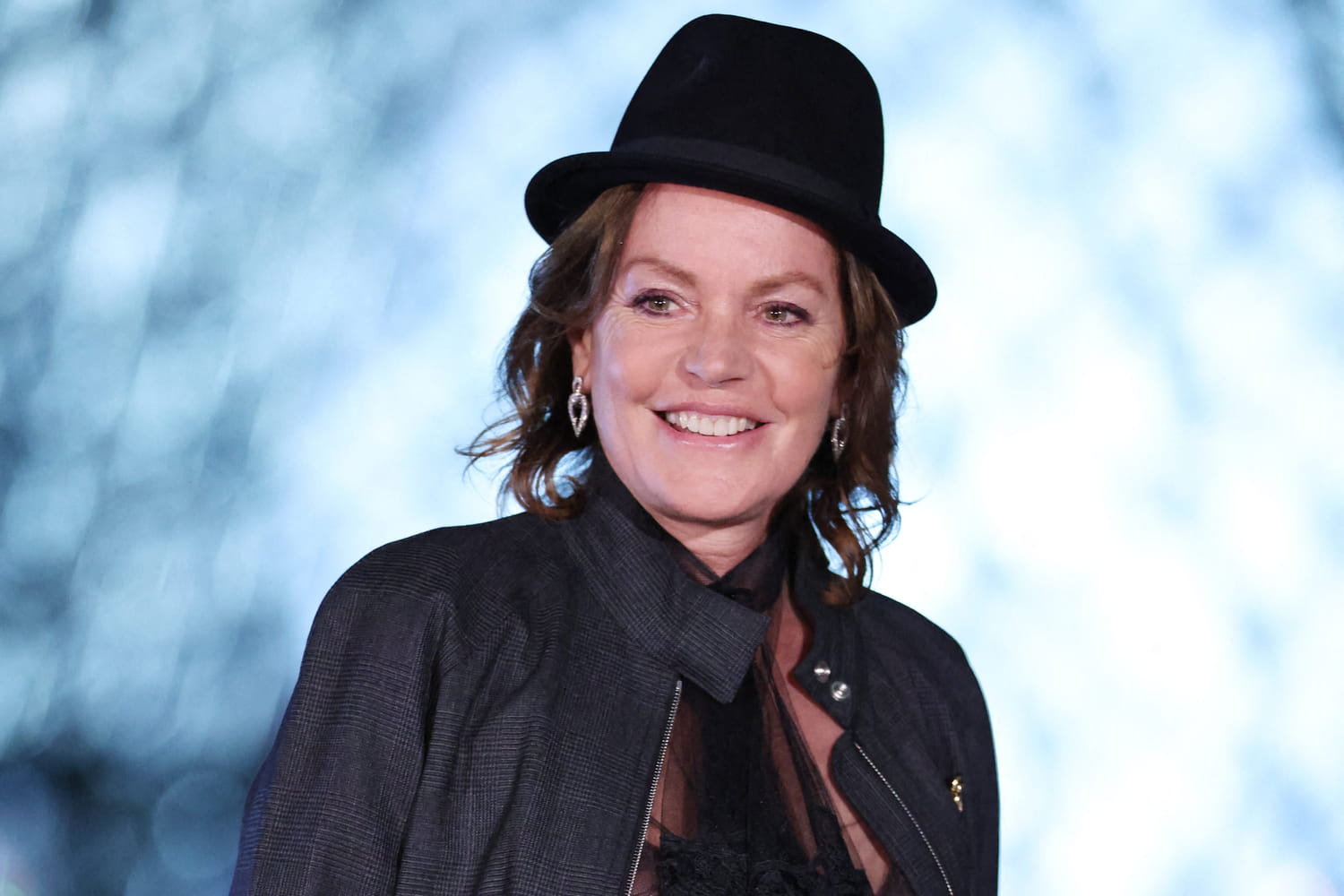


Today’s world is structured by adults for adults. Relegated to the small space of the home, often narrow, cramped and bare, the world of children has lost its dimension. Theirs is an incomprehensible civilization, often in contradiction with ours, as Maria Montessori suggested, which uses its own language and specificities which are often forgotten or labeled as “annoying”. But what do children really think? What do they suffer and what do they try to communicate to us? To these questions Margherita Rimichild neuropsychiatrist and poet, responds through decades of clinical and literary research. A universe of fragility and beauty emerges, where the voices of children overlap with those of adults to claim their own truth.
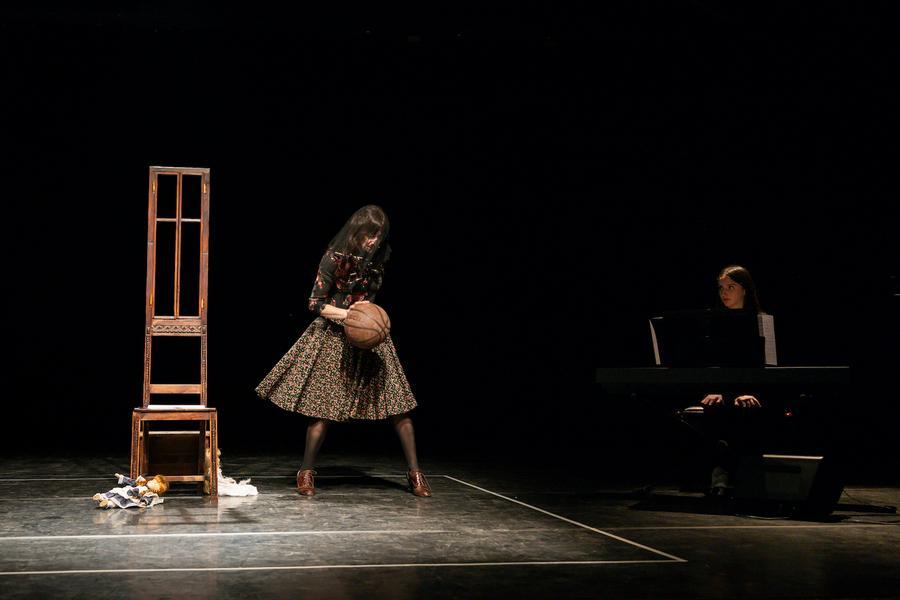
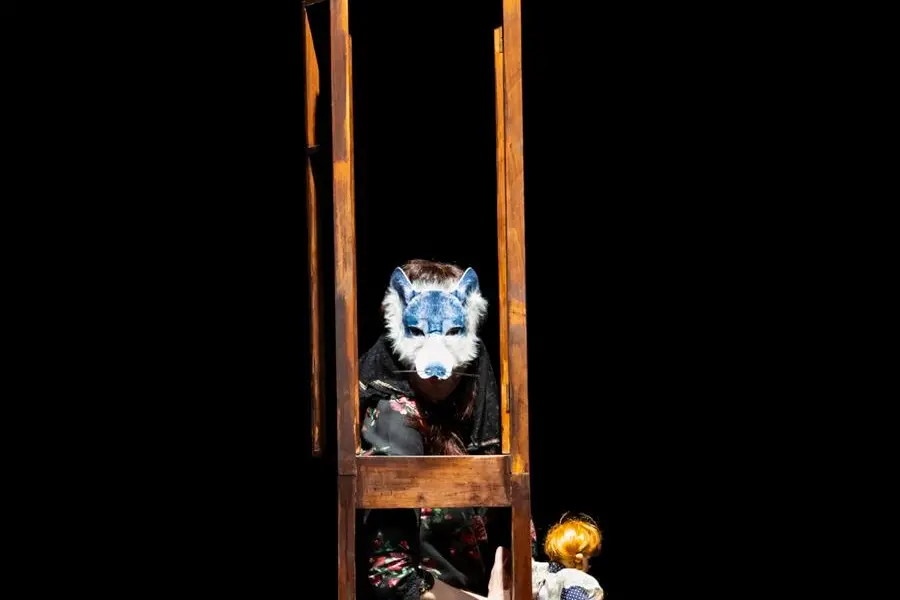
On the occasion of the review WomenTheatreRights at the PACTA Salone (23-24 April), Rimi’s poetic words come to life in the show Le voci dei bambini, adapted and performed by Lorena Nocera. We interviewed the doctor to ask her about this delicate balance between childhood, medicine and poetry.
How do these two apparently so distant worlds coexist in you?
«Medicine and poetry are not antithetical worlds, but different ways of questioning the human. As a doctor, I studied the physical structure of the body, learning that disease is never an abstract concept: it takes on different shapes and nuances depending on the person who inhabits it. Medical ethics requires treating each patient as unique. Specializing in child neuropsychiatry, I understood that a child’s body is a growing organism, not a miniature of the adult one. Children’s language is a language in itself, which adults often do not understand. Scientifically, we are talking about codes that vary with age: there is early childhood, second childhood (up to 6-7 years) and the one that lasts up to 10 years, before leading to pre-adolescence. The children taught me to talk to them, bringing me into their world through a language that adults often don’t understand. What for a speech therapist or a psychiatrist is just “altered language”, for me it was a form of expression that deserved to be heard. We must not be afraid, as Giuseppe Pontiggia says, to name things with their own words. The children I have treated, with psychophysical disabilities or language disorders, often use highly original associations that possess an extraordinary poetic amazement.”
This listening led to the birth of works such as The Voices of Children and The God of Children. What is the challenge in transcribing these delicate realities?
«I started taking notes which I then reworked. Thus was born The Children’s Voices, a very small volume where I transcribed their words without rhetoric, without any forcing, merging them with my artistic-linguistic qualities. Giving children a voice is an act of extreme responsibility. While the dialogue between adults takes place between equals, acting as a spokesperson for childhood means handling an absolute fragility, especially when reporting their verbatim words. In this listening, a universe of pain, loneliness and anger emerges, but above all a paradoxical sense of guilt: the abused or mistreated child often ends up feeling ‘bad’, taking on the responsibility for the harm suffered by adults. From an early age, children have a clear perception of complex feelings such as guilt, shame and loneliness. It is a surprising clinical fact: while the external observer often only sees anger, the child victim of abuse paradoxically tends to feel guilty. This lack of awareness of the harm suffered, which can last up to 8-9 years, is one of the most difficult aspects to treat. Only through therapy is it possible to overcome this phase, transforming that paralyzing sense of guilt into healthy and conscious anger. In a moment of great despair, The God of Children was born. I chose to divide the violence committed by adults into chromatic categories: black for war, red for child brides, and so on. It is a work that wants to give voice to “scandalous” realities for us adults, because they reveal without filters the meanness and cynicism of those who should protect and instead manipulate or abuse. In this scenario, I inserted positive figures who recall the image of the therapist or positive parent: adults capable of helping the child to name things and understand the surrounding world. The idea of a “Children’s God” arises from the fact that little ones have no tools to defend themselves and are often forced to live according to rules imposed by those who harm them. I imagined a deity who believes their words and doesn’t dismiss them as lies. Representing the harm caused to a child is a complex challenge, as much as representing the good without falling into rhetoric.”
We live in a time of global conflict. How do children perceive this reality and what role should the adult have in mediating this fear?
«Faced with geopolitical complexity and wars, children perceive everything. In this context, the parent must act as a mediator: he must not deny the fear, but rationalize it, admitting that it is human to have it and then offering reassurance and hope. This approach is reflected in the “God of Children” that I talk about in my writings: a paternal and maternal figure who does not betray, who does not dismiss fears or reports of abuse as lies, but who welcomes every word of the little ones as an absolute truth to be protected.”
From a clinical point of view, how is the health of the little ones changing? Which pathologies are decreasing and which ones are on the worrying increase?
«The landscape has changed radically. Advances in medicine and prenatal diagnostics have meant that spastic tetraparesis or birth trauma have been drastically reduced, as has Down syndrome. However, we are witnessing an exploit of other problems: autism spectrum disorders and attention deficit hyperactivity disorder (ADHD) are on the rise. Eating disorders have also grown in parallel with a social system that is moving badly.”
What are the underlying causes of this malaise and why are terms such as “evil” inadequate to describe phenomena of youth deviance such as baby gangs?
«The discomfort of children and adolescents arises from a complex network of contributing causes. On the one hand, there is an increase in poverty and an urban management that confines the most vulnerable to marginal areas that lack attention to children. On the other hand, it is reductive to demonize only technology: the real problem lies in a society that exalts absolute narcissism, money and power. These values are internalized from an early age: the “disease” incubates during childhood and then explodes dramatically in adolescence. In this context, defining the kids in the baby gangs as “bad” is a mistake. Evil is not genetic: the aggressive instinct almost always leads back to educational deficiencies or degraded social contexts where young people imitate the only behavioral and verbal languages available to them, often dominated by crime. Children, in their essence, offer us a reversal of adult values: they do not ask for power or money, but to be loved, cared for and listened to. It is necessary to put ourselves in their eyes to build a true civilization of childhood, made up of family mediation, solidarity and educational spaces such as libraries and playgrounds.”
His reflections and lyrics have found new life on the stage. How did this transition to the theater come about?
«The work brought to the theater is a fundamental piece of this path. Lorena Nocera was extraordinary in capturing the essence of these themes, managing to represent them without any hypocrisy. The show transforms words into a tangible truth, made of bodies, objects and sets, remaining extremely faithful to the original text. Theater allows us to make visible that “truth of the body” that society often prefers to ignore. It is a powerful way to force adults to make the necessary effort to put themselves in the eyes of children, looking at the world from their height to understand what is really important to them.”
We conclude with the concept of Restitutio ad Integrum. Is there still room for hope in this panorama?
«Absolutely yes. “Medicine is the child of dreams”, of the desire to heal people. Even when a complete recovery is not possible, as in certain cases of disability, the “cure” can and must improve the human condition. Restitutio ad Integrum is a phrase that speaks of hope: technically it indicates the healing of an organ, but humanly it represents the ability of our mind to go beyond the fragility of the body and seek transcendence. My work, and the ethical oath I took as a doctor, aims to improve the human condition, reminding us that children are not a passing “nuisance”, but the beating heart of our world to which we must give back space, listening and respect.”