





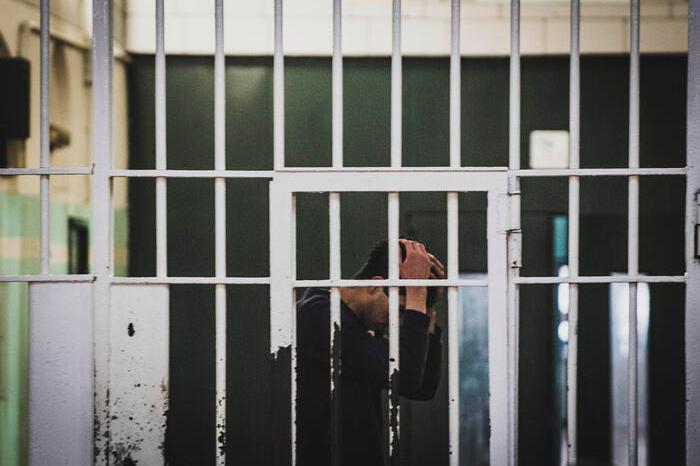
There is a dark paradox, which borders on the Kafkaesque absurdity, at the heart of Italian justice. It happens when the perimeter of control is tightened to the maximum, when the institution declares to have understood the extreme fragility of a man and, to protect him from himself, strips him of everything. It isolates him. He locks him in a “smooth cell”, without edges, without handholds, under the theoretically watchful gaze of the cameras and the patrol. It’s in there, in the “ad” sectionhigh suicidal risk” of the Milanese prison of San Vittore, that a man suffering from severe psychosis found a way to cancel himself out, evading surveillance and transforming the last outpost of prevention into the theater of his definitive abandonment.
Recent news had brought this man back to us through the frantic frames of an afternoon of ordinary metropolitan madness in Milan. He walked down the street waving a machete, his eyes lost in the void of a delirium that no one had been able to intercept before. A dangerous man for others, it was said; a threat to public safety, the agencies shouted.
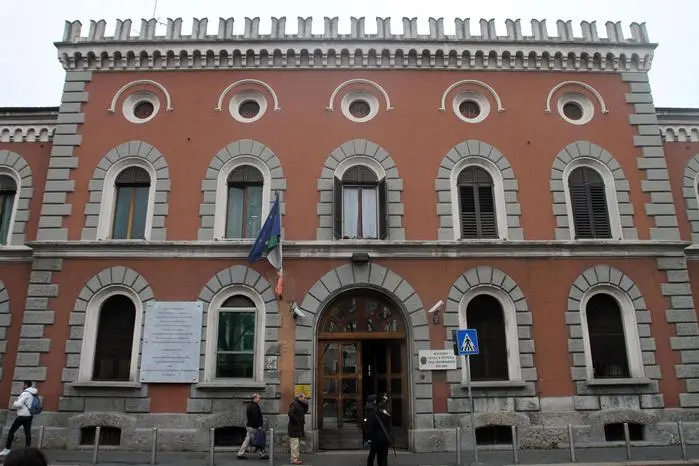
But behind that iron brandished against the ghosts of his own mind, there was a dramatic request for help, the plastic symptom of a total psychic decompensation. Once disarmed by the police, the state apparatus responded with the only automatism it still has left: the prison police van, the registration, the heavy noise of the keys turning in the lock of San Vittore. Not a psychiatric ward, not a treatment facility, but prison. That is, the terminal funnel where civil society unloads what it cannot understand or manage.
In San Vittore, a prison built in the heart of the city of Milan on the eighteenth-century model of panopticongiven the obvious vulnerability, the man did not even see the common departments.
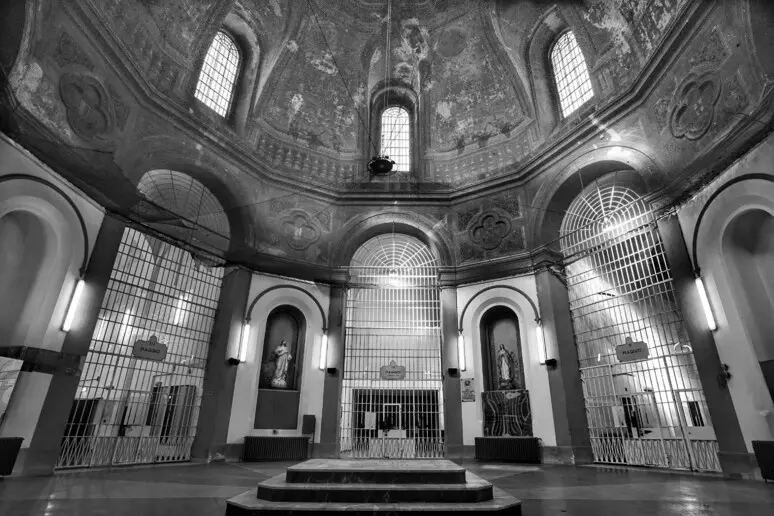
He was immediately transferred to the special section, the one designed to prevent prisoners from taking their own lives. Yet, the accounting of death does not stop at bureaucratic designations. As forcefully denounced by Don Paolo Selmi, president of the Casa della Carità Foundation, whose operators and educators frequented that special department to bring a modicum of listening and relationship, the drama of this broken life raises a radical question: why was a person with such a full-blown diagnosis of psychosis in an isolation cell and not in a health service?
The answer is not just an ethical question, but a sequence of merciless numbers. The database and research of the “Dying in prison” dossier expose a reality in which the total institution denies, in fact, the humanity of the weakest: 28 people have committed suicide in prison since the beginning of the year, after the 80 in 2025 and the 91 in 2024.Historical statistics and epidemiological data on penitentiary distress reveal that the suicide rate in prison in Italy is consistently over ten times higher than in the free populationan incidence that dramatically increases in the first months and, paradoxically, in the first weeks of detention: the moment of the original impact with the deprivation of freedom, when the emptiness of the horizon becomes absolute.
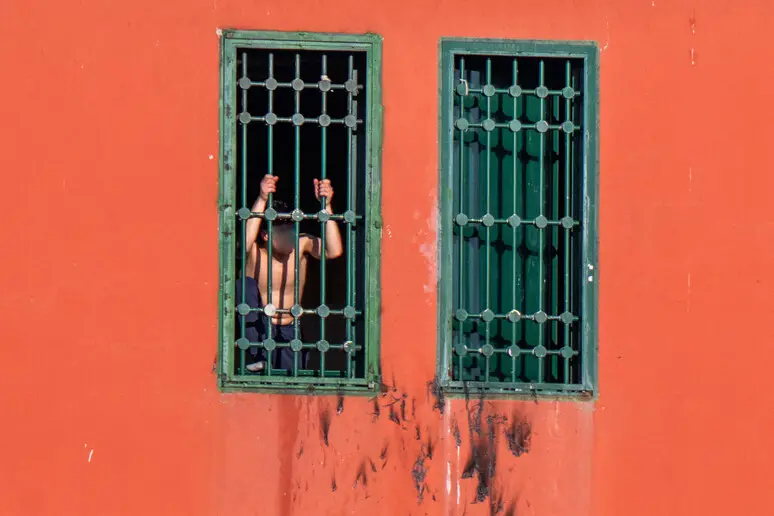
These are not isolated tragic fatalities, but a structural collapse. Scientific data and independent monitoring of mental distress confirm that over 70% of prisoners have some form of psychological or psychiatric disorderwhile cases of full-blown psychosis, personality disorders and serious pathological addictions weigh disproportionately on the prison sections. In institutions like San Vittore, which are chronically overcrowded, the management of this suffering almost fatally abdicates clinical therapy and is reduced to pharmacological containment and forced custody.
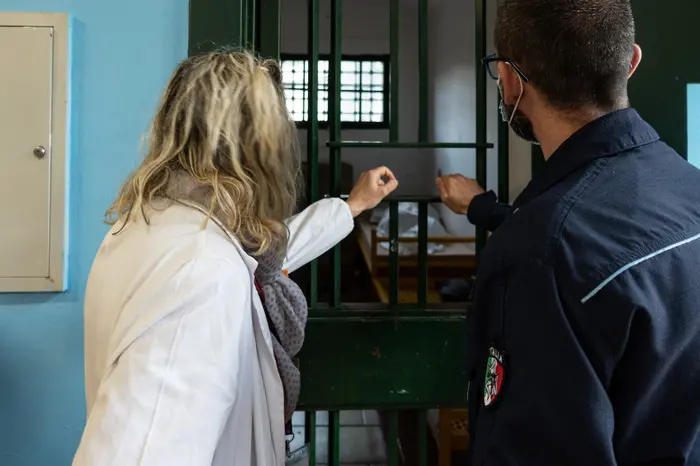
Emergency psychiatry in the area is reduced to a bare minimum by years of cuts, and suitable healthcare facilities are in short supply; thus the justice system uses solitary confinement cells as substitutes for hospital beds. But the “smooth cell” removes the physical means of suicide while exasperating, at the same time, the psychological motivations. Depriving a man in full delirium of any contact, clothing or anthropological point of reference means accelerating his breaking point.
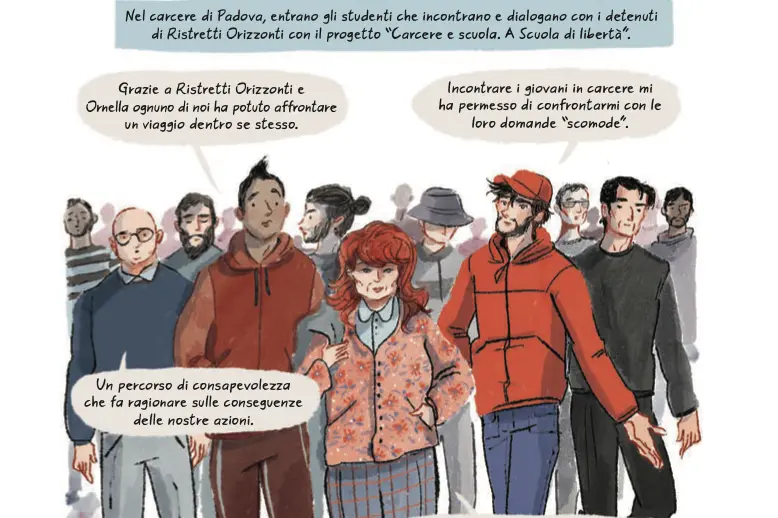
Those who experience prison from the inside know well the density of this isolation. In the precious testimonies collected in the field and emerging from the stories of those who live in the cells – such as the voices of the inmates Paolo, Mario, Amin and Tommaso, at the center of the comic Die in prison de La Revue Italia created with the editorial staff in prison in Padua of Ristretti Orizzonti of the Due Palazzi prison in Padua – an underworld emerges where bureaucracy anesthetizes even the most basic needs. «In prison you don’t move a comma without knowing it, and yet you can’t find the chili pepper», explain the prisoners to describe a system that is hyper-regulated in form but totally inefficient in human substance.
A system capable of millimetrically supervising everyday little things, but dramatically blind when it comes to grasping the breaking point of a soul. The stories that filter from the toughest sections show how the emotional impact of imprisonment acts as a multiplier of phobias, obsessions and desperation. As recalled by the lucid testimony of volunteers and associations who weave every day that very difficult “narrative carpet” made of numbers and real people, the submerged part of this iceberg impacts the lives of many families, leaving behind a trail of removal and ambivalence on the part of the outside world.
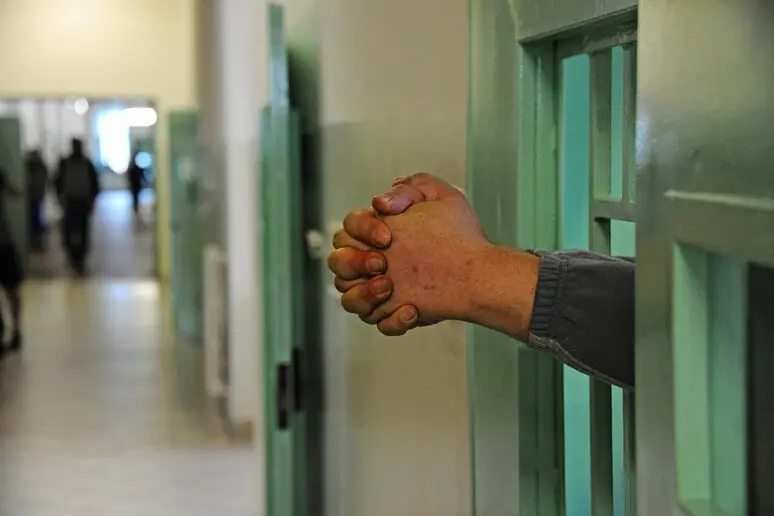
Dossiers on deaths in prisons demonstrate that increasing visual surveillance is not enough. Also because educators and prison officers are lacking, and especially these latter are victims of suicide rates, well above the national average. Solving the suicidal risk by emptying the cells of every object means ignoring the root of evil. Prison has become the only public facility that cannot say no. And so, when a fragility explodes in the middle of the street, the penitentiary system is transformed into the unseemly “disposal of waste lives”. A gigantic carpet under which to hide the dust of social suffering, ignoring the dictates of article 27 of our Constitution, which imposes a re-educational function and recovery of human dignity, not a structural torture.
When the news throws a man walking around with a machete in Milan in our faces, our first reaction is fear. The second should be responsibility. That man needed to be cared for first, then protected, and finally saved from himself. Having entrusted him to the walls of a prison, albeit in a guarded cell, means having signed a collective surrender. If prisons continue to be the ultimate terminal of poverty and mental illness, the death of a prisoner in a high-risk cell is not an inevitable fatality, but the tragic verdict of a system that has stopped looking at man to focus exclusively on the crime. A scream within the silence that democracy can no longer afford to ignore.