





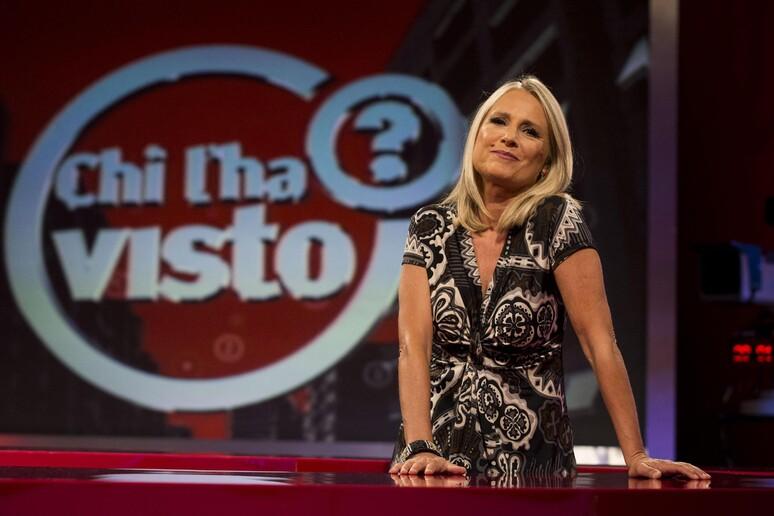
There are ads that weigh more than a choice. That of Federica Sciarelli, who will not host “Who saw it?“ in the television season that is about to begin, belongs to this category. It is not the simple change of a presenter, however well known, after 22 years of continuity. It is the conclusion of a cycle that has marked the events of Italian television and, above all, the lives of thousands of viewers left waiting for an answer, a face, a truth never found.
When Sciarelli inherited the helm from Daniela Poggi in 2004, he already had a career as a solid reporter behind him, capable of navigating the complexities of contemporary times. But “Who saw it?” it is not an ordinary transmission. Born in 1989 from the intuitions of Donatella Raffai, the Rai program had built, in previous decades, an intimate pact with the public: the pact of those who have no answers and hope to find them by watching television. A space where private pain becomes public, where desperation meets the audience in the most fragile moment of the narrative.
Sciarelli understood this responsibility immediately. He transformed the program without distorting it, giving more space to disappearance cases while maintaining the section dedicated to unsolved crimes. He brought to the studio the rigor of investigative journalism, that methodology that is not satisfied with appearances. The “Circeo massacre”, dating back to 1975saw the broadcast mobilize in 2004 to locate one of three fugitive attackers; The case of Sarah Scazzi in 2010 was followed with a punctuality that also became controversial – when the girl’s mother learned directly of her uncle’s confession.
Those moments, the terrible moment of discovery, the uncertainty that dissolves into tragedy, also mark those who watch. Above all, they mark those who sit in the management chair every week. Sciarelli has spoken about this burden in recent years, confessing in an interview with Repubblica in 2020 that the work had become “very tiring” due to the psychological impact of the stories covered. It wasn’t physical tiredness. It was the accumulation of hundreds of unresolved stories, of endless questions, of faces that return every week because nothing has changed yet.
In this, the broadcaster’s previous choices build a special continuity. “Who saw it?” has maintained, over time, that practice of direct interactivity, telephone calls in the studio, which other programs have abandoned for years. It is one of the few spaces in which a parent, a sibling, a friend can still telephone live, tell stories, be listened to. For this reason the program remains, even today, a necessary form of television. Not simply necessary for the schedule, but necessary for those who, on the other side of the screen, have nothing else to hold on to.
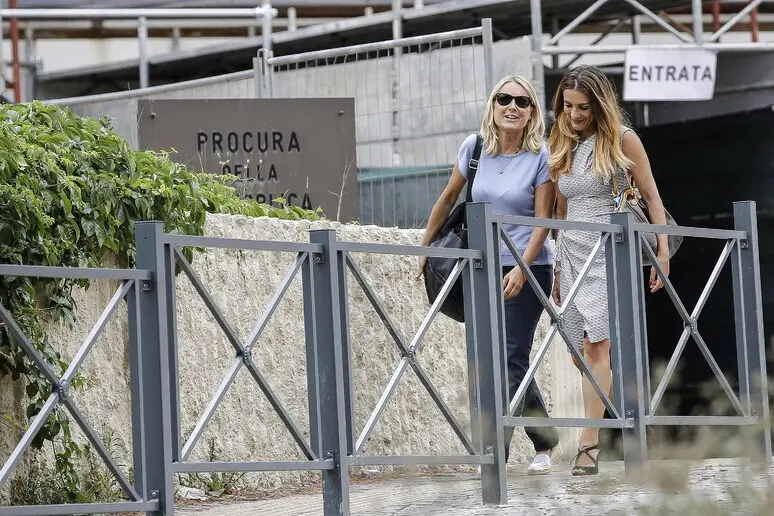
The leave of Sciarelli, who is 67 years old and had already been confirmed for 2026, but with 2027 remaining uncertain, closes a chapter. Not because “Who saw it?” disappear, but because the voice that has been able to weave, for over two decades, the thread between crime news and the human, between the journalistic method and compassion, disappears. A voice that never transformed pain into entertainment, even when entertainment was what could have guaranteed higher ratings. It’s rare to find this consistency on television. It’s even rarer for someone to keep it for 22 years.