




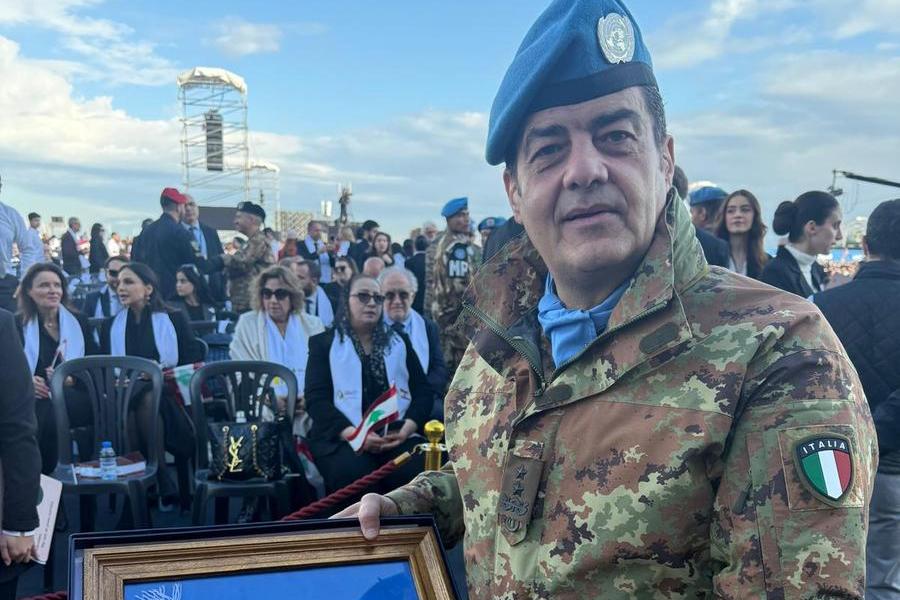
«The situation remains extremely complex.” General Diodato Abagnara, head of mission and commander of the Unifil forces speaks of “a constantly evolving operating context”. Meanwhile in Washington, Secretary of State Marco Rubio is hosting the ambassadors of Israel and Lebanon today, April 14, for talks that should lead to a ceasefire with the possibility of long-term disarmament of Hezbollah and the signing of a peace agreement between the two countries. A conversation, the one in which the US ambassador to Lebanon, Michel Issa, the advisor of the State Department, Michael Needham, the Israeli ambassador, Yechiel Leiter and the Lebanese ambassador Nada Hamadeh participate, which, at such a high level, has not been held since 1993. And which comes while we are witnessing “a phase of growing intensity, with a humanitarian framework that is rapidly deteriorating”.
General, what’s going on?
«On the one hand there are signs of diplomatic opening, on the other military activities continue even in densely populated areas. It is a phase that we can define as “negotiations under fire”, where dynamics of dialogue and military action coexist. In this scenario, UNIFIL continues to operate with balance and a sense of responsibility, keeping the dialogue channels between the parties active and helping to contain the risks of escalation. Our commitment is to avoid a further deterioration of the situation and, at the same time, remain safely close to the civilian population, who continues to pay the highest price for the crisis.”
Unifil also paid with the killing of three peacekeepers.
«The death of the three Indonesian peacekeepers was a grave loss and affected us deeply. It is paradoxical to think that one can die serving the cause of peace.”
The Israeli army also fired at an Italian vehicle.
«There is an ongoing investigation because there has been a clear violation of international law. Defense Minister Guido Crosetto protested to the United Nations and the Israeli government. I intervened towards the Israeli commanders and in Tel Aviv to reiterate that these situations are unacceptable and must be avoided not only towards the Italians, but towards the entire contingent”.
In August there was the UN decision to demobilize the Unifil mission starting from January 2027. What will happen?
«This is a time horizon defined by the United Nations Security Council, which must be interpreted from a strategic perspective and based on conditions on the ground. The objective is not a simple withdrawal, but a responsible and gradual transition, aimed at preserving the results achieved, avoiding security gaps along the Blue Line and progressively strengthening the role and responsibility of the Lebanese state authorities, in particular the Armed Forces. Unifil today represents the only stable international presence in Southern Lebanon and its continuous presence is a fundamental element of stability and connection between the parties. Several options are being studied and will be discussed in June. They range from a possible extension to a reconfiguration of the international presence or to different but still considered effective forms of support. In my opinion, without UNIFIL, or an international force, there would be a real risk of a security vacuum along the Blue Line, with potentially much more serious consequences for the population and for the balance of the region.”
Is the President of the Republic’s decision to limit weapons in Beirut to state forces only practicable? Will Unifil have a role?
«This is an important political objective, because it goes in the direction of strengthening the sovereignty of the State and the centrality of Lebanese institutions. However, its implementation requires time, balance and an internal consensus which I hope will be fully consolidated in a very short time. Unifil does not have a direct role in the application of these decisions, but contributes by creating a more stable context, supporting the Lebanese Armed Forces and encouraging dialogue between the parties. These are indispensable conditions for measures of this type to be implemented in a sustainable way.
We are talking about changing the rules of engagement: what does this mean in concrete terms and how is the safety of the Italian military guaranteed?
«Unifil operates in full compliance with United Nations Security Council Resolution 1701, with a clear mandate of peacekeeping, not combat. Our action is guided by the mandate of the United Nations and not by the logic of direct military intervention. Today it is certainly correct to talk about adaptation. We have adapted our operational posture, reducing non-essential activities and strengthening logistical and humanitarian ones. Personnel safety is our top priority: we have significantly strengthened the protection of individuals, bases, movements and assets, while ensuring operational continuity and support for humanitarian support and the protection of civilians but every decision remains with the United Nations Security Council. As far as we are concerned and with particular reference to the Italian contingent which is the largest with its 1,200 men, morale remains high, thanks to the professionalism of our soldiers and the closeness of the institutions from the Government to the Minister of Defense, to the Defense General Staff, to the Joint Forces Summit Operational Command and to the support of our families, who represent fundamental support at this moment”.
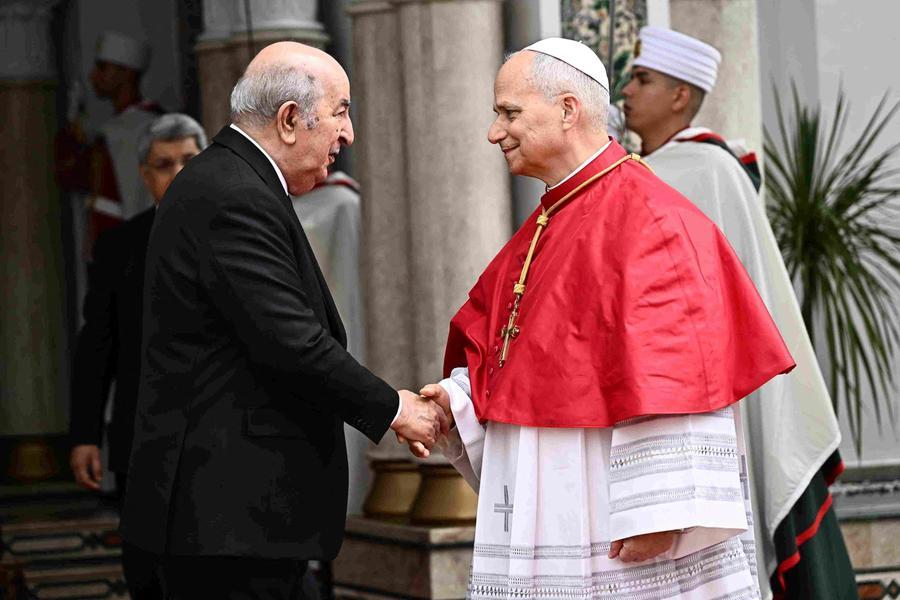
Is it possible to guarantee access to basic necessities in the Christian villages of the south? After episodes such as the blockade of the Nuncio’s convoy, how do the communities live?
«The situation remains difficult, but there is a constant commitment to guarantee access to essential goods. Today the facilitation of aid and the protection of civilians of all religions are at the center of our action. In many areas, including those with a Christian majority, Unifil represents a point of reference and contributes to keeping the main supply lines open. Alongside this, concrete solidarity initiatives are underway, also in close connection with important religious and humanitarian realities present in Lebanon, where the Maronite Patriarch, Cardinal Bechara Boutros Raï and the Apostolic Nuncio, Archbishop Paolo Borgia operate. In particular, the Community of Sant’Egidio, in collaboration with Covi, will donate materials and healthcare aids; the Banco Farmaceutico Onlus Foundation will provide medicines, furthermore, UNIFIL itself contributes directly with healthcare materials, clothing and furnishings and food materials. These are interventions which, despite the difficulty of the context, concretely help the most vulnerable communities and keep alive a fundamental solidarity network.
Is there a space for hope?
«In a situation like this, it is essential not to lose sight of the value of peace and the hope of stability and dialogue. In this complex context, however, there are faces, families, stories and stability to be sought and preserved on both sides. Unifil continues to operate with determination, maintaining credibility and presence on the ground. In a phase of crisis like this, in my opinion, our presence is not only useful, but essential. Our task is not only to guarantee security, stability and also to safeguard a space for dialogue and humanity. Peace is not an abstract concept, it is a concrete need of people and we pursue it together.”