



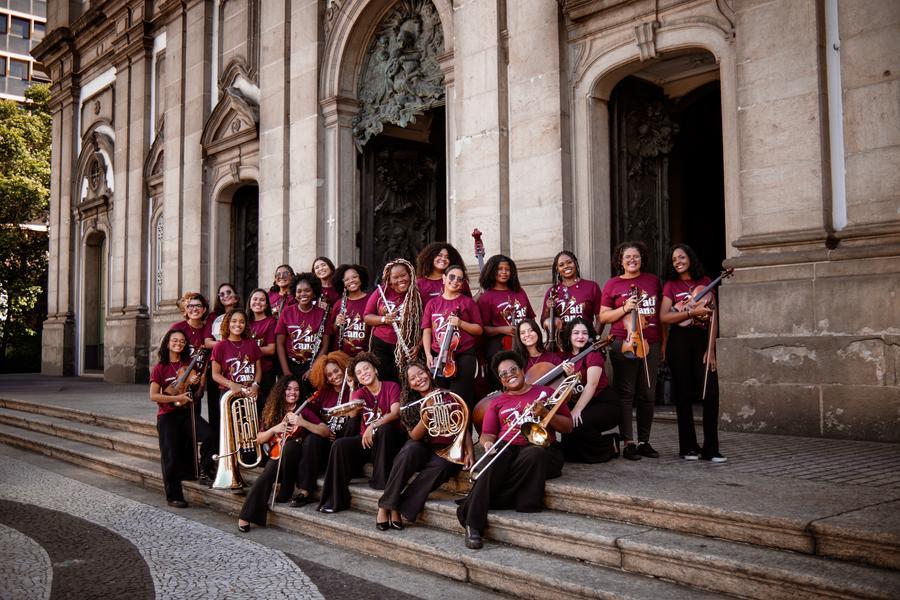
Made up exclusively of young instrumentalists from Rio de Janeiro, the Orquestra Sinfônica Juvenil Chiquinha Gonzaga will make its debut in Italy at the end of April. The group will perform at the Aula Magna of the Sapienza University of Rome on April 28 at 8.30 pm as part of the 2025-2026 season of the IUC (University Concert Institution) and in other cultural spaces in Rome. He will then participate in the audience with Pope Leo XIV in the Vatican on April 29. The “Conexão Vaticano” tour is part of the program of celebrations for the bicentenary of diplomatic relations between Brazil and the Holy See. Founded in 2021 with the aim of increasing the presence of girls in orchestral music, the Chiquinha Gonzaga Orchestra is an exclusively female formation, made up of 52 instrumentalists aged between 13 and 21.
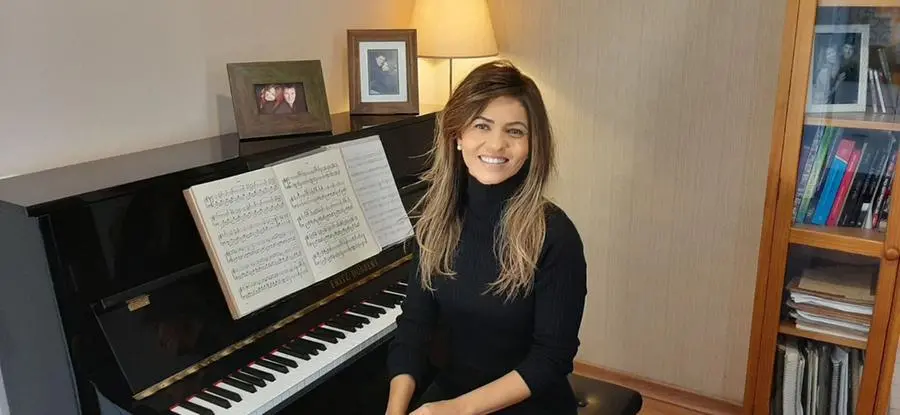
Moana Martins is the Orchestra’s Executive Director. Pianist and composer, for over 20 years she has worked as a music educator and social entrepreneur. In 2011, together with musicians, journalists, historians and educators, he founded the Brazilian Institute of Music and Education (IBME) in Morro da Providência, Rio de Janeiro. For 15 years, this institution has been developing projects focused on promoting artistic and educational experiences for children, adolescents and young people from disadvantaged socioeconomic backgrounds.
Mrs Martins, female composers and conductors are still a minority, but Chiquinha Gonzaga stands out among them. Could you tell us about its importance in the history of Brazilian music?
Chiquinha Gonzaga is a pioneer in the history of Brazilian music. In an era where women were often relegated to the domestic sphere, she broke barriers by drawing inspiration from the sounds of the street and contributing to the creation of authentically Brazilian music. His work was fundamental to the consolidation of genres such as maxixe, choro and carnival songs. Beyond his rich musical production, his life represents courage, independence and social commitment. Chiquinha was also an important advocate for the abolition of slavery and copyright. Its story inspires generations and reaffirms the role of art as a tool for social transformation.
What was the secret to his success?
The combination of talent, courage and determination. She mastered the musical language with excellence, interpreting, for example, Chopin’s waltzes with great mastery, but she went beyond mere technique. Chiquinha possessed an acute sensitivity and was deeply connected to the social and cultural transformations of Brazil. She moved between different environments, occupied spaces and created paths in a context that did not favor the presence of women. This ability to adapt, innovate and persevere has allowed him to build a strong and lasting legacy.
Are your songs still performed and broadcast often in Brazil?
Yes, his music remains extremely present in Brazilian culture. Works like “Ó Abre Alas” transcend generations and continue to be performed. His work remains alive because it directly engages with Brazil’s cultural identity and because each performance also represents a reunion with our history.
What does it mean to found an orchestra that bears his name?
Naming the orchestra after Chiquinha Gonzaga is, first of all, an affirmation of the female presence in music and a recognition of the role of women in the construction of Brazilian culture. The orchestra bears this name as a source of daily inspiration and as a commitment to the values it represents: female emancipation, artistic excellence and social transformation.
Why an orchestra composed only of girls?
In 2021, our Institute already had more than 5,000 students and five youth orchestras. Analyzing our indicators, we found a significant female underrepresentation in several instrumental sections. There were no girls playing tuba, trombone, double bass or percussion. The girls did not hold section leader roles and rarely performed as soloists. When we asked the students why, the answer was simple: there was a lack of female role models. Based on this experience, we decided to create an orchestra made up exclusively of girls, with the aim of combating this inequality and strengthening spaces for training, leadership and autonomy. We also needed to provide a safe and welcoming environment for girls to develop their self-esteem. More than training musicians of artistic excellence, the goal is for girls to become aware of their own value and role.
What is the history of the orchestra and how many girls have been part of it so far? How are they selected?
The orchestra was founded in 2021, under the direction and musical guidance of conductor Priscila Bomfim, the first woman to conduct an opera in Rio de Janeiro. Currently, the main ensemble consists of 54 girls aged between 12 and 21. The students begin their journey in the centers, located in areas of great social disadvantage in Rio de Janeiro, and participate annually in auditions to become part of the orchestra’s main ensemble.
When did your collaboration with the orchestra begin?
I had the pleasure of accompanying the orchestra from its first rehearsal, when the students were still discovering their collective sound. Since then, it has been exciting to watch the musical and personal growth of these young musicians, many of whom now hold positions at public universities and continue to build professional careers in music.
How does the group’s activity take place between rehearsals, concerts and other events? Have you collaborated with famous artists?
Every week, students participate in approximately 8 hours of activities, divided between instrument lessons, music theory, section rehearsals and general rehearsals. The orchestra maintains a year-round concert calendar in venues of cultural significance, and collaboration with renowned artists has been a constant, broadening the repertoire and offering meaningful artistic experiences.
How do you vary the repertoire?
The orchestra is dedicated to the repertoire of Brazilian music, enhancing the diversity of composers, eras and musical styles. This work aims both to preserve tradition and to open up to new languages, always promoting recognition of the country’s cultural richness. We also play classical music.
How important is music to the education and development of girls? How does the study of music enrich a person’s growth?
Music is a powerful tool for holistic development. It promotes discipline, listening skills, sensitivity, teamwork and the ability to express oneself. In the context of the orchestra, music also strengthens self-esteem, broadens horizons and creates new perspectives for the future. The girls begin to recognize themselves as capable and as protagonists.
What does performing in Rome and in the presence of the Pope mean for you and for the girls in the orchestra?
Playing in Rome and participating in the audience with the Pope as part of the program for the Bicentenary of Diplomatic Relations between Brazil and the Holy See represents a moment of profound significance to bring Brazilian culture, the strength of young women and a message of social transformation to the world.