





There is a moment, in fragile lives, when everything seems already decided. The neighborhood where you were born, the companies you meet, the wrong shortcuts that seem inevitable. It is there, in that invisible crack between what you are and what you could become, that sport often enters. Not that of television, millions and celebrities, but that of suburban gyms, of buses taken at dawn, of educators who wait for a boy even when that boy seems to have stopped waiting for himself.
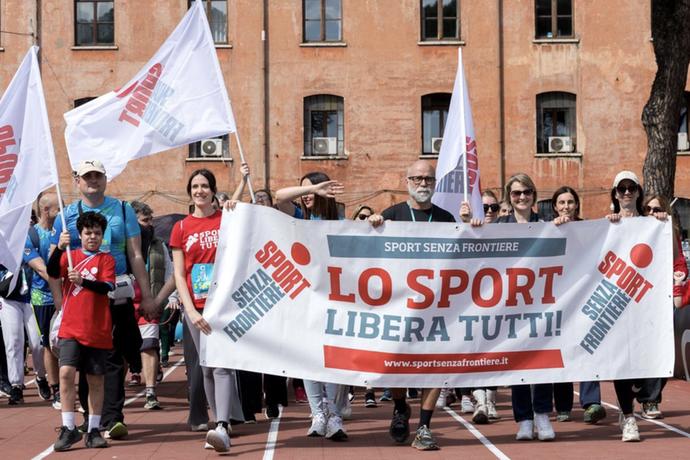
For fifteen years Sports Without Borders ETS try to stay right inside that crack. And the conference that will celebrate this anniversary on May 14th at Roma Tre University will not just be an institutional anniversary. Above all, it will be the story of an idea that has become reality: sport not as a pastime, but as a right and an educational tool.
When in 2023 the Italian Constitution has included in article 33 the recognition of the educational, social and psychophysical value of sporting activitythe association had already been working for over a decade in the suburbs of Rome, Naples, Milan and Turin. There where playing sport, for many families, is still a luxury.
The strength of Sport Senza Frontiere is not just in numbers — 228 affiliated sports clubs in eight Italian cities — but in the nature of its model. Because here the sports field is just the beginning. A network is built around the children: educators, psychologists, cultural mediators, teachers, families. An educational community that accompanies minors in the most fragile territories.
It is significant that the focus of the conference is above all on stories. Not “the beneficiaries”, as they are often called in bureaucratic language, but the children themselves. They will be the ones to speak. To tell what happens when someone looks at you not as a problem to be managed but as a possibility to grow.
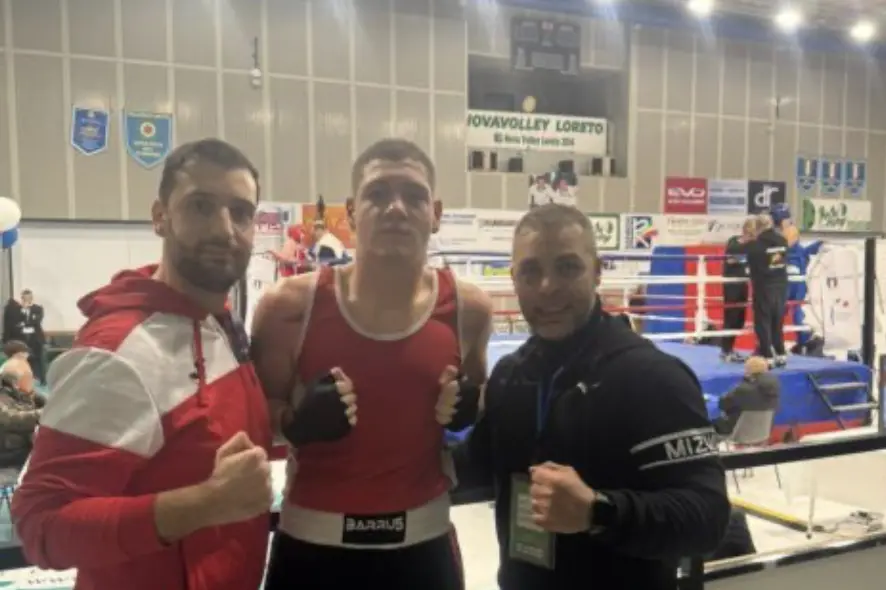
Among these stories there is one that comes from the eastern outskirts of Naples, from San Giovanni to Teduccio. Francesco is twenty years old and today he is the Italian Youth heavyweight vice champion. But the point is not the silver medal won at the 2024 Italian Championships. The point is everything that was there before.
«I saw wrong examples around me and I thought that that would be my destiny too“, tells. A simple phrase, but capable of describing the social fatalism that often inhabits the suburbs: the belief that one’s future is already written.
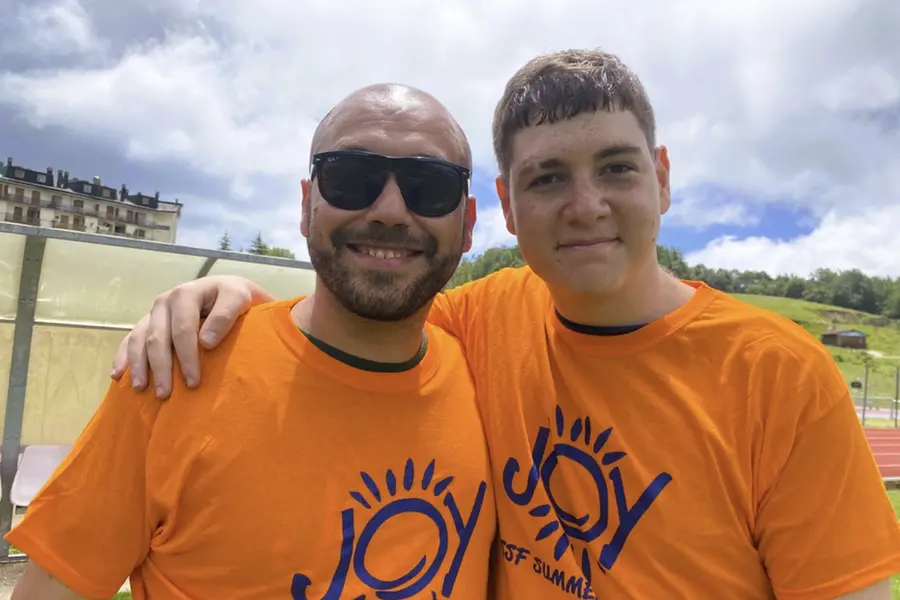
Then come the meetings. Maestro Alfredo Veneruso. Salvatore, the educator. Valeria, project coordinator. And boxing arrives thanks to the Joy project of Sport Senza Frontiere. Francesco discovers discipline, respect, effort. Above all he discovers that anger can be governed and transformed.
His words in the ring have something almost literary: «I try to convince myself that the opponent is my enemy, that he represents all the evil I have experienced. Then I go up… and the fear remains, but when the bell rings everything disappears».
There is much more than sport in that sentence. There is the attempt to give a shape to the pain, to tame the internal chaos, to transform the violence suffered or breathed into disciplined energy. It’s one of the great educational paradoxes of boxing: learning to fight to stop destroying yourself.
Today Francesco continues to study, works in the summer as a bricklayer, perhaps dreams of a career as a professional boxer or as a teacher. But above all he has become an example in the neighborhood. Other boys started boxing by looking at his medals. Others approached the sport seeing that a different path was possible.
This is how the social impact of a project is truly measured: not only in the boy saved, but in the possibility that that boy in turn becomes a point of reference for others.
Even the very story of Sport Senza Frontiere was born almost by chance, in 2008, around a photographic exhibition on the Beijing Olympics. Some photographs destined for pulping become the driving force of a charity auction. With those first funds, five children from the Roman suburbs were enrolled in free pentathlon courses. Just five children. But authentic transformations often begin like this: in a tiny, almost invisible way.
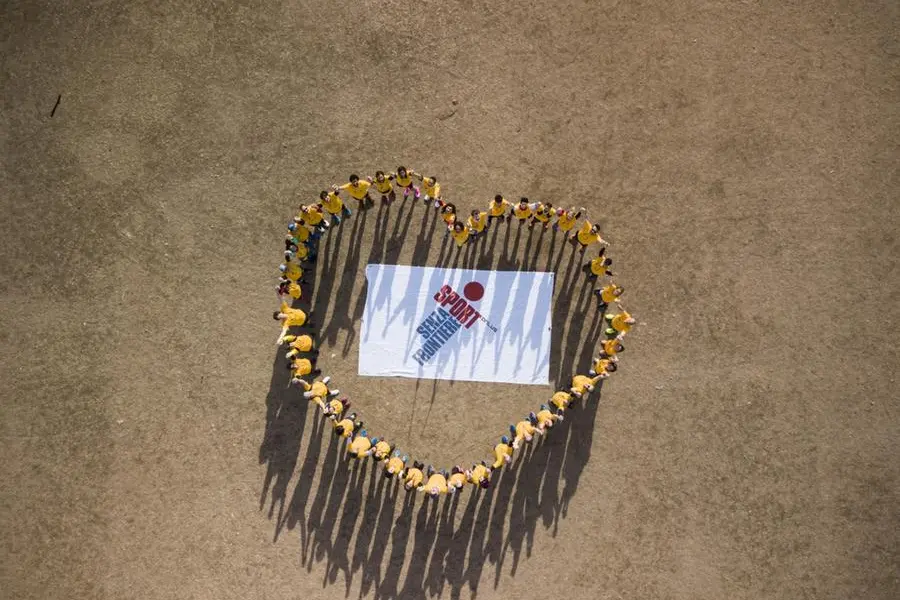
Over the years there has been no lack of resistance. When some Roma children were included in a rugby team in Northern Rome, protests broke out among parents. The association responded with dialogue, with educational patience, with presence. A year later, one of those kids was captain of the Under-12 team. And the same parents who had protested were raising funds to buy school books for their Roma classmates.
This is perhaps the most important victory of social sport: not producing champions, but changing perspectives.
In a time in which youth hardship is growing, the suburbs are expanding and educational poverty is becoming increasingly hereditary, experiences like Sport Without Borders remind us of an elementary truth that we too often forget: no child saves himself. He needs someone who waits for him, who accompanies him, who continues to believe in him even when he himself has stopped doing so.
And then the ring, the football field or the gym cease to be simple sporting places. They become human garrisons. Places where someone, finally, teaches you that fate is not a condemnation.