





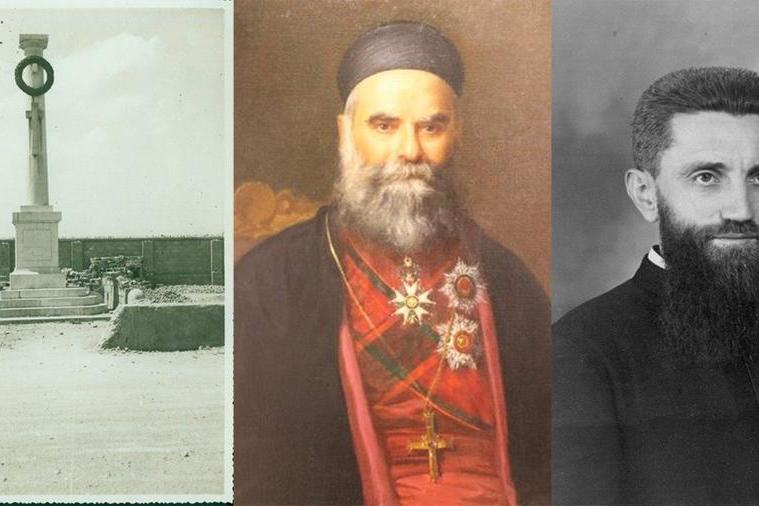
Fidelity to the Gospel to the point of giving one’s life, in persecution or trial, and a holiness lived in daily service. It is the thread that unites the figures at the center of the six decrees of the Dicastery for the Causes of Saints, promulgated on Friday 22 May after the approval of Pope Leo who received in audience the Prefect of the Dicastery, Cardinal Marcello Semeraro: the 80 martyrs of Santander and the Maronite patriarch Elias Hoyek they will be blessed, while the Salesian missionary becomes venerable Costantino Vendramethe barefoot Carmelite from Cameroon fra Jean-Thierry of Baby Jesus and the Passionthe Spanish nun María Ana Alberdi Echezarreta and the lay Capuchin brother between Nazarene from Pula.
The 80 martyrs of Santander: faithfulness to the end
Their story is rooted in the religious persecution of the Spanish civil war of the 1930s. Eighty priests, religious, seminarians and lay people – including 67 priests, 3 Carmelite religious, 3 seminarians and 7 lay people – were killed in different circumstances but united by anti-Christian violence: thrown into the sea, imprisoned on prison ships, killed and burned or died in improvised detention camps.
Among them, the figure of Francisco Gonzáles de Córdova, parish priest in Santoña, stands out, who chose to remain close to his faithful despite the ban on celebrating the sacraments. Prisoner on a ship transformed into a prison, he continued to confess and pray the Rosary until the end. At the moment of execution he asked to be the last to die, so that he could absolve and bless his companions: a gesture that summarizes his total dedication to the ministry.
Elias Hoyek: the patriarch of “Greater Lebanon”
The beatification also concerns the Maronite Patriarch Elias Hoyek, a central figure in the religious and civil history of Lebanon. Born in 1843, trained in Rome and ordained a priest in 1870, he was patriarch of Antioch of the Maronites from 1899 to 1931. A spiritual guide and at the same time a man of dialogue and political mediation, he supported the Lebanese people in the difficult historical transition from the end of the Ottoman Empire to the birth of Greater Lebanon in 1920. During the First World War he opened monasteries and convents for the poorest, without religious distinction, to feed those who were exhausted from hunger. For this reason he was called “Father of Greater Lebanon”. The miracle recognized for his beatification concerns the sudden healing of a Druze Muslim officer in 1965, which occurred after a dream in which he saw the patriarch.
Costantino Vendrame: “poor among the poor” in India
The Salesian missionary Costantino Vendrame, born in 1893 in the Treviso area and ordained a priest in 1924, becomes venerable. After leaving for India, he lived between Assam and Tamil Nadu sharing the lives of the poorest people. A tireless itinerant missionary, he traveled through villages and communities on foot, announcing the Gospel with simplicity and concrete closeness. Even his imprisonment during the Second World War did not extinguish his charity: he was a spiritual point of reference for many prisoners. He died in 1957 in Dibrugarh, leaving the image of a priest who had chosen to become “poor among the poor”.
Friar Jean-Thierry: offering one’s life for vocations
The young life of the barefoot Carmelite from Cameroon between Jean-Thierry of the Child Jesus and the Passion is marked by a radical self-offering. Born in 1982, he soon discovered his religious vocation and joined the Discalced Carmelites in 2003. Struck by bone cancer, he faced the disease with profound faith. After the amputation of a leg, he was transferred to Italy for treatment. Shortly before his death, in 2005, he made his solemn profession “in articulo mortis”. His definitive choice is to offer his life not for healing, but for vocations: “How beautiful Jesus is” are among his last words, a sign of a luminous faith until the end.
María Ana Alberdi Echezarreta: holiness in daily charity
The Spanish religious María Ana Alberdi Echezarreta, born in the Basque Country in 1912, became venerable for a life entirely spent in meekness and service. Orphaned as a child, she joined the Franciscan Conceptionists in 1932. She went through the difficult years of the Spanish civil war and subsequently led her community as abbess with wisdom and a spirit of reconciliation. After the Second Vatican Council he also contributed to the renewal of the Constitutions of his order. His distinctive trait is the ability to create peace around himself, living a holiness made of concrete and daily charity.
Fra Nazareno da Pula: the “saint of sweets”
Affectionately known as the “saint of sweets”, Fra Nazareno da Pula, born Giovanni Zucca, was born in Sardinia in 1911. After an experience of imprisonment during the Second World War and a journey of discernment also through the meeting with Padre Pio, he joined the Capuchin friars in 1951.
A simple and joyful man, he dedicated himself to the most humble jobs and to a life of prayer. The sweets he distributed to children, inviting them to recite a Hail Mary, became the symbol of his popular and affectionate spirituality. He lived his last years near the sanctuary he wanted in Pula, where he died in 1992, leaving a testimony of faith embodied in simplicity and joy.