




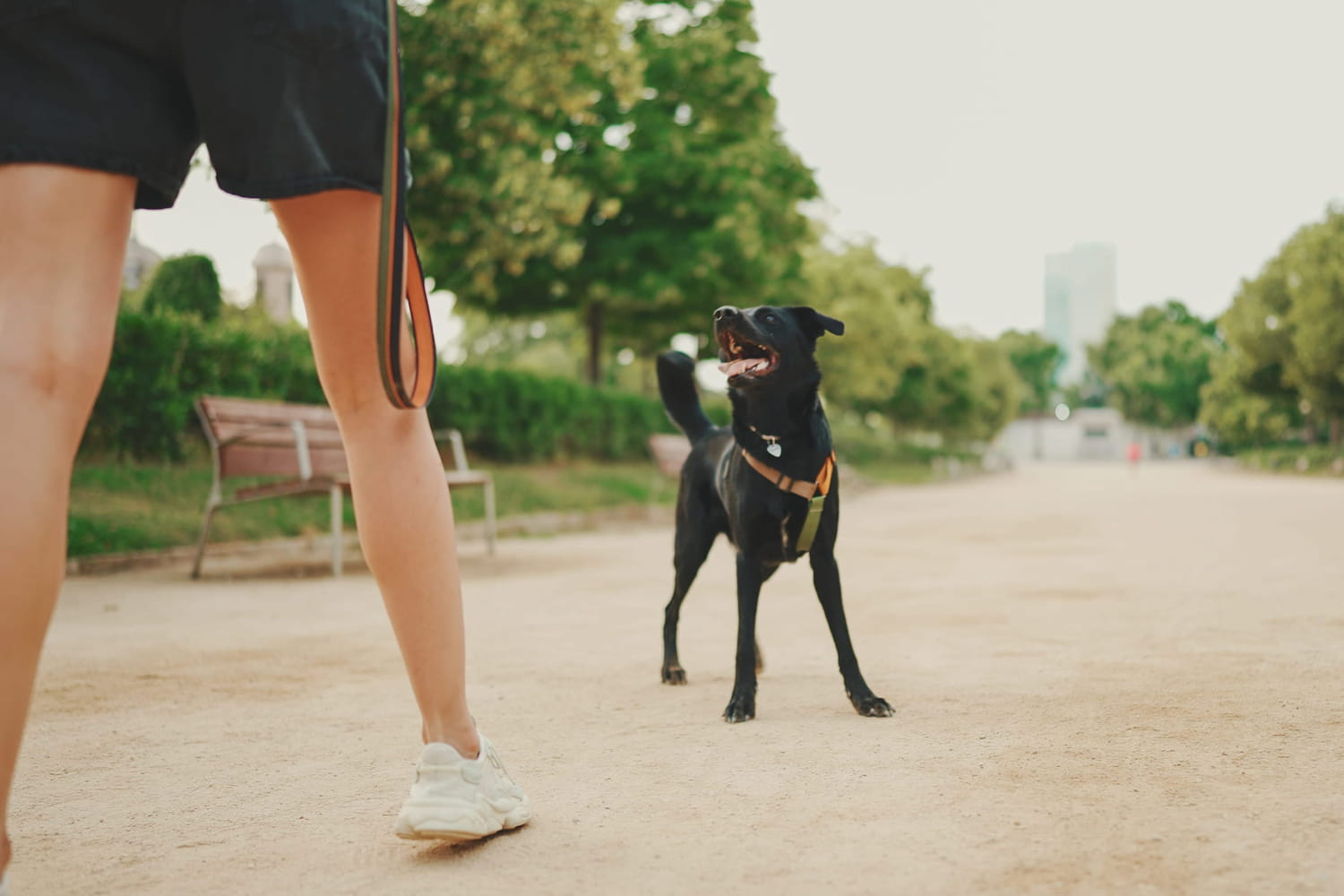
You walk your dog so that he can exercise and do his business, but there is a detail that no one thinks about, and which can have consequences on his long-term health. An animal osteopath reveals the bad habit she most often sees among dog owners.
All dog owners will say it: their doggie is not only a full member of the family, but he is a true prince. Real “dog parents” give in to all the whims of their beloved ball of fur, buy him his favorite treats, take care of his little comfort, walk him diligently, and pamper him from morning to evening to make him as happy as possible. Although all owners try to do the right thing, there are unfortunately daily errors of which they are not aware and which can ultimately impact the physical health of the dog.
In any case, this is what Morane Teisseire, animal osteopath, reveals to us. When it comes to taking your dog for a walk, there are things to do… and not to do. Especially depending on its age: yes, a puppy does not have the same needs or abilities as an adult counterpart. This is precisely where the specialist observes an error that “owners often do”, and who canfatigue the joints of the dog from a very young age. As a result, it is a companion who ages less well, and who will certainly need more frequent veterinary care… and more expensive.
“People often take walks that are too long.”explains Morane Teisseire. Indeed, “the puppies are energetic” and tend to rush without stopping, but the masters “don’t realize that they are still growing and that it can be bad for them.”. And it’s often too late when we discover the problem: “At the beginning it’s not dramatic: when they are young, it’s not visible. But when they get older, it’s felt more and more. It can cause problems later like early osteoarthritis, or hip dysplasia for example.” The animal osteopath confirms this to us, when you adopt a dog aged 2 or 3 months, it is better not to exceed 15 to 20 consecutive minutes of walking. “Then, we add 5 to 10 minutes per month” as growth progresses.
Even once an adult, the problem is no longer really the walk that is too long, but above all the walk that is not preceded by a little “warm-up”. Indeed, like us humans, dogs need “warm your joints before making a significant effort. For this, the osteopath has a very simple tip: “It’s good for the dog to exercise, but the best thing is to keep him on a leash, even if only for 5-10 minutes, before letting him go and letting him run. Otherwise, he’ll run off at full speed when he’s cold, and that’s not good.”
Overall, but especially when they are growing, the goal is “to avoid as much as possible. gestures or activities that could put too much stress on their joints in the long term. If owners generally know the risks with stairs or jumping too high for example, there is another common mistake: thinking that a harness is better than a collar, when this is not necessarily the case. “If it’s a dog that pulls a lot on the leash, yes, because the collar risks getting out of control, but it’s a double-edged sword because the harness can also block his shoulders and back. You really need a Y-shaped harness, very thick at the sternum and which goes around the shoulders”advises the specialist.