

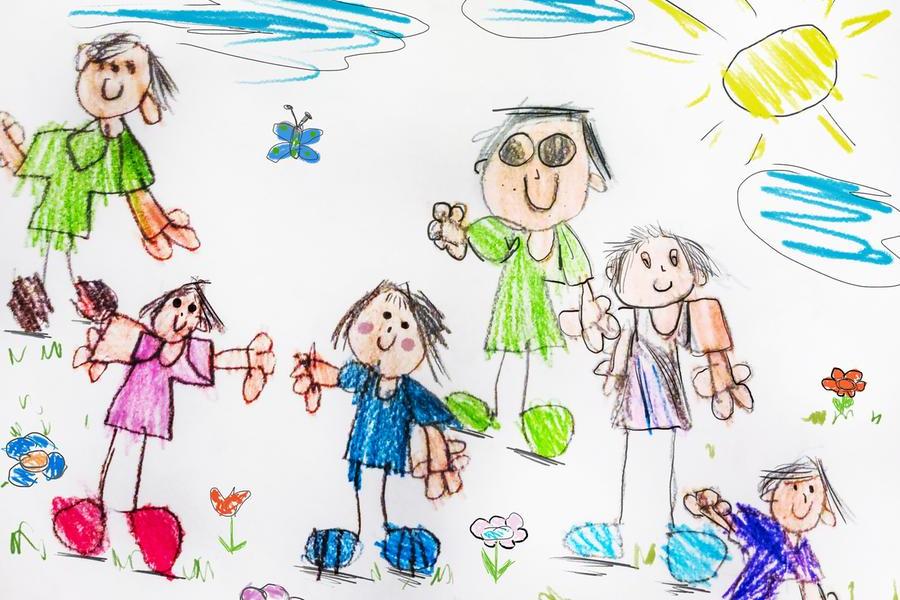



«With a piece of paper and a few colors the child doesn’t just play: explores the world, gives shape to your emotions, a means of communication with dad and mom. It’s a game that grows with him and never stops educating him.” Graphologist Evi Crotti is certain of this: «paper and colors are the most beautiful game that can exist for a child».
Does drawing involve all the faculties of the mind?
«Drawing mobilizes perception, memory, imagination, language, motor skills, emotions and reasoning skills. It is one of the most complete activities for the harmonious development of the person.”
Why is it good for an adult to show appreciation for the creations of the little ones?
«Because every drawing is a message that the child entrusts to the adult. Sincere appreciation strengthens self-esteem, encourages creativity and fuels the desire to continue expressing oneself and also sets in motion feelings and communication with others. In fact, he is happy to show off his skill.”
Drawing as an antidote to digital?
«Drawing gives children the pleasure of slow time, manual skill and personal imagination, without patterns imposed by a screen. It is not an alternative to digital, but a precious balance that helps us to grow better, and above all to increase in small ways a kind of egocentrism necessary to move further and further away from static “digital” learning.”
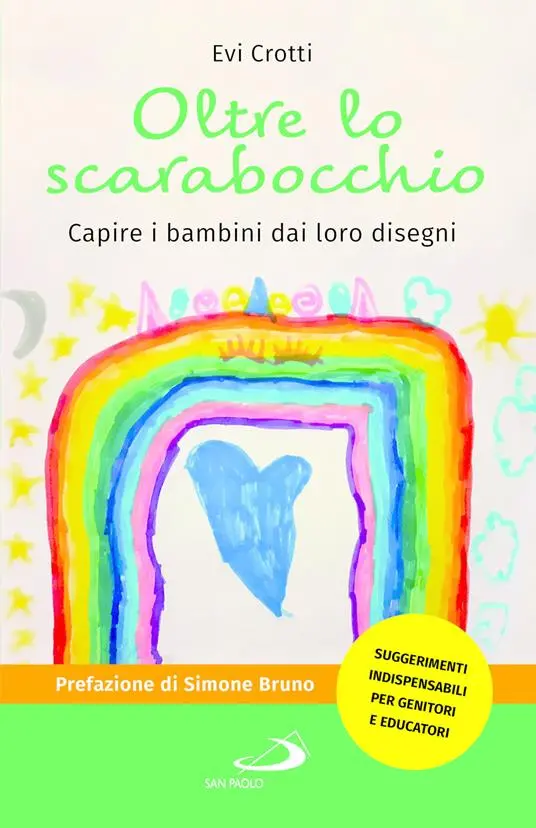
How have you seen children’s stories change through doodles over the years?
«They always remain the same in their spontaneity. Even today I receive drawings both from parents and teachers who, if not manipulated by the adult’s desire for technology, maintain the natural frankness of children. But today their drawings are more often victims of the haste, loneliness and anxieties of the adult world. The context in which children grow up has changed and this inevitably leaves a trace on the paper, but if the drawing is left free the child draws spontaneously and colors with the same creative richness.”
What are the most recurring themes?
«Family, home, animals, friends, school and nature remain protagonists. In recent years, superheroes have also appeared more frequently, representing their need for safety and protection.”
Why shouldn’t you be afraid to have your drawings interpreted?
«Because a serious interpretation does not judge or “label” the child, but tries to understand his inner world. The drawing does not issue judgements: it offers precious listening ideas, to always be integrated with the history and context of the child’s life. I like to define drawing as a gift that children or teenagers give to their loved ones, sometimes resulting in emotional suffering, the difficulty of growing up, possible fraternal jealousies. Spontaneous drawing, i.e. free and not suggested, is an effective help, since for them it represents success, emotional release, but above all a key to real communication with the adult world. Together with the colorful drawing, the little one gives his loved ones or educators a way to learn about his little world in progress and therefore also the possibility of “prevention which is always better than cure”.
Have children changed in recent years?
«No, they haven’t changed. They ask for the same love as years ago; it is perhaps the adult who, fearing not being able to educate them correctly, tries to delegate the educational and aseptic task to TV and AI. This is why the drawings created by the free feelings of children can lend a hand in an effective and productive way both to them and to their parents, telling their story including the difficulties, anxieties and fears that are always present in evolutionary growth.”