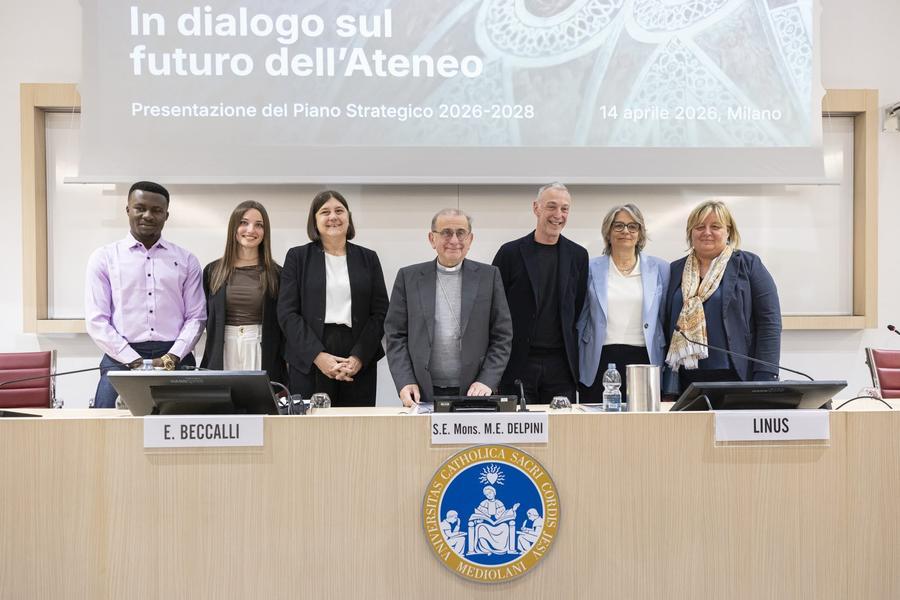




A nine-month long journey, built with the contribution of the entire academic community, to outline the future of the university. It was presented on Tuesday Strategic Plan 2026-2028 of the Catholic University of the Sacred Heartillustrated in the Aula Gemelli in Milan by the rector Elena Beccalli in the presence, among others, of the president of the Toniolo Institute and archbishop of Milan Mario Delpini.
A document which, in the intentions of the promoters, is not just a three-year plan but a truly shared process: 34 thematic workshops, 665 participants of the academic community, 1,711 responses to an online survey e 54 project proposals emerged from a call for ideas.
«To give substance to the idea of the best University for the world, i.e. for our students and for society, we are launching new project lines ranging from the School of knowledge integration to lifelong learning in collaboration with a primary international digital platform» explained the rector, also underlining the method adopted: «It is not usual for a Strategic Plan to set up such a participatory method, based on the active collaboration of the entire university community, on co-planning and listening to the main interlocutors and writing together the future of the University for the next three years”.
In his speech, Archbishop Delpini recalled the deepest meaning of the initiative: «The strategic plan is not a bureaucratic fulfillment. It is an initiative, that is, it declares the responsibility and determination to face and direct the life of the university.”
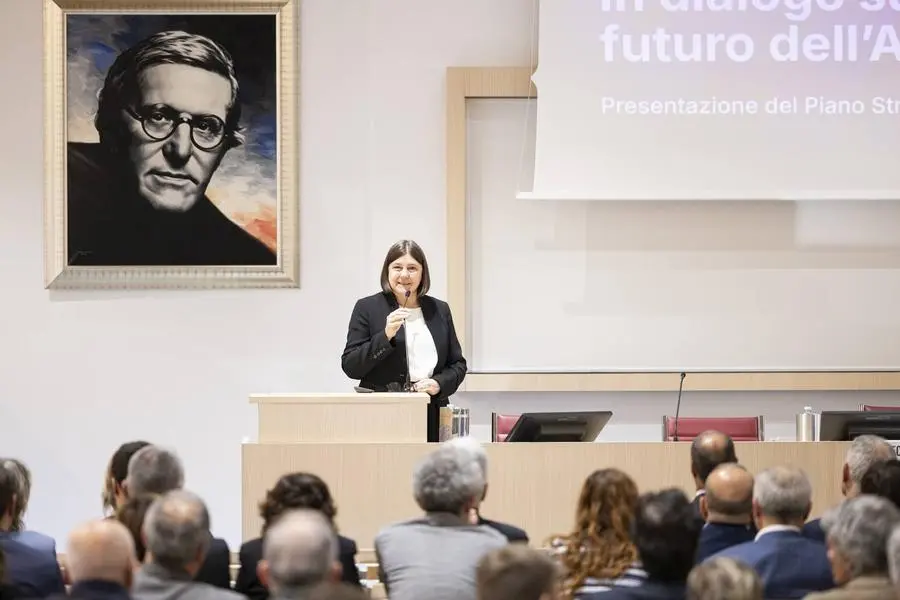
The pillars of the Plan: research, teaching, internationalization and fundraising
The Plan is divided into three directions and five pillars. Addresses include the enhancement of the university’s Catholic and non-profit identitythe integration between the educational community and research university and the construction of a university as a “place of experience of knowledge”. «This means, for example, activating innovative pedagogical proposals such as service learning, based on the involvement of the student community in paths of active citizenship and social participation, or such as peer mentorship, for help between peers also on contents, knowledge and skills» added Beccalli.
Among the five pillars stand out the birth of the School of knowledge integration, the strengthening of research and young researchers, the innovation of the training offer also through artificial intelligence and digital platforms, internationalization with the Africa Plan and a new approach to fundraising.
«The first pillar concerns the establishment of a school of knowledge integration, capable of strengthening the interdisciplinarity of the University in addressing the great issues of our time», explained Elena Beccalli. «The second pillar is represented by the valorisation of research, of researchers, with the aim of making the research university profile even more incisive». On the teaching front, the rector highlighted «a quality training offer that enhances the experience of knowledge in physical and digital spacesfor the full development of the educational community.”
Particular attention also to the global dimension: «the expansion of the global dimension through accreditations, attention to rankings and further dual degrees in addition to the 112 already active» and «a more identity orientation inspired by solidarity, aimed at continuing in the implementation of the Africa Plan».
Finally, fundraising is rethought as a relationship and shared responsibility: «The purpose goes beyond gathering resources and encompasses strengthening relationships with alumni and external interlocutors to support strategic projects and guarantee access to our courses to deserving but lack of means young people.”
The artistic director of Radio Deejay also spoke during the meeting Linuswho spoke with representatives of the academic community.
«The intention that the Toniolo Institute recommends and for which it feels responsible is to propose with conviction a commitment to work, study, research, in favor of the person and not of the idol» recalled Monsignor Delpini, adding that the university is called to «make the world habitable, thoughts confident, coexistence and solidarity desirable». At the end of the work, the rector reiterated the meaning of the participatory process: «A plan to build the future of our University together and write a new page in our history».