




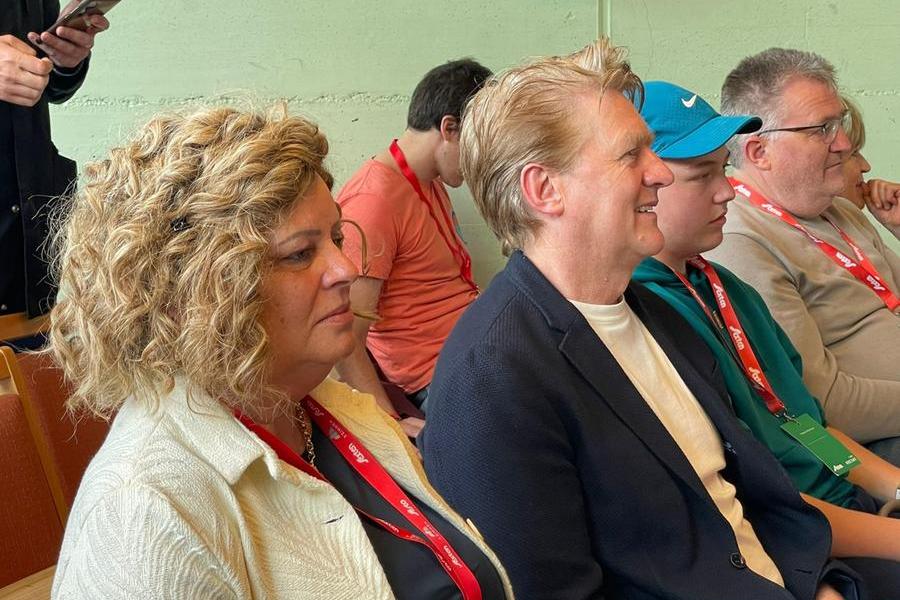
Mum and dad Sinner are there when it’s important, they join their globetrotting golden boy when he plays in Italy, in Turin or Rome, and in Vienna not so far from their home in Sesto in Val Pusteria. They appear in very important finals such as Wimbledon and Paris, it is known that dad Hanspeter sometimes lends himself to being a cook (the job of a lifetime) when Jannik and his staff replace the hotel with the rental of a shared house in long tournaments. He was very present in the difficult period of the proceedings with Wada, between the moment in which the news of the dispute on the clostebol case emerged, before the US open 2024, and the resolution of the case which cleared Jannik of any personal responsibility but which led him to negotiate a three-month suspension for the objective one, i.e. for the type of responsibility that an employer bears for the error of his staff in certain cases.
The family reaches out to the child when there is a need for physical closeness of bonds. Mother Siglinde, who manages the bed & breakfast in Sesto and has elderly parents there, also arrives sporadically for important matches, as Jannik recently explained. We know that mum suffers from matches and gets excited but even more she suffers from the cameras that scrutinize her, with their invasive eyes and in fact, when she is there, she chooses inconspicuous places. If Dad Sinner is present at the tournaments alone, he sits in the box with the coaches, but never in the front row, apparently impassive like Jannik on the pitch, he doesn’t let his emotions show, he simply applauds a good point without saying a word. Leave the staff with their well-defined role: no words readable on the lips, no technical advice, no gestures that can be interpreted from outside or on the pitch. When the wife is also present, they tend to choose more secluded positions, more confused in the public (even if they now recognize them and look for them), their key factors in the career of their son – who never fails to thank them – are discretion and confidentiality.
Solid presence, but at the right distance, but zero intrusiveness and zero intrusion. Even in the embrace that follows the successes, they tend to give priority to the staff who share the work with Jannik and contribute to his results. A form of respect for the professionalism of others. This is an alternative model of family behavior to the one, much more represented in the history of tennis in the father-master and/or pygmalion form, which became very famous with the release of OpenAndré Agassi’s unapologetic autobiography, with its set of tennis balls suspended in place of the traditional airplanes, bees or butterflies above the cradle, the first imprinting of the future champion who grew up at a table to the sound of ball-shooting machines.
It is the most famous case of an accidental champion, because its protagonist openly spoke about his experience of tennis as an imposition on others rather than as a personal passion. But the history of tennis is full of “predestined” by paternal will. A parental-tennis model that has also managed to set up successful champions from birth or almost. Illustrious examples are known besides that of Agassi: the most famous and declared is that of Martina Hingis, Swiss, number 1 at 16 in 1997, named in honor of the tennis legend Martina Navratilova, to express clear parental ideas.
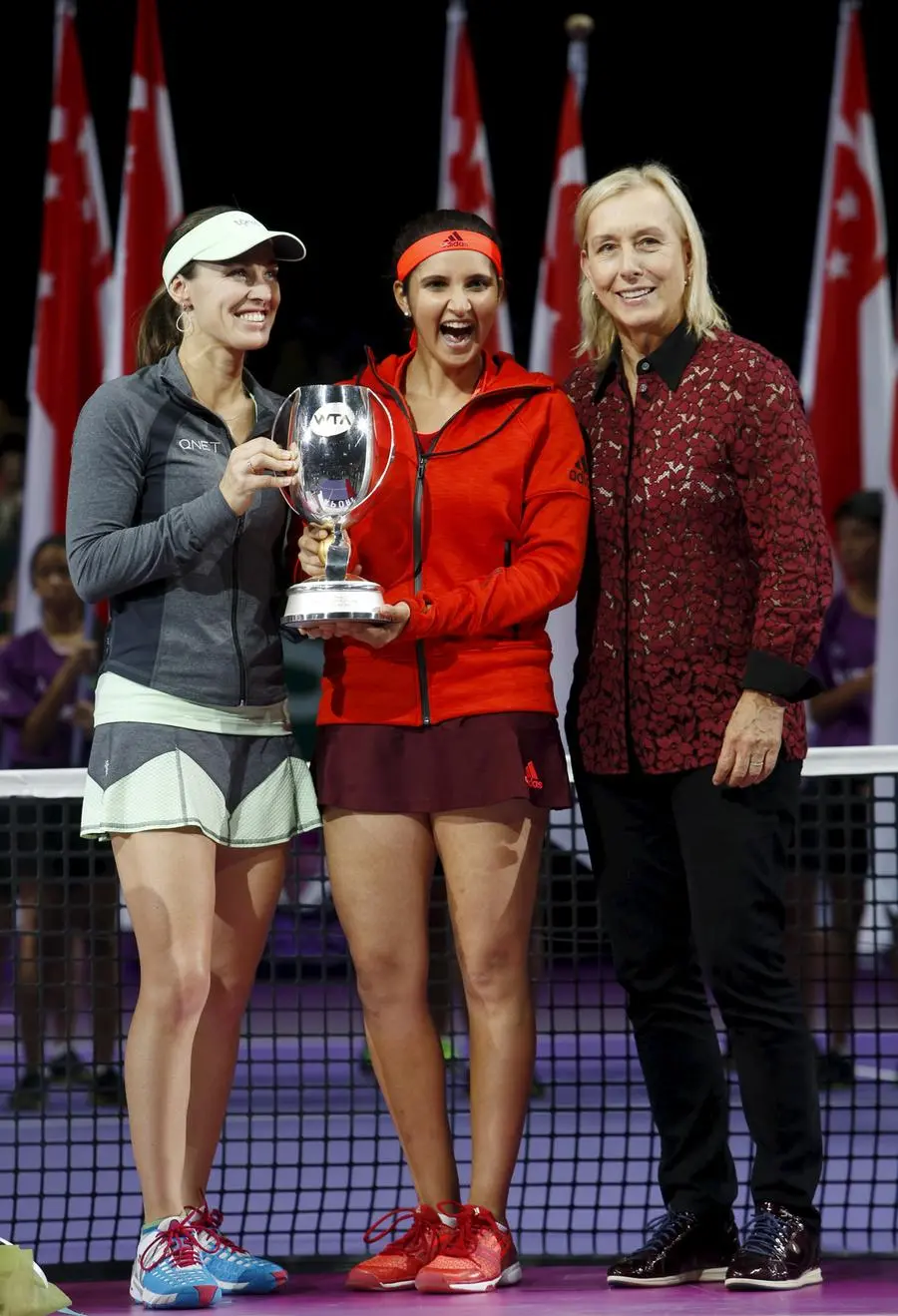
But Steffi Graf is part of it, the only one capable of the Grand Slam after Rod Laver, Jennifer Capriati, Monica Seles, Maria Sharapova, the Williams sisters to name just a few. Especially among women, they have very present father figures in common, who in some cases have been cumbersome if not at the limit with the abuser.
A more common modality for women for a series of reasons, including the fact that in many cases women explode athletically earlier and in many cases the girls were sent onto the circuit very early, between 14 and 16 years old: a world-sized circus in which at that age they would not have been able to go alone, even more so in times in which, in the impossibility of remote technological connections other than telephone teleselection, professional tennis meant detachment from the real world and from relationships unless have them in tow.
The indispensable presence of a parent has often translated into a very present father figure, who could be protective as was the case of Karolj Seles, Monica’s father, who left a great void, but also very harsh as it was for Mary Pierce. In many cases this presence also became rather cumbersome, especially when precocity made it difficult to understand how much it was the parent who followed the child’s inclination and how much the child followed the parent’s physical and emotional investment.
The history of tennis is full of omnipresent fathers (and sometimes, but less so, mothers, at risk of intrusiveness in technical choices, and in many cases of parent-coaches, a mix of roles, the latter difficult to balance which according to a recent statement by Fefè De Giorgi, coach of the men’s national volleyball team, should be prohibited by law, due to the damage it can cause, barring praiseworthy exceptions. We also see positive and negative examples today: Alexander Zverev, after changing several coaches, returned to his father, even Casper Ruud, Ben Shelton and Flavio Cobolli have always had their fathers as a technical point of reference and at the moment they could be said to be balanced relationships.
A cryptic phrase from Juan Carlos Ferrero, followed by an equally cryptic response from Carlos Alcaraz’s father, has meanwhile led the tennis court to some unconfirmed or denied gossip about a possible role of the player’s family in the divorce of the world number 2 from the historic coach.
While Stephanos Tsitsipas’s tormented relationship with Apostolos, his father coach, is blatantly full of tension even in public, with whom, especially in this moment of crisis for the Greek tennis player, rags often fly even on the court. Nor can it be said that this is something new: in 2020 the boy, who has now grown up, had received a reproach like the people also at the press conference by his mother.
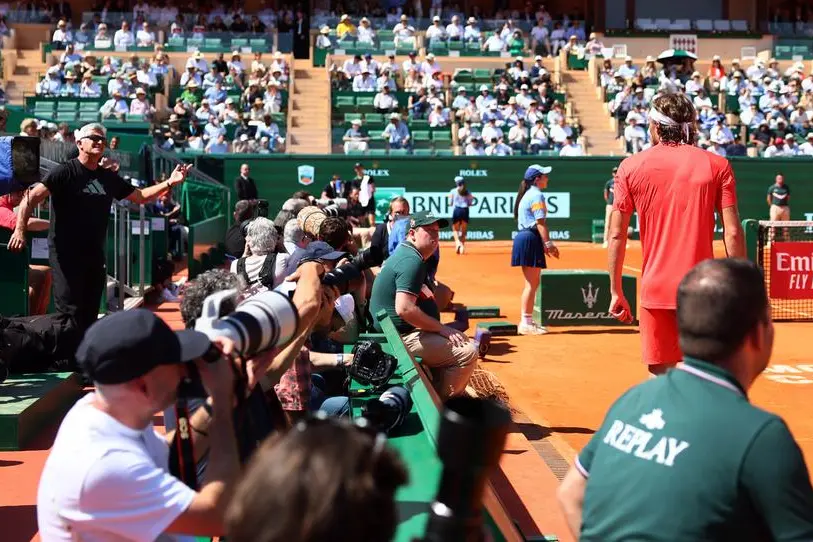
In terms of discretion, the Tsitsipas family seems to be the extreme opposite of the Sinner family, and who knows, it might mean something in the opposite parables of the two players.
However, we are at the tip of the iceberg: the cases cited concern tennis players who have been successful and have reached the top. The big question concerns the family-emotional investment of those who don’t arrive: the emblematic situation portrayed in the film The master with Pier Francesco Favino, with a little boy of modest talent hostage to his parent’s frustrated ambitions, destined to suffer without reaping anything except reproaches and drops in self-esteem.