




There is a moment, in the life of every man or woman who goes through serious illness, when the medicine stops and the person remains. He remains with his pain, with his fear, with his loneliness. This was the void that in 1976 a Lombard engineer of great acumen and big heart, Virgilio Floriani, decided not to accept. He had seen his brother suffer. He had seen it as cancera word that was then pronounced in a whisper, as if it were a shame, as if it were a guilt, devouring not only the body, but also the dignity of the person who carried it and of those who remained next to him. And he wasn’t resigned.

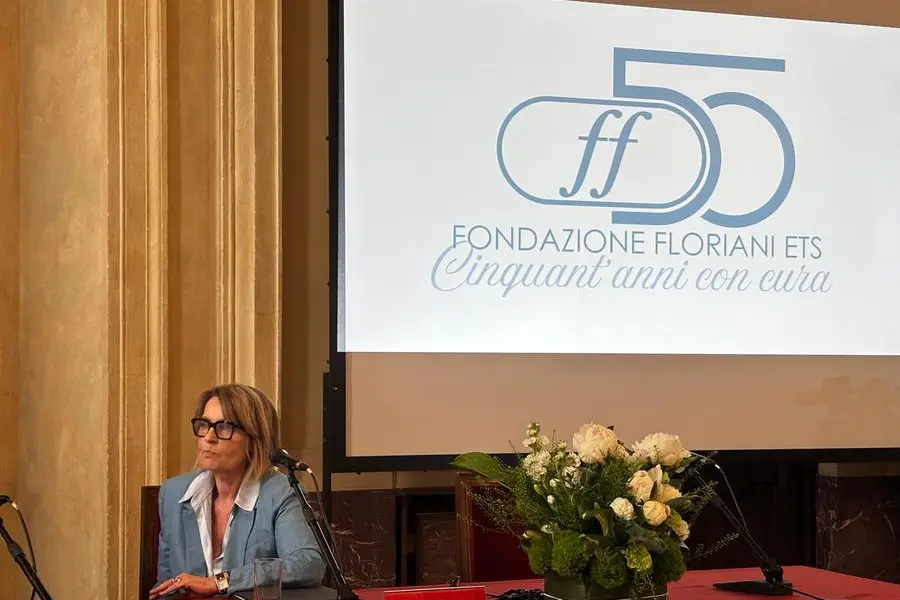
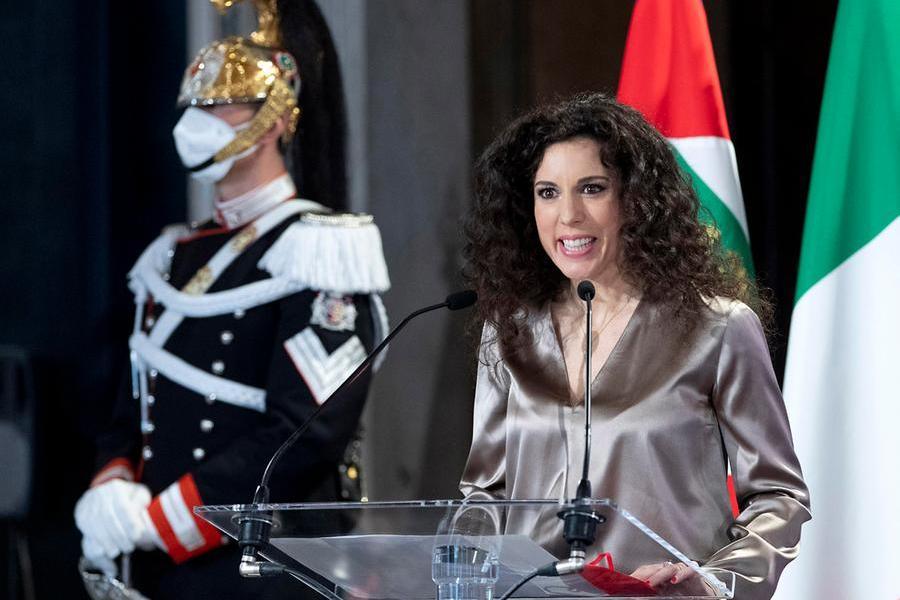
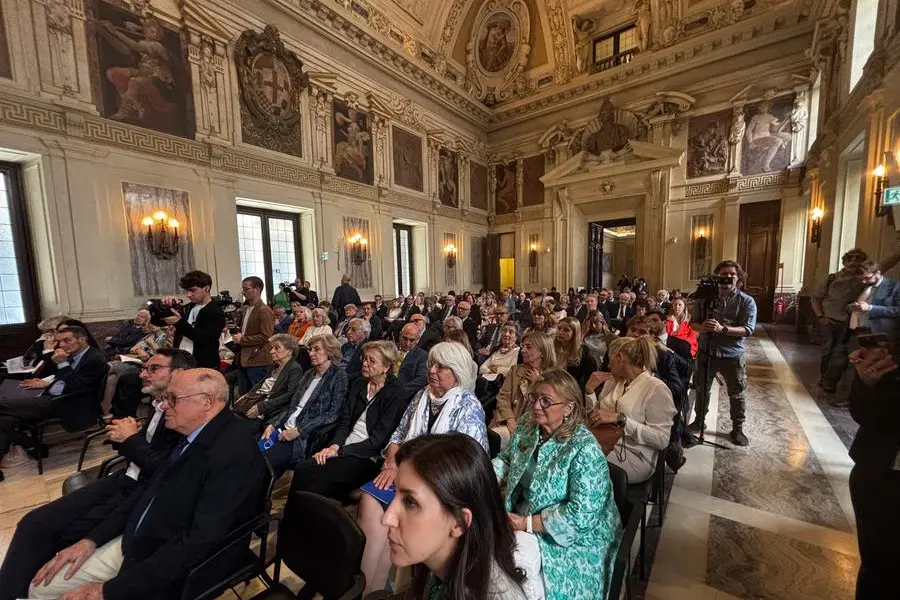
Fifty years later, in Alessi room in Palazzo Marino, the institutional heart of Milan, the city that more than any other has been able to make solidarity a civil vocationthe Floriani Foundation celebrated its half century. One hundred thousand Lombards accompanied. A model that has become state law. An idea transformed into law. And a still open question about what it means, in a country that is aging faster than ever, to really take care of those who will not recover.
The engineer and the taboo
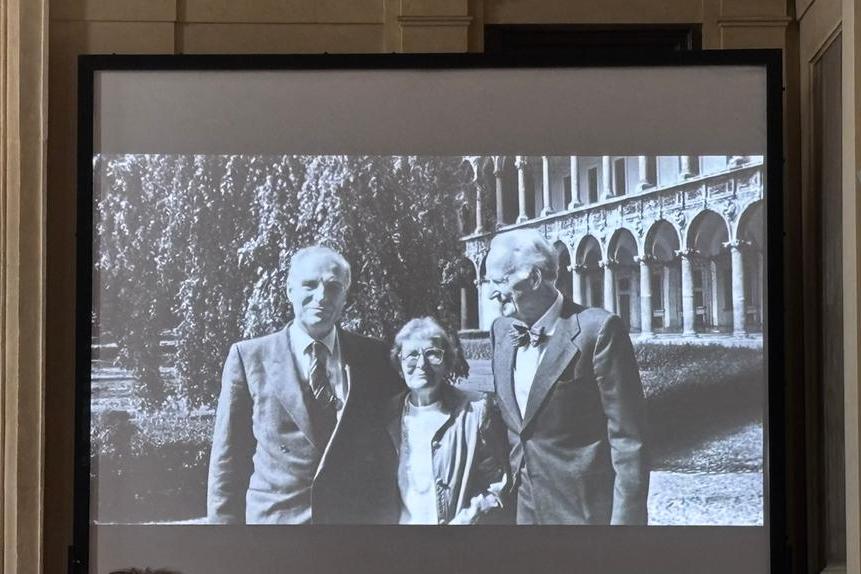
The history of the Floriani Foundation begins with a vision and a meeting. Virgilio Floriani, successful engineer, self-made man of the Lombard bourgeoisie, son of a small Venetian province transplanted to the moral capital of Italy, had built his fortune in the field of telecommunications. But he was a man who knew how to look beyond profit. When he saw his brother wasting away in a path of relentless suffering, without comfort, without adequate tools, he decided that the first two billion lire of his entrepreneurial life had to go back to the city. Not as an act of charity, but as an act of justice.
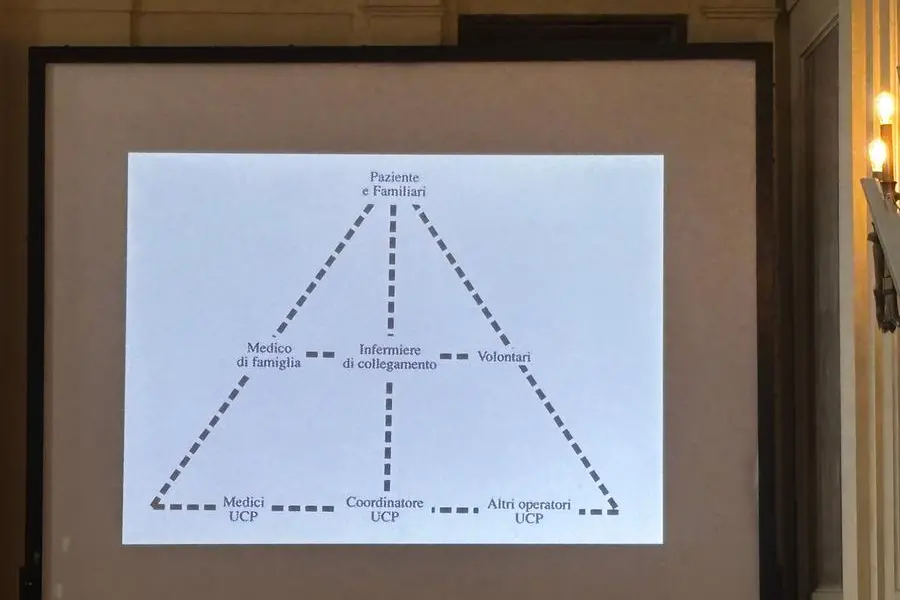
«He wanted all cancer patients to be able to have an answer, and that this answer was not guaranteed only to the economically privileged», Alessi recalled yesterday in the room Francesca Crippa Florianivice-president of the Foundation and a point of reference for solidarity in Milan for decades. It was the meeting with Umberto Veronesi, and through him with Vittorio Ventafridda, the most influential anesthesiologist of his generation, the one who had begun to treat the phantom limb pain of war veterans in a basement of the National Cancer Institute, that gave scientific form to Virgilio Floriani’s human intuition. From their meeting the so-called Floriani Model was born: a multidisciplinary approach to incurable disease, which placed not the pathology but the person at the centre, not healing but quality of life, not abandonment but accompaniment.
It was 1976. In Italy the word “cancer” was still a taboo. Palliative care did not exist as a recognized category. Yet, in that basement in Via Venezian, something was moving that would change Italian medicine.
The Floriani Model becomes law
It took time. It took the stubbornness of a foundation that did not want to be a service company, but a cultural machine, as Francesca Crippa Floriani proudly reiterated yesterday. It took conferences, battles, alliances with the academic world. It took years for Italy to understand that from the idea that “there is nothing to be done” we could and should have moved on to the idea that there is a lot to do, even when we cannot heal: we can alleviate, we can accompany, we can stay.
The result of all this was the law 38 of 2010the legislation on palliative care and pain therapy which is still considered one of the most advanced in Europe, and which, not coincidentally, bears the imprints of the Floriani Model. Lombardy is today among the regions that best fulfill the essential levels of assistance in this field: a record that is not accidental, but the fruit of fifty years of dark, methodical, generous work.
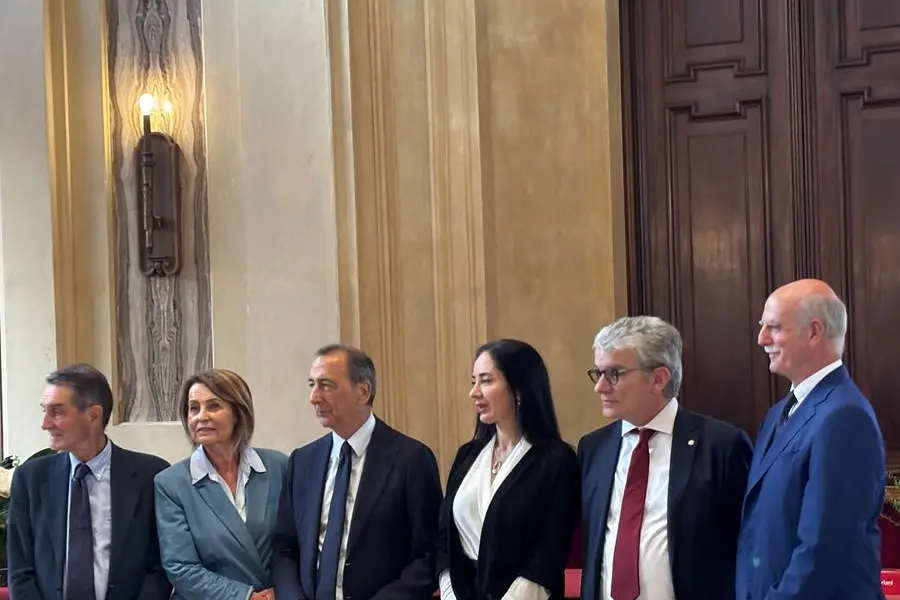
To the message of President of the Republic Sergio Mattarellawho underlined how the Foundation contributes to making the right to health enshrined in the Constitution effective, in compliance with the principles of equality and solidarity, was added the voice of the Mayor of Milan Giuseppe Sala, who drew a parallel with the figure of Saint Ambrose, bishop of the poor and the suburbs. The Foundation’s solidarity effort, Sala said, belongs to the deepest identity of this city: its ability to look at those who suffer without looking the other way, even in the most difficult moments, even when the public debate seems to have forgotten about that vocation.
The strength of fragility
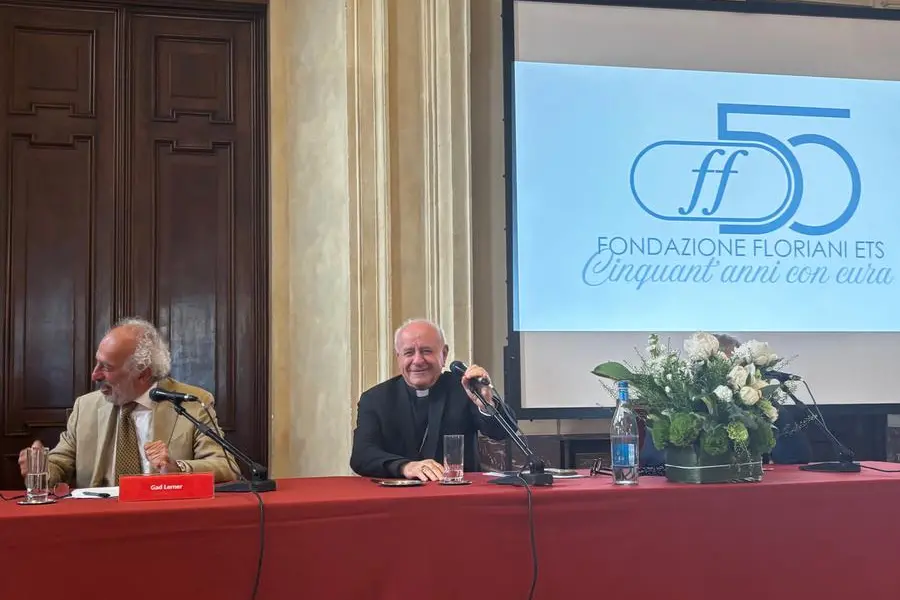
But it is Vincenzo Pagliapresident emeritus of the Pontifical Academy for Life, to give the celebration its broadest and most demanding scope. His reflection on palliative care is not consolatory: it is philosophical, almost provocative in the best sense of the term. Fragility, Paglia insisted, is not a defect of human existence: it is its fundamental condition. And precisely fragility, when it is not removed or hidden but welcomed, becomes an opportunity to rediscover bonds, to reinvent solidarity, to challenge that “throwaway culture” that Pope Francis never ceased to denounce. Accompaniment, pain control, psychological and spiritual support for families, presence until the last moment: all this is medicine, all this is care, all this is humanity. Paglia recalls the Gospel of the Good Samaritanreturns to the ancient heart of the Christian message: no one should be left “half dead” on the side of the road.
«Palliative care puts the person and their quality of life at the center when the disease is no longer curable», reiterated Francesca Crippa Floriani. «Through pain and symptom control, listening, emotional support and multidisciplinary care of the family as well, people are helped to live every phase of the disease with dignity, respecting everyone’s needs, values and choices.”
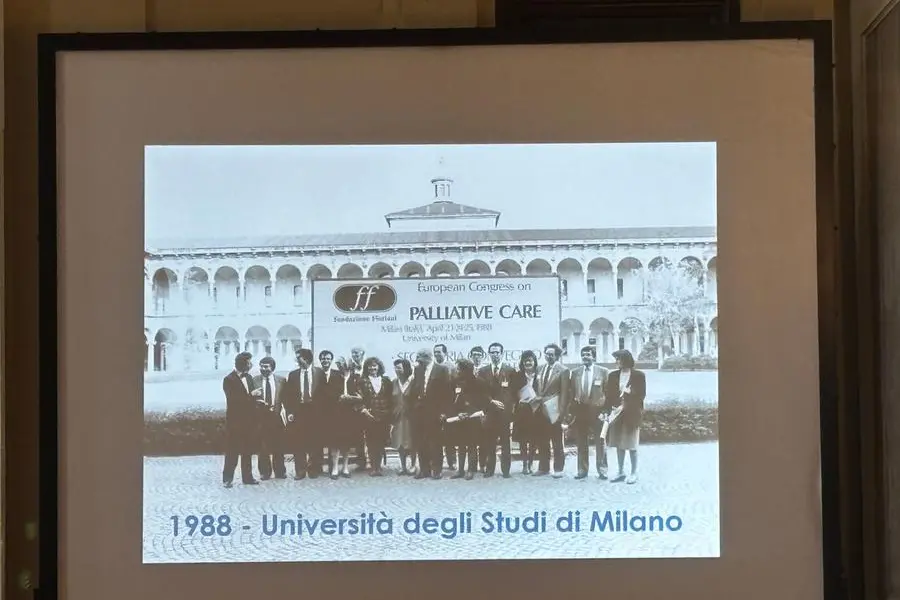
The University of Milan – which established the first Italian chair of palliative medicine in collaboration with the National Cancer Institute – and the Bicocca University brought their presence and academic commitment to Palazzo Marino yesterday. It is a significant signal: palliative care is no longer an appendage of medicine, but a discipline with its scientific status, its protocols, its full university dignity.
Milan, solidarity laboratory
Milan is not only the geographical place where the Floriani Foundation was born. It is the laboratory in which the model proved possible, in the collaboration between public, private and third sectors which is the most difficult – and most fruitful – equation of Italian civil life. «Milan has a rather unique characteristic in the national scenario», said Mayor Sala. In a season in which much seems lost, in which solidarity risks becoming rhetoric or, worse, a commodity, the history of the Floriani Foundation is a story against the grain: it says that you can build something that lasts, something that grows, something that really changes things.
One hundred thousand people accompanied. They are not an abstract number. There are a hundred thousand stories of pain that have met, in the moment of greatest vulnerability, someone who has not looked the other way. There is inside, in that figure, a measure of the civilization of a community.
The passing of the baton
At the end of her long and moving account of the history of the Foundation, Francesca Crippa Floriani announced the passing of her role as vice president to Maddalena Floriani: a young mother of three children, graduated in philosophy, with a master’s degree in healthcare organization and one in social enterprises. A handover which is also a bet on the future, the future of a Foundation which in the next fifty years will have to face profoundly different challenges, in a country where people will live longer and more often in solitude.
The challenge, as underlined by the councilor for social services of the Municipality of Milan, it no longer concerns only the end of life in the strict sense, but all the fragilities that aging brings with it: isolation, loss of self-sufficiency, lack of family networks. The palliative care of the future will have to be a cultural approach, a way of understanding medicine and society that takes care of fragility in all its forms, not just in the last phase of life. Not hospices versus hospitals, not pain versus healing: but a medicine that recognizes the whole person and does not give up on their vulnerability.

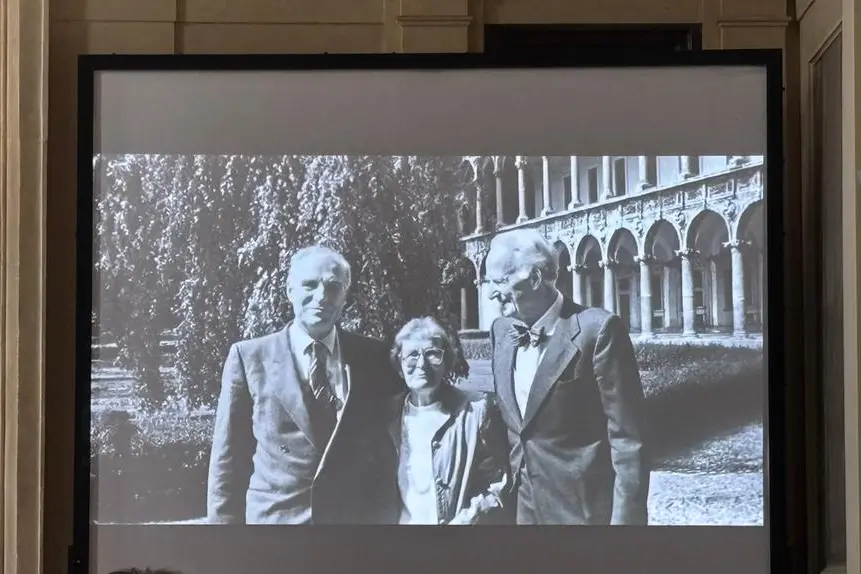
This is what Virgilio Floriani had intuited seventy years ago. This is what the Foundation, in fifty years of daily and obstinate work, has demonstrated to be not only necessary but possible. The Alessi room in Palazzo Marino yesterday afternoon was full of that awareness. And of that hope, soberof those who know that the road is still long, but at least they know the direction.