




There’s a way to say goodbye to someone you love underwater: dive. It’s not a metaphor. That’s what the students decided to do Distav, the Department of Earth, Environmental and Life Sciences of the University of Genoaafter the news that shattered their world: the teacher Monica Montefalcone he will never return to the chair again. He will not return with his voice capable of making the sea something alive, urgent, almost moral. Muriel Oddenino, thirty-one years old, a research fellow, who was acting as guardian of that sea, will not return. The idea is as simple as it is powerful: descend together, in silence, to the Christ of the Abyss, the bronze statue positioned seventeen meters deep in the bay of San Fruttuoso, between Camogli and Portofino, within the Portofino protected marine natural area. Stop there, beneath the surface of the world, and pray.
There are gestures that no press release can do. This is one of those.

The tragedy in Vaanu Atoll
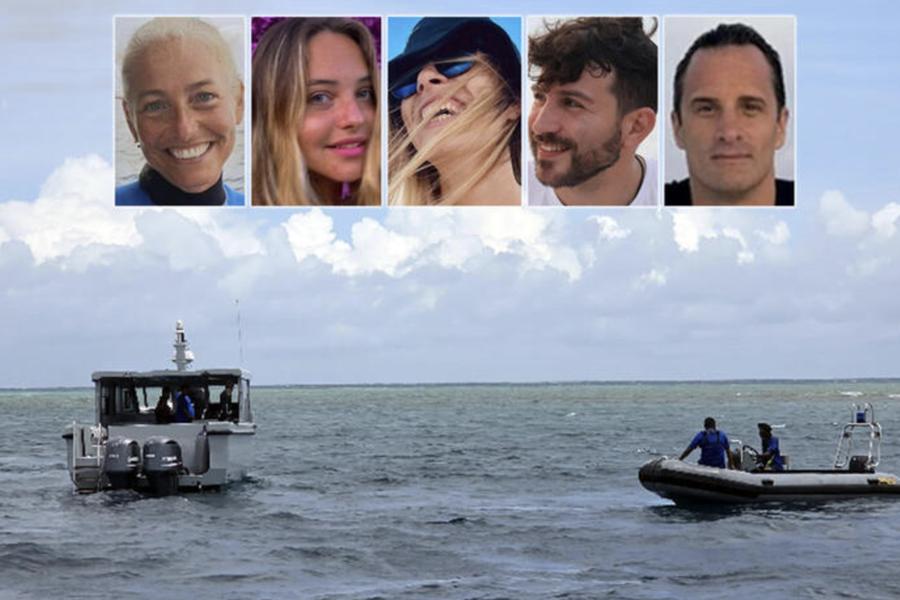
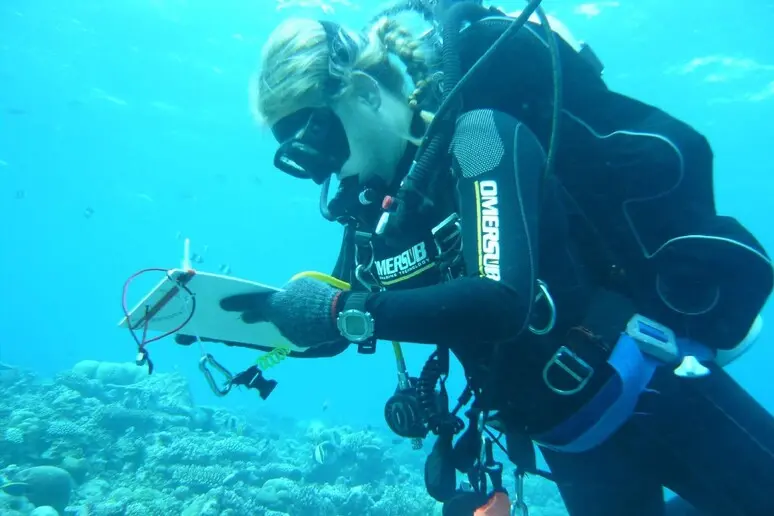
It was May seventeenth when fromVaavu atoll, Maldivesthe news arrived. Five people had not emerged from a cave dive sixty meters deep. Among them, Monica Montefalconefifty-one years old, associate professor in Ecology at the University of Genoa, marine biologist, also a well-known face in scientific popularization television programs. Her daughter with her Giorgia Sommacalwho would have turned twenty-three on June 1st, a student at the Genoese university. And then Muriel Oddeninooriginally from Poirino in the Turin area, young researcher at the Distav. And again Federico Gualtieria recent graduate from Omegna, in Piedmont, who had discussed his thesis on Maldivian biodiversity and had left with the professor as a natural continuation of that path. The fifth was Gianluca Benedettiforty-four years old, captain of the expedition.
The scientific cruise was organized by the Piedmontese tour operator Albatros Top Boat. Montefalcone was its coordinator: a two-week mission to monitor the marine environment, study corals, measure the consequences of climate change on one of the most vulnerable ecosystems on the planet. They had arrived in the Maldivian archipelago on Sunday. A few days later, at the bottom of a cave, the sea held them back.
The Rome Prosecutor’s Office has opened a case for manslaughter against unknown persons. The Flying Squad of Genoa, delegated by the Roman magistrates, acquired the emails exchanged between Montefalcone and the Distav, the “mission document” with the search addresses, PCs and telephones of the group members. At the center of the investigation, a question still open: were the dives part of the activities authorized by the scientific mission? The Genoese university has specified since the first day that “the scuba diving activity was in no way part of the activities foreseen by the scientific mission, but was carried out in a personal capacity“. A colleague, the forensic entomologist Stefano Vanin, told investigators that he and Montefalcone had requested authorization from the University, and that individual contracts had been stipulated with Albatros, as private individuals. The bodies of Monica Montefalcone, Giorgia Sommacal, Muriel Oddenino and Federico Gualtieri returned to Italy on the twenty-third of May, landing in Malpensa on a Turkish Airlines flight from Istanbul. The autopsies are scheduled to begin from May 25th to Gallarate.
Christ, bronze, memory
The Christ of the Abyss was positioned in 1954 on the seabed of the bay of San Fruttuoso, the work of the sculptor Guido Galletti. It is a bronze statue made by melting medals, bells and ship parts – materials that already carried stories of the sea, of departures and failed returns. The arms raised towards the surface seem to reach towards the light from below, or perhaps hold it back from above. Over time it has become the universal symbol of those who have lost their lives at sea and of those who have consecrated their existence to the sea. Every year divers from all over the world descend there, to seventeen metres, for silence and memory.
That the Distav students thought about that place, that statue, those seventeen meters deep, says something precise about the nature of mourning when you lose a teacher. The ceremony on the surface is not enough. We need to go down to where she was, where the sea tightens around the body and the orientation fades, where the light changes color and the breath is measured. You have to stay in that world that she loved, that she taught to love, that she went to study until the last day of her life. Praying there, in front of a bronze Christ looking up, is perhaps the most coherent act one could imagine.

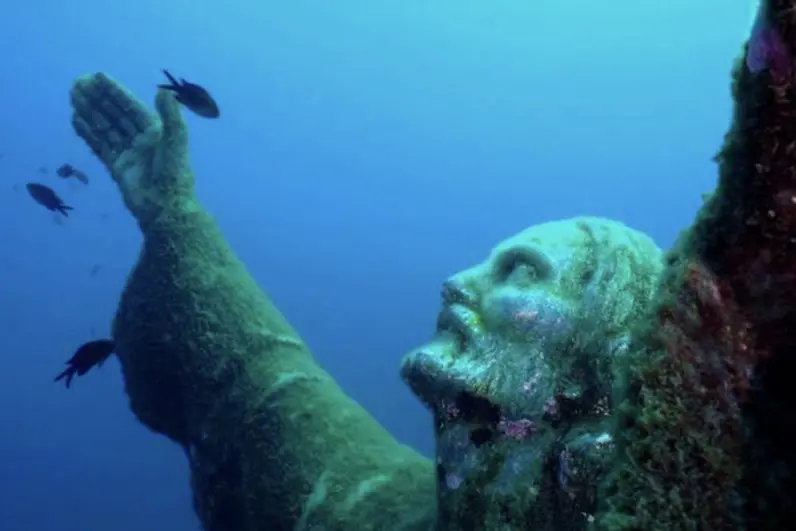
The date of the immersion will be set once the funeral has taken place. There isn’t a day yet, but there is already an intention: to go down together, in silence, and return. Like Monica and Muriel couldn’t do.
There are ways of remembering that are, in themselves, already a form of continuity. Taking your mourning underwater, letting it breathe with tanks, looking at it through the mask, is something that Monica Montefalcone would have understood immediately. She who had made the sea into a scientific discipline and an emotional language. She who had brought her daughter, her students, her colleagues there. She who wanted to measure climate change in the corals of the Maldives because she believed that knowledge had to be useful, that the beauty of the marine world was worth the effort to defend it.
The immersion in the Christ of the Abyss will not be reported in any scientific journal. It will not produce data, it will not feed databases. It will be useful for something else: to make disciples the continuers not only of the method, but of the gaze. Of that ability to look at the marine ecosystem as one looks at something precious and fragile, something that can disappear if you don’t take care of it, study it and love it with tenacity. This is what the students of Distav are saying, descending to seventeen meters in the bay of Silence in Camogli: that they will not forget. And they will continue.
Below the surface, next to the bronze Christ with his arms stretched towards the unseen sky, their pain will become something that the sea can transform: something salty and alive.