



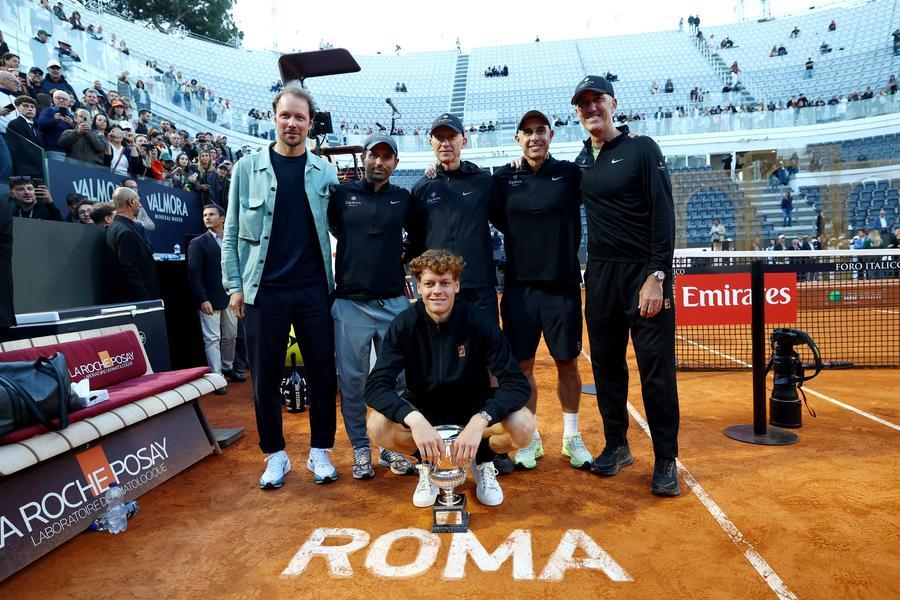
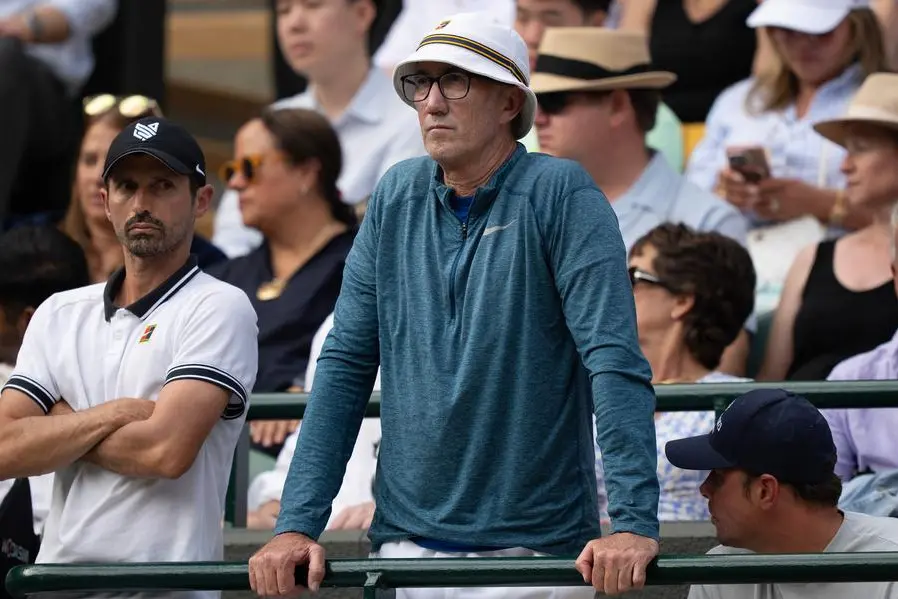
«We had to do things a little differently arriving in Rome (after consecutive victories in Indian Wells, Miami, Monte Carlo and Madrid ed.). We gave Jannik Sinner three full days of rest immediately after the final in Madrid, which is very rare for him because he hates taking days off from tennis. So we basically had to force him to put his rackets away, not think about playing tennis, and let his body rest for three days. We played a little golf, we played a little soccer, we really tried to rest our minds and bodies. And when he returned to the pitch he was ready to go again.”

These words spoken by Darren Cahill in the Vlog of Jannik Sinner’s official YouTube channel give an idea of the professional approach of the number one in the world of world tennis and also of how pioneering in some ways it is to train a number one who reaches “unknown” levels, that is, who finds himself in psycho-physical situations never experienced before by others: the case of Sinner after Madrid.

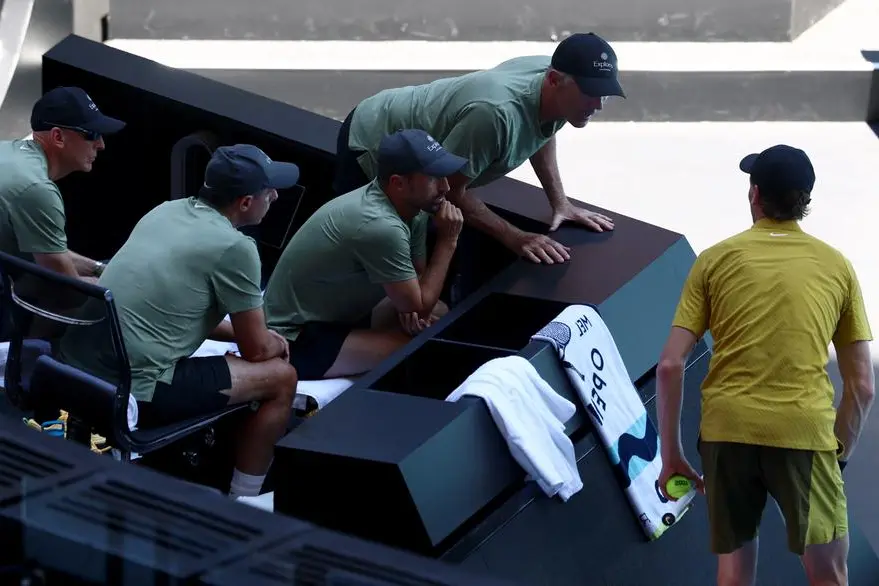
A relationship of great trust is needed in a staff to work at these levels, the young champion who is everyone’s employer also needs to know how to listen and trust, not just impose himself. Other times Jannik underlined that this relationship arises from the fact that those who are part of the staff know how to tell the truth even if it is uncomfortablenot just to please. Condescension is never a good deal for those at the top, not even if they are the number one in an individual sport.

Jannik Sinner was asked about Cahil’s words on the relationship with work and rest in the press conference following the debut match in Paris, won in a peremptory manner against the Frenchman Clement Tabur. The champion responded wisely: «Rest is part of training, the trail is important to finish well in as many tournaments as possible. I love being on the pitch, I understood the importance of going to the gym, where before I found it more difficult to train, even mentally. Now I know what I have to do, it’s part of the game, I’m understanding too. I’m happy when I don’t touch the racket, but I repeat, this is part of 24 years. You have to have a minimum amount of guidance, I am aware of how much it has grown, it is important to have this team, without them I wouldn’t be here”
This too is progress. In 2022, in his tennis a geological era ago, to Icon Magazine, Sinner told about himself: «I left the court destroyed, but full of energy and proud thanks to the lessons I had learned from the masters. I have a very strong sense of duty, that my parents taught me. My mother was a waitress and my father was a chef in a shelter. They both founded their profession on iron discipline and educated me to complete what I start with commitment and honesty. Whatever the cost.”
Evidently this “Habsburg” sense of duty, which makes Sinner continually say “I have to improve” even after all the records, is still one of the figures of his continuity and the progress that the champion himself believes cannot be said to have been achieved until 27-28 years of age, the age of athletic maturity. But Darren Cahill is also there to give the right ones
times, not only to the body but also to the mind. Otherwise it explodes. If you think about it, it also applies to studying: it is not by spending nights studying books, keeping yourself awake for coffee, and then sleeping in class the next day that you build an effective university path. There is a moment on the eve of an exam when you need the wisdom to close the books so that the adrenaline doesn’t turn into panic.
THE ROLE OF DARREN CAHILL
A year ago after the final lost by Sinner in Paris in five sets with three match points the super coach explained his role like this: «it is not that of main coach. The main coach is Simone (Vagnozzi, ed.). My role is linked to match planning, the technical and emotional aspects and I would say that this last part is the one I follow the most.”
On many occasions Cahill’s calm certainly served to lighten rather than add. Each champion is different in this and the best coach is the one who knows how to shape himself in the individual relationship by adhering to the champion’s needs, which can be different for each one: at the cost of taking the racket away from the hands of those who risk exceeding out of a sense of duty and ending up in overtraining, to the point of physical and mental short circuit or vice versa, of grabbing by the ears those who, even at the top, tend to evade. But this is not the case, Sinner works well with Cahill because he has the authority to lighten the inflexible internal coach who, without him or without someone of his ilk, would order Sinner to never leave the lines of the pitch.