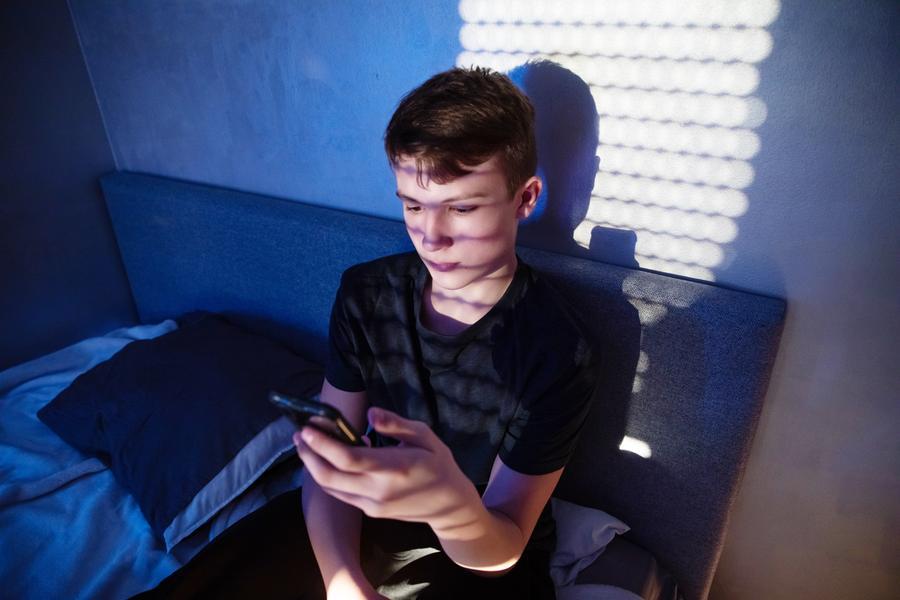




In recent days a letter written by has appeared Giuseppe laveniaa psychotherapist father, at the address of Giorgia Meloni. The theme is linked to the use of social networks by very young people, a problem that has been around for some time and which some countries around the world have decided to resolve by banning access to under 16. Lavenia expressly says she is in favor of denying children the use of social mediabut believes that this is not enough if it is not accompanied by a school course that allows you to truly understand the dynamics that are created once you open a profile on Instagram or TikTok. Ivano Zoppi, General Secretary of the Carolina Foundation commented on the psychotherapist’s letter thus:
«The letter that Giuseppe Lavenia addressed to the Prime Minister collects and relaunches a work that many in Italy have been carrying out for years on the relationship between minors and digital. However, the hope of regulating pre-adolescents’ access to social media must be accompanied by a serious and continuous educational process.
A law that simply draws a boundary, without building skills, in fact, risks being circumvented the next day. It goes for cars, it goes for drugs, it goes for every powerful tool handed over to a life in the making. Educating digitally is not a curricular addition, but a gesture of justice towards a generation of digital citizens to whom we have handed over hyperbolic tools without setting a route, a limit, a reference for their navigation”.
One of the main issues raised by the psychotherapist is linked to parents who, in his opinion, cannot be marginal in introducing their child to social networks. For dads, establishing a digital license, which can be obtained by completing the course, is absolutely necessary. Even for Ivano Zoppi and the Carolina Foundation, the role played by parents is fundamental to give the minor the necessary tools to not be subjugated by the dynamics of the algorithm.
«Lavenia talks about “digital orphans” and hits the nail on the head. A lack which, however, is also and above all relational. This is where the reflection comes in that, as the Carolina Foundation, we have always carried out, in continuity with the educational work of our communities: the “connection” between users is one thing, the “connection” between individuals is another. The connection is technical, always available, aseptic. The connection is human, complex, mutual. A teenager can have a thousand connections and zero connections. This is where isolation disguised as sociality arises, a phenomenon that we encounter every day at the offices of the Carolina Foundation and at the Re.TE Center. So the ban is welcome, the license is welcome. But alongside this we need a policy that invests in the presence of adults, in the training of parents, in a new concept of oratories and supervised educational spaces, in schools that give themselves time to listen, beyond the study programmes. The law will try to put a barrier, and it will be a good thing. No rule, however, will be able to replace the gaze of a father who puts down the phone at dinner, the patience of a mother who awaits the response of a child without respecting his silence, the effort of an educator who stays when it would be more convenient to leave. True digital literacy begins there: not where we just learn to use a device, but when we rediscover the value of the person behind the screen. Because a face, a smile, an authentic emotion cannot be “shaked off” like any viral content. It remains in the most precious memory, that of the heart.”
The hope of those who know the dangers associated with digital identity is that something will finally change, that we will no longer have to hear stories of cyberbullying, kids who fall into depression because of social media or people who develop a strong addiction from a system as captivating as it is petty. But instead these stories are replaced by positive examples of kids who master the instrument and make it do what it should: connect people, without affecting their lives.