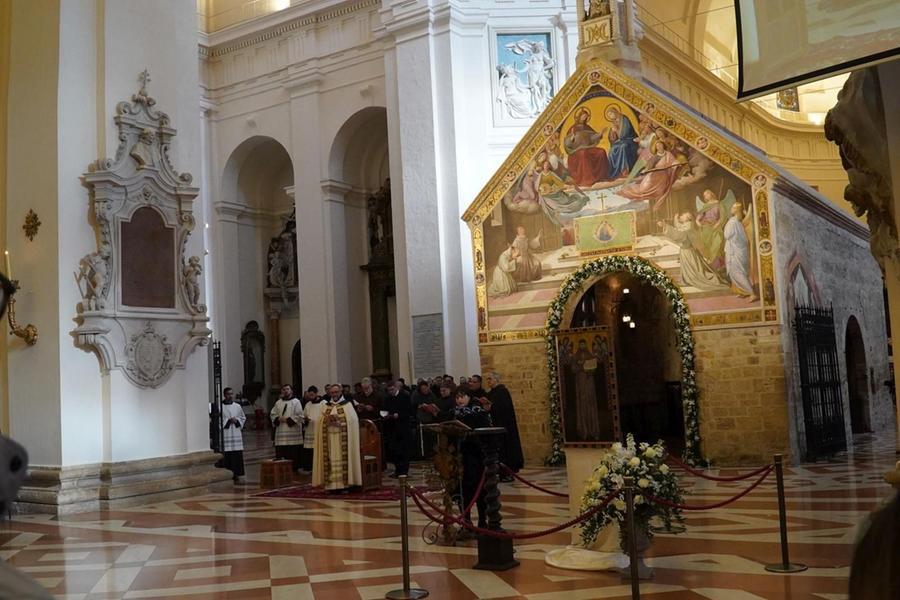



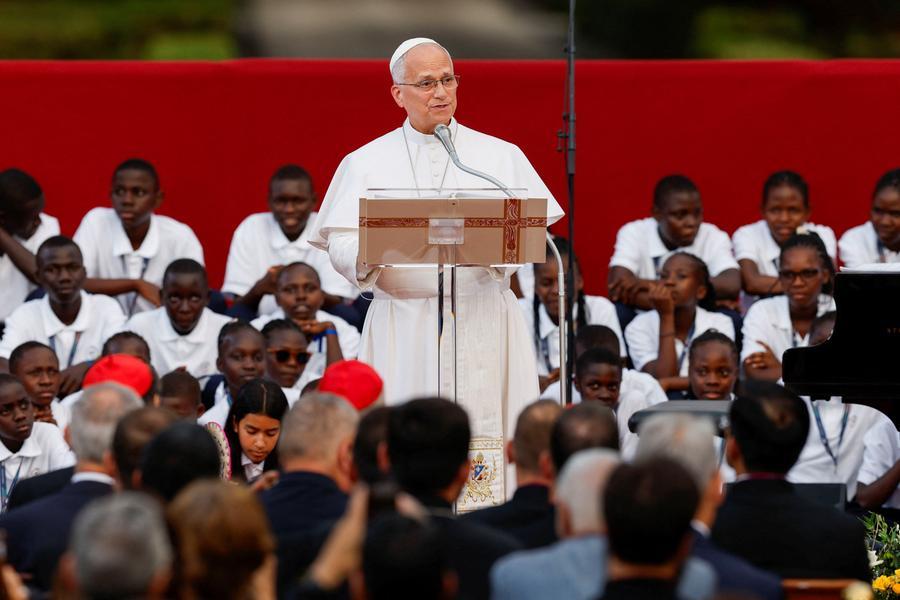


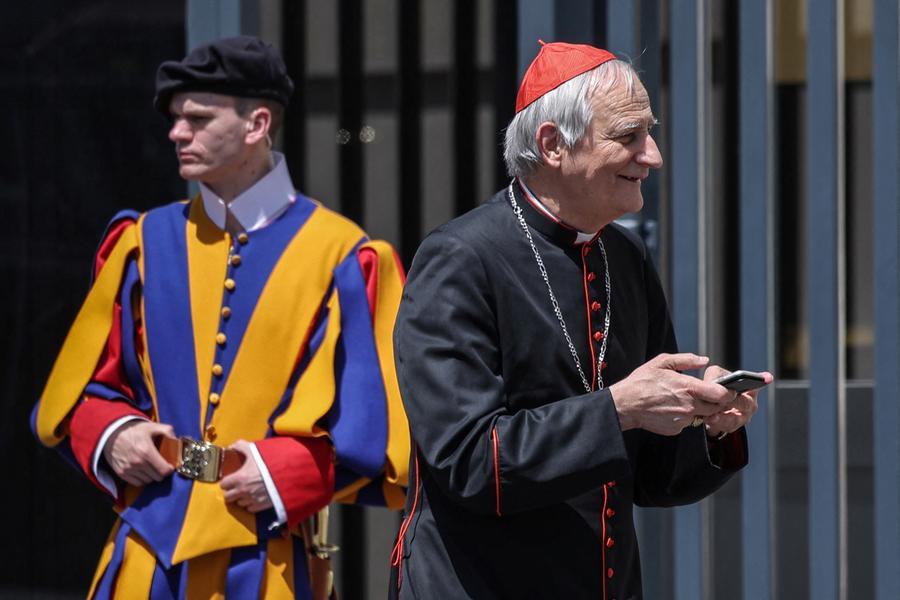
It begins with thanks «for the gift of the Encyclical “Magnifica humanitas”». Cardinal Matteo Zuppi, president of the CEI, opens the work of the 82nd Assembly of Italian bishops, which is held from 25 to 28 May, speaking of the text just presented as «a beacon of light in the darkness of thought and violence that we sometimes feel around us. This document, in the wake of the Social Doctrine of the Church, encourages us in our commitment to making the common good, the universal destination of goods, subsidiarity, solidarity and social justice the reference principles in an era in which the great challenge is to protect humanity. Indeed, “it may happen that means increase without humanity growing to the same extent: one ‘has more’ but one does not ‘are more’, and the person risks being evaluated above all on the basis of the services he guarantees”».
“Peace be with you”, recalled the cardinal, recalling Jesus’ greeting to the disciples closed in the cenacle. These are the only words that count, also made by Pope Leo XIV.
That reiterates the Pontiff’s words on the “madness of war” inviting communities to be “houses of unarmed peace”.
Thanking the Pope “for his meekness, which is the true strength the world needs”, the cardinal recalled that today the international context is “a field hospital with fewer defenses”. He denounced the arms race with “world military spending reaching $2,887 billion in 2025 with an increase of almost 3%. Europe has increased investments in weapons by 14%.” A «vortex of rearmament»accompanied by a «violent culture of power», while instead we need to stop and say, as Leo did during the peace vigil: «Enough with the idolatry of oneself and of money! Enough with the show of force!». And, again, repeating Leone’s words, he insisted: «Rearmament that increases tensions and insecurity and depletes investments in education and health should not be called “defense”.
In his speech the cardinal explained that “war has changed, increasingly longer and technological” and reread the words of the encyclical: “There is no algorithm that can make it morally acceptable”. Hence the appeal to “sit at the tables of dialogue and mediation, not at the tables where rearmament is planned”. The president of the CEI also recalled the “It’s more beautiful together” project, which will bring hundreds of Ukrainian children to Italy, and urged non-violence education, especially in summer activities.
He spoke of “poor work” and the lack of a home – «There is no dignified life and there is no family without a home» -, of the exploitation that nails the weakest, of the loneliness that kills. He recalled Sako Bakari, the 35-year-old laborer killed in Taranto «by a group of very young people, victim of gratuitous violence that leaves one astonished. Behind this fact, as well as others, there is a profound educational poverty, as also recalled by the Archbishop of Taranto, Monsignor Ciro Miniero: when significant relationships, points of reference, sense of limits are missing, when one does not receive disinterested love and is unable to give meaning to one’s life, one seeks strength in the group, in domination over the other, in the humiliation of the weakest. And if for years public language fuels suspicion and contempt towards those who are foreign or vulnerable, then violence finds even more fertile ground. The problem of young people today is not just what they do, but what they dream – or are no longer able to dream.” But there is also the example of “Davide, 22 years old, stabbed last October in Milan by some very young people, mostly minors”. The guy wrote that he doesn’t hate. «I should do it, I think, it would be logical, but I can’t… If you are truly able to put yourself in the shoes of those who you should hate, perhaps you are also able to forgive. And some part inside me that didn’t want it to end like this did. I have compassion for them and I embrace them.”
And then, within this framework, the Church. Zuppi was clear: no “fences”, no “den-identity”. The Christian community cannot afford the luxury of crying over the past or transforming itself into a sect of the pure. “The CEI must not be the sum of opinions,” he said. And he showed the way: proclamation of the Gospel and human promotion are “a single breath”.
“The Church gains nothing by longing for the time when it seemed more listened to,” he said. Instead “He gains everything if he speaks to the heart again, with understandable words and credible lives.” He recalled the need to build communities in a “country of solitudes”, with attention to young people, the elderly, the poor and justice. And, regarding the referendum on justice, he hoped for “a serious, non-ideological dialogue, with a constituent spirit”.
A strong image came from the memory of the Friuli earthquake (1976): in Venzone the stones of the Cathedral were numbered one by one to be relocated. “You cannot rebuild by erasing the past,” said the cardinal. «There is a future that is born only if we know how to preserve what came before us». The Church in Italy must also do the same and safeguard the Council, the Synodal Path and widespread charity.
Zuppi closed his long speech with the image of the Last Supper: «The Risen One continues to be among us even when the doors are closed, and tells us: “Peace be with you”. From this peace we start again.” A peace that is not a private consolation, but a mission. And true strength, according to the bishops, does not lie in weapons, but in “serving life”.