




«May the Spirit of the Risen One save us from the evil of war, which is won not by a superpower, but by the Omnipotence of love, and free humanity from misery, which is redeemed not by an incalculable wealth, but by an inexhaustible gift». It is the strong invocation of Pope Leo XIV in the homily of the Pentecost Mass, which concludes the Easter season, celebrated in St. Peter’s Basilica in front of a crowd of faithful from all over the world.

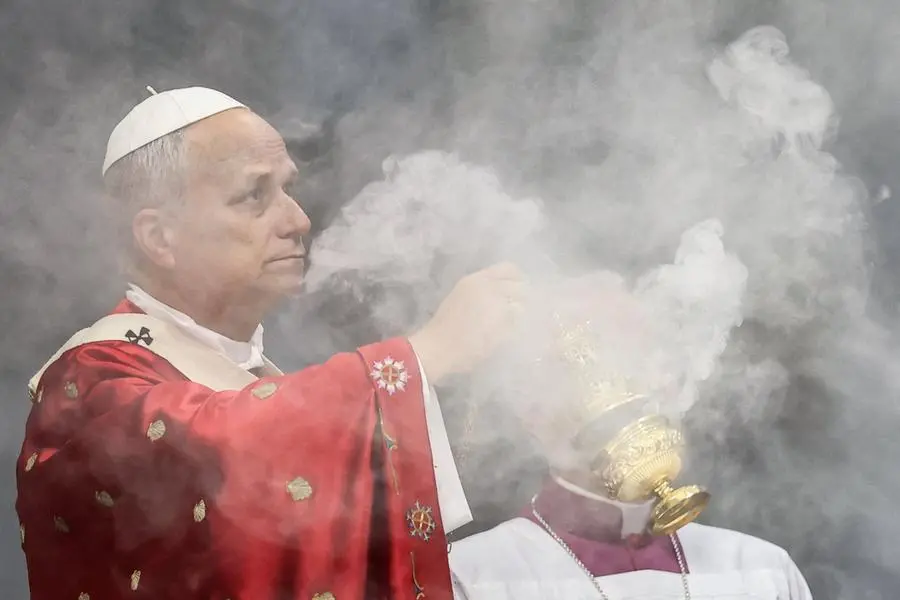
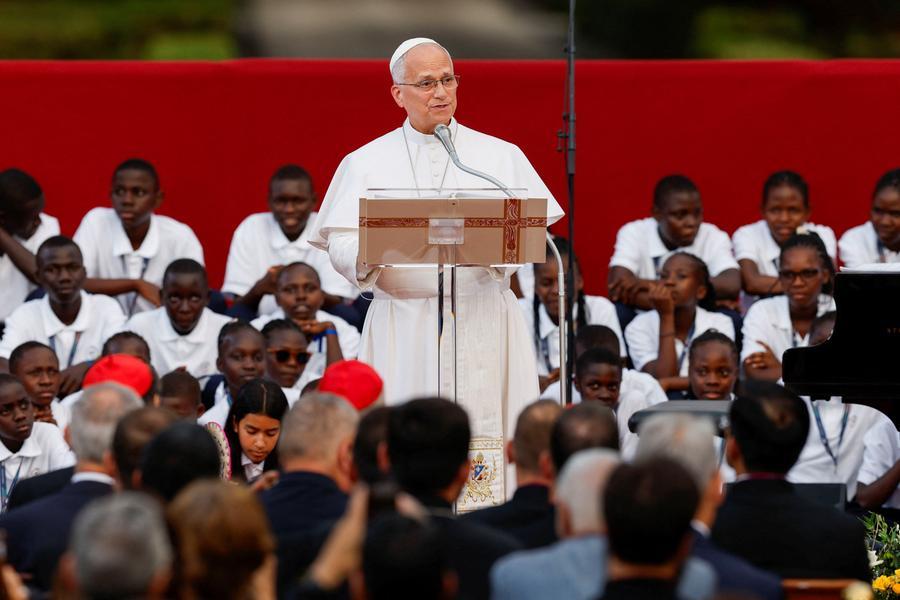
The Pope during the celebration at St. Peter’s
(REUTERS)
The cenacle transformed by the Spirit
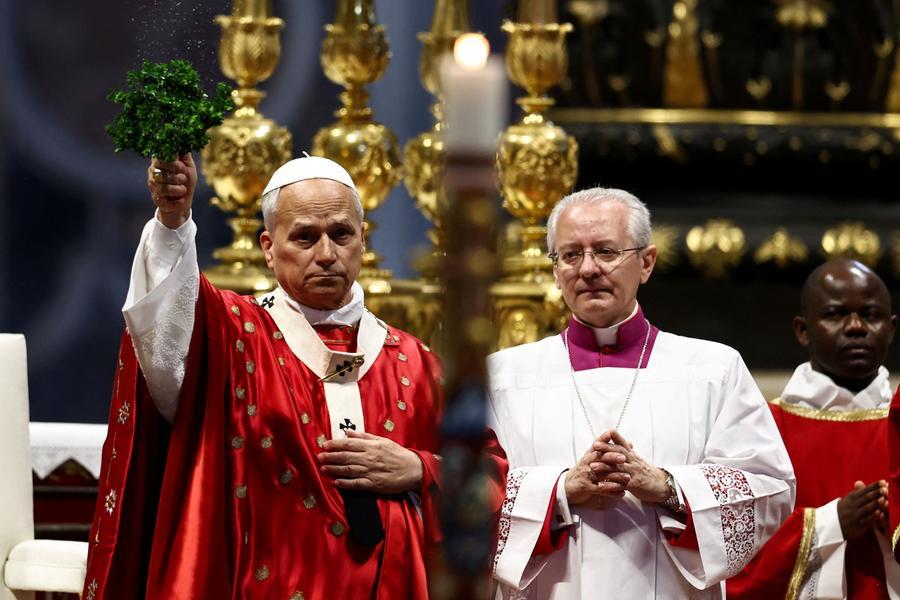
The sprinkling with holy water, incense, the Latin singing of the Sequence with the hymn to the Holy Spirit, the liturgical gestures. Every element of the liturgy suggests the solemnity of this feast which, together with Easter and Christmas, is the most important for Christians.
Commenting on the passage from the Gospel of John, the Pope brought the faithful back to the “first day of the week”, when the Risen One appears to the apostles closed in the cenacle out of fear: “Jesus enters despite the closed doors and fills them with joy”, recalled Leo XIV, underlining how Christ shows his wounds: “These signs of passion, more eloquent than any speech, are transfigured: He who was dead lives forever.”
It is precisely in that place marked by fear that the Church is born: «The place of the dinner and of the betrayal is transformed and, from the tomb of the Apostles, becomes the womb of resurrection for the whole Church».
Peace comes from forgiveness
The heart of the Easter announcement, explained the Pontiff, is the peace that flows from the Risen One: «The Spirit of the Risen One is the Spirit of peace». A peace that is not the simple absence of conflict, but the fruit of forgiveness.
“This peace comes from forgiveness and leads us to forgiveness”, stated the Pope, recalling the words of Jesus: “Those whose sins you forgive, they will be forgiven”. In this gesture, he added, Christ entrusts to the Church “a divine work”, that of universal reconciliation, because, he added, Pentecost is “fulfilled as the celebration of the New Covenant, that is, of the alliance between God and all the peoples of the earth. While the roar from heaven, the wind and the tongues of fire in the cenacle recall the ancient signs of Sinai, the holy law of God is written in the hearts, engraved by the Spirit with characters of love in the flesh of Christ and in his body, which is the Church. This law is the code of peace: it is the double commandment of love, which the Spirit reminds us of with every heartbeat. With our heart we can therefore invoke: “Veni Sancte Spiritus”, because He has already been given to us. We can desire it, because it has already been promised to us. We can welcome him, because he himself is a sweet guest of the soul.”

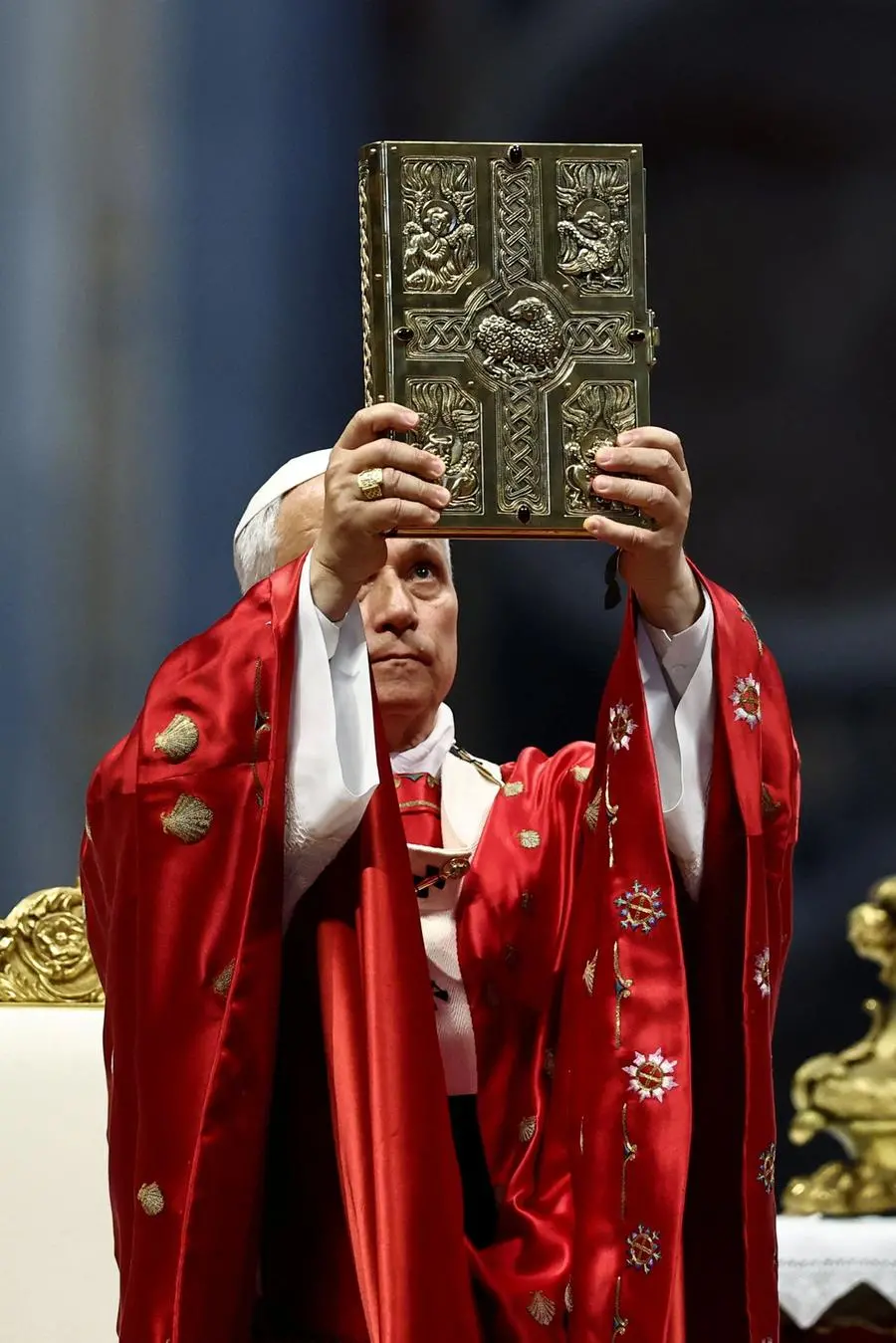
A moment of celebration
(REUTERS)
The Spirit and the mission of the Church
The Pontiff focused on the meaning and purposes of the mission of the Church which was born at Pentecost precisely with the outpouring of the Holy Spirit on the apostles who finally found the courage to leave the Cenacle and announce the Gospel. «The Spirit of the Risen One is the Spirit of the mission», said Pope Leo, recalling Christ’s mandate: “As the Father has sent me, I also send you.”
The Church, he explained, is not a spectator but a protagonist of the Gospel: “With the strength of the Spirit, our announcement becomes full of joy and hope.” A mission born from faith: «The first work of the Holy Spirit in us is the faith with which we profess: Jesus is Lord!».
The truth that unites and defends the Church
In a world marked by divisions and conflicts, the Pope recalled the role of the Spirit as an element of authentic renewal and a principle of unity: «The Spirit of the Risen One is the “Spirit of truth”». For this reason, he said, the Paraclete “always promotes unity in truth”. And he warned the Christian community: the Spirit defends us “from factionalism, from hypocrisies, from fashions that cloud the light of the Gospel”, because the truth does not divide but builds communion. And he underlined how, «on the one hand – we see it well – there are changes that do not renew the world, but age it through errors and violence. On the other hand, however, the Holy Spirit illuminates minds and inspires new energies of life in hearts. This is how he transfigures history, opening it to salvation, that is, to the gift that the one Lord shares with everyone. The mission of the Church attests to this sharing, transforming the confusion of the world into communion with God and among us.”
The Spirit of the Risen One, the Pope then recalled, «it is not poured out once and then that’s it, but constantly. Just as the Eucharist is the living presence of Christ, who always nourishes us, so the Holy Spirit imprints his character on us in Baptism, which makes us Christians; in Confirmation, which makes us witnesses; in the Order, which constitutes ministers and pastors for the people of God. In every Sacrament He is dator munerumsource of holiness that multiplies gifts and charisms in prayer, in works of mercy, in the study of the word of God. As the Apostle teaches: “To each one is given a particular manifestation of the Spirit for the common good”.
A Pentecost for the wounded world
The Pope concluded his reflection with a strong appeal for peace and justice. He prayed that the Holy Spirit “save us from the evil of war”, a war that cannot be won “by a superpower, but by the Omnipotence of love”. And again: “We pray that he will free humanity from poverty, which is redeemed not by incalculable wealth, but by an inexhaustible gift.” A plea entrusted to Mary, “Mother of the Church”, to accompany the journey of believers in peace and hope.