



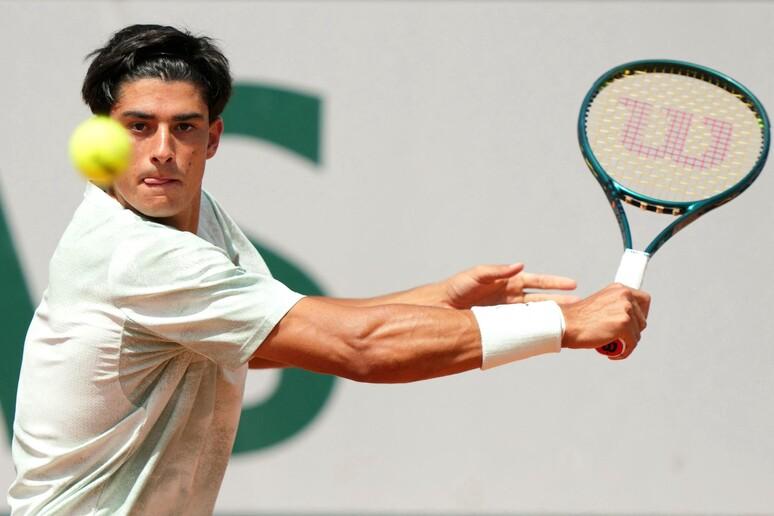
There is a moment, in big tennis tournaments, when the noise changes. It is no longer just the sharp hit of the ball on the racket or the elegant buzz of the French public. It’s something more subtle. A different attention. The spectators stop looking at the board and start looking at the boy. It happens when they understand that perhaps, in front of them, a story is being born.
In Paris, on the arid red of the fields scorched by the already summery May solo of Roland Garros, that moment has arrived for Federico Cinà. Nineteen years old, Palermo in his eyes and an almost ancient calm about him, like some Southern boys who grew up between the sea and silence. On his absolute debut in a Slam he beat Reilly Opelkasomeone who seems to have come out of another sport: two meters and eleven, the serve of an American bomber and the look of someone who can sweep you away in three quarters of an hour. Instead the Italian boy remained there. Point after point. Without haste. Without shaking too much. As if he had already crossed certain fields in his dreams.

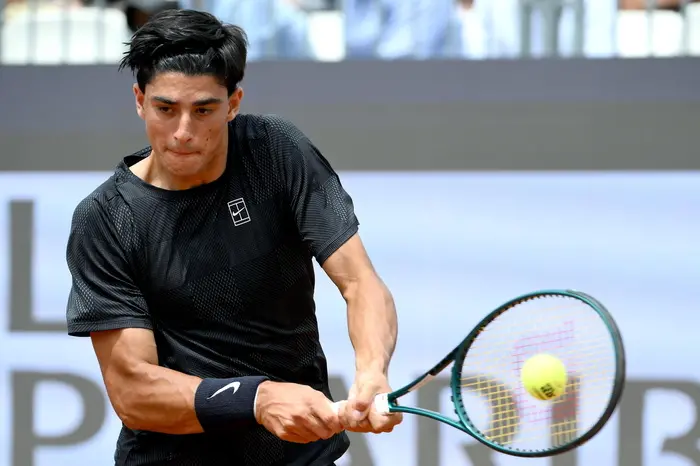
And then one might think that tennis, every now and then, still knows how to tell simple stories. A boy, a family, a worn racket, a stern but present father. You don’t need big special effects.
Federico Cinà is a son of art, of course. But in the most tiring sense of the term. Her father Francesco was not just a tennis coach: he was the coach who accompanied Roberta Vinci to the final of the 2015 US Openthe all-Italian match against Flavia Pennetta which still today seems like a story to be passed down to tennis children. Someone who knows the circuit well. Who knows how much talent is lost along the way, how many promises evaporate between premature sponsors and wrong characters.
This is why Federico grew up within an almost artisanal discipline. No shortcuts. Training, education, patience. His father taught him probably the most difficult thing in contemporary sport: staying normal when everyone starts telling you that you are special.
Those who follow him tell of a polite, serious boy, not inclined to the social grimaces of modern tennis. Someone who listens a lot. Who speaks little. And perhaps also for this reason, within an Italian movement now accustomed to permanent euphoria, it is so striking. It does not give the impression of the predestined created in the laboratory. He seems rather like one of those tennis players who develop slowly, like certain good wines or certain Argentine midfielders: grinding out hours, effort and silence.

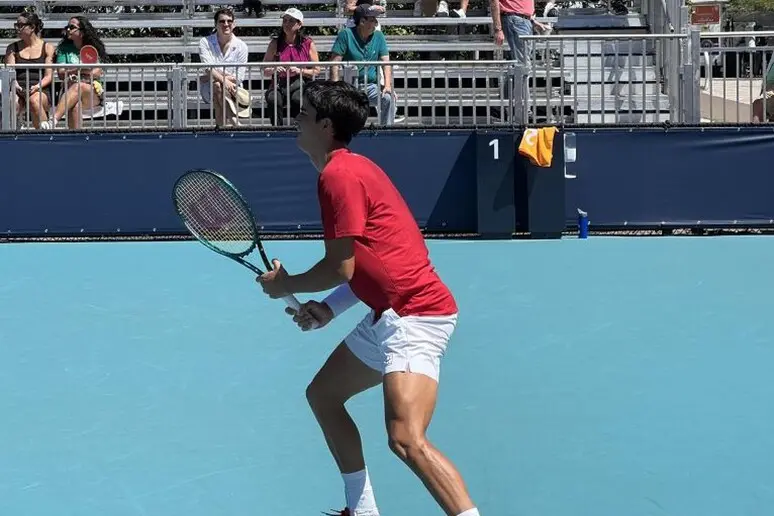
Naturally the stone guest is called Jannik Sinner. Now it happens to anyone who holds an Italian racket well before the age of twenty. Every record becomes a “yes, but Sinner…”. Federico also immediately found himself in this game of statistical mirrors: the youngest Italian to win at Roland Garros after the South Tyrolean, the second precocious here, the third there. But perhaps the point is not to continually chase comparisons. Sinner already belongs to another dimension, almost mythological. Cinà still has to build its own tennis lexicon, its own emotional geography.
Yet something can be glimpsed. Not so much in the shots, which were also notable, but in the times. In the way he is on the pitch. In the ability not to rush. Extremely rare quality in an era that devours kids as soon as they begin to shine. Federico, on the other hand, seems to have good slowness, almost Sicilian. As if he knew that tennis not only rewards those who arrive early, but those who resist.
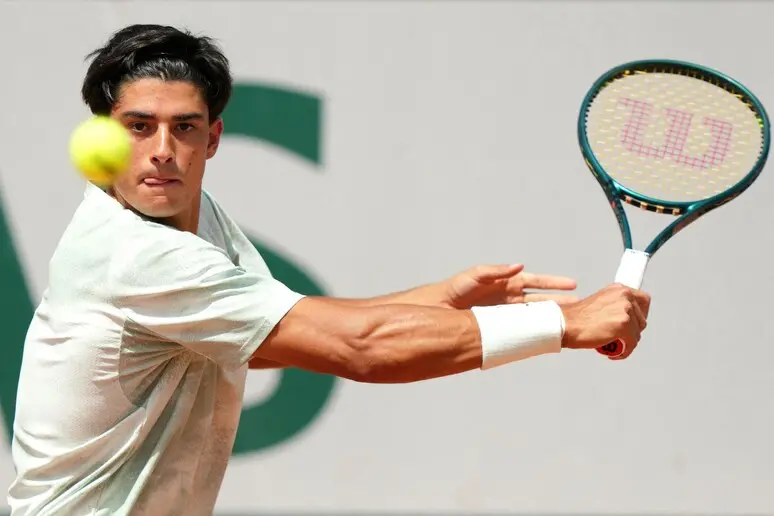
In Palermo they still call him “Pallino”, a nickname from normal childhood. And it’s nice to imagine that under the Philippe-Chatrier, among the French applause and the curious looks of the experts, there was still a little bit of that little boy there. The one who just obtained his first Slam victory, he dedicates it to his grandfather, who passed away a few months earlier. The one who perhaps left the club with the bag that was too big on his shoulders and his father on the sidelines correcting a movement, a support, a posture.
Italian tennis is experiencing an unrepeatable season. First Berrettini, now Sinner, Musetti, Cobolli, Darderi, and for women Paolini and the evergreen Errani: names that now permanently inhabit the important weeks of the circuit. But every generation needs new entries, fresh faces who remember how this sport is still a journey rather than a ranking.
Federico Cinà, for now, is above all this: a journey that has just begun. With the red of Paris on the shoes, a victory to cherish and that indefinable feeling that accompanies the boys destined, if nothing else, to really try.
And perhaps the best thing is that he seems to already know: tennis is not a race against anyone. Not even against Sinner. It’s a long conversation with yourself.
Federico Cinà’s next match is scheduled for Wednesday 27 May at 11.00 against the Dutch Jesper de Jong.