




We should start with water, because everything, in this May 2026, revolves around water: the one that is missing, the one that overwhelms, the one that evaporates in a white sky of heat before even touching the ground. Italy is a country that has not yet understood how to stay within the climate that it helped to buildand the test comes every year with the same ritual violence of those who never learn.
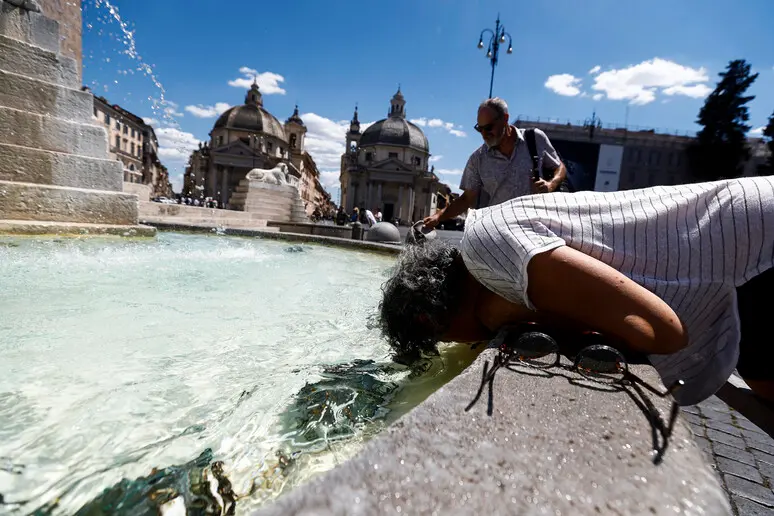
This week the thermometer touched i 34-36 degrees in much of the North and in the internal areas of the Centre. A vast anticyclone of subtropical origin has settled over the Mediterranean like a landlord convinced that he has all the rights. It is the month of May, but the Po Valley resembles the plain in July: the still air, the sky too bright, the heat rising from the asphalt like steam.

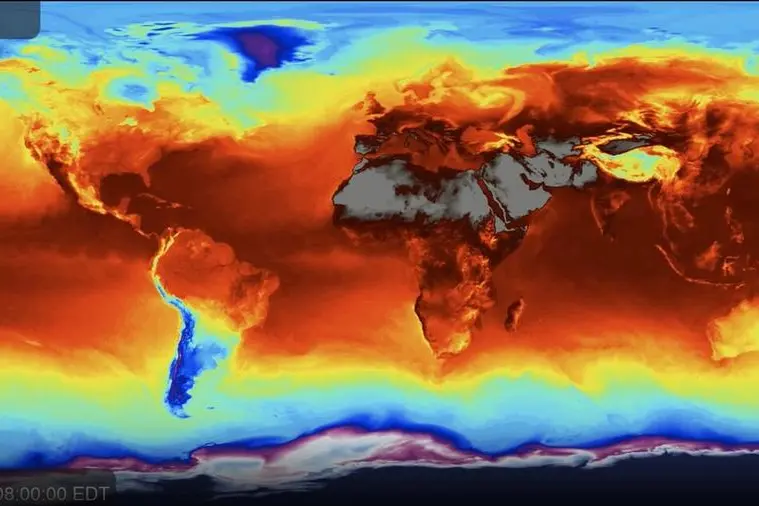
The Ministry of Health, which since 25 May it has reactivated its heat wave surveillance system for the 27 most exposed capitalsreports an orange sticker for fourteen cities for today: Bologna, Bolzano, Brescia, Florence, Frosinone, Milan, Perugia, Rieti, Rome, Turin, Trieste, Venice, Verona and Viterbo. Tomorrow, Thursday 28 May, Bologna, Florence, Rome and Turin will rise to the red label. First heat wave of 2026, and we’re still in spring.
The map of the disaster: Milan, Genoa and Rome the most affected
The Istat 2026 annual report photographs with the cold precision of numbers what citizens experience first-hand every day: in the regional capitals, between 1971 and 2023, both annual average temperatures and climate anomalies grew. Since 1997 almost every year has recorded values above the norm, with only two exceptions: 2005 and 2010.
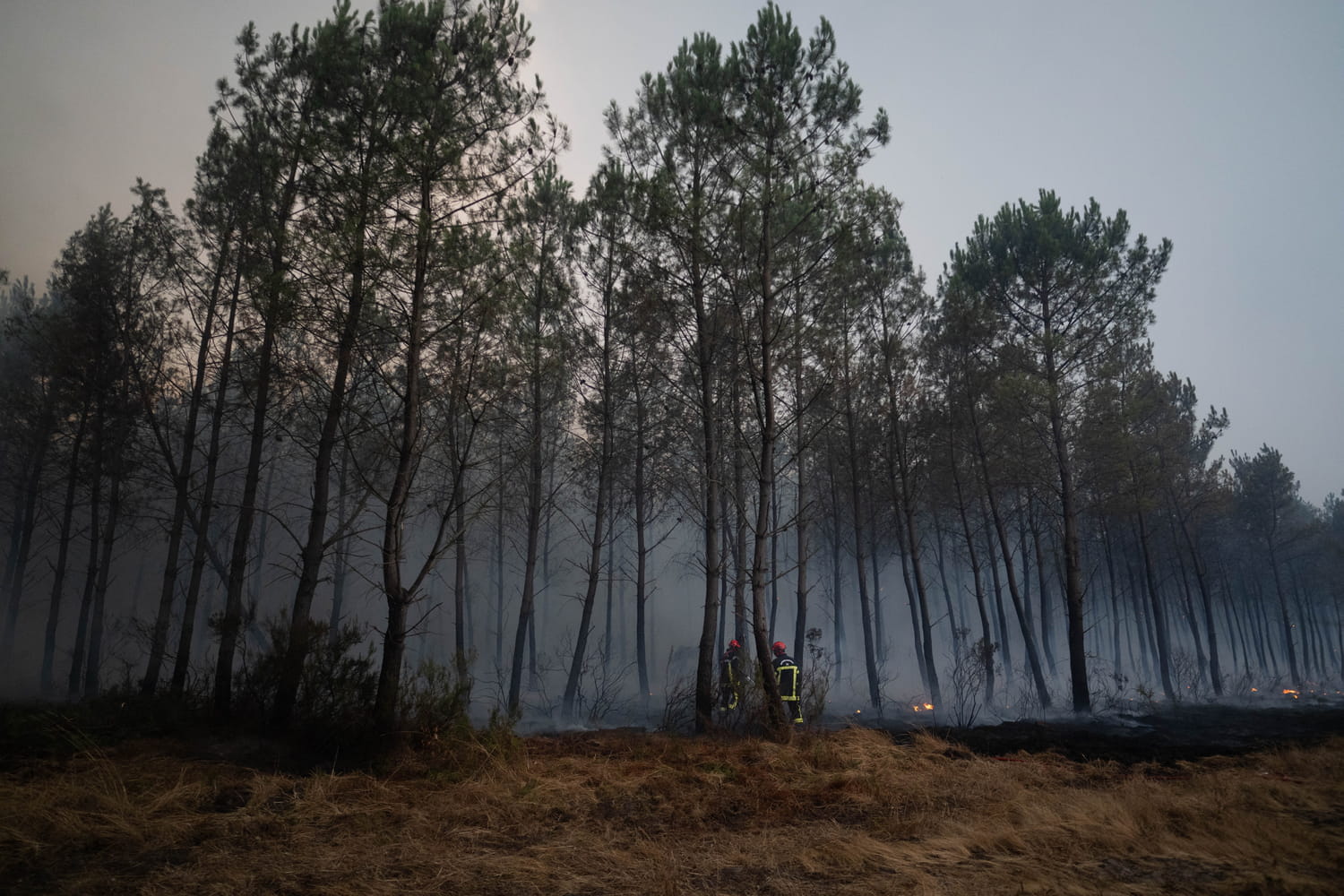
Among the cities most affected by extreme meteorological events in the period 2000-2024, Milan, Genoa and Rome emerge, leading the ranking of episodes of flooding, flooding and storms. In many cases the intense rains lasted for over twenty-four consecutive hours, jeopardizing sewer systems designed in another climatic erawhen the sky was more predictable and less angry.

The paradox is all here: the same cities that are flooded by storms then suffer from drought in the following months. 2022 was among the driest years in recent history. The period 2020-2023 saw a strong overall reduction in annual rainfall, while the South – Sardinia, Sicily and Puglia in the lead – faces a structural water crisis that no summer storm can resolve. The water is there, but it arrives in the wrong place, at the wrong timewith an intensity that the earth cannot absorb.
2025, black year: 376 extreme events
If 2026 promises to be a record year, 2025 has already written difficult pages. According to Legambiente, last year Italy recorded 376 extreme meteorological episodes, a figure that confirms 2025 as one of the most critical years of the last decade, second only to the negative record of 2023. Among the most frequent events: flooding, river flooding and damage from gusts of wind. Phenomena linked to exceptional temperatures, landslides caused by intense rain and widespread bad weather are on the rise.
The most affected regions in 2025 were Lombardy, Sicily and Tuscany. The most tormented provinces: Genoa, Messina and Turin. Legambiente data updated to 26 May 2026 already report 82 extreme events in the first five months of the year alone, in line with the data from the beginning of 2024. In other words: the pace is not slowing down, rather it is consolidating.

The European climate service Copernicus warns that summer 2026 could present positive anomalies of one or two degrees compared to historical references over much of the continent, with even more irregular distribution of precipitation. The North of Italy, in recent days, is recording a thermal anomaly of 8-9 degrees above the averages of the end of May. As if someone had flipped the calendar two months ahead without telling anyone.
In Southern cities the relationship with water is even more contradictory. The large winter and spring rains, when they arrive, are not captured by efficient infrastructure; water networks lose on average 40% of the water introduced (ISTAT data) before it even reaches users. Palermo, Bari, Naples know the paradox of cities that alternate between full emergency and dry emergency in the space of weeks. The poorest neighborhoods, those without air conditioning and with homes exposed to the afternoon sun, pay the highest price.
It is in this context that a small everyday object acquires an almost symbolic value.

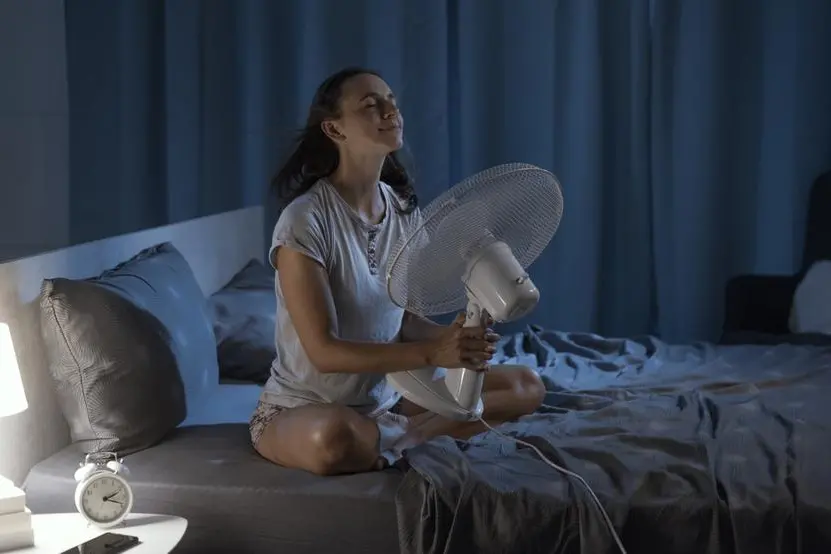
Grandparents’ fan: technology that doesn’t need updates
In the attic or cellar of almost every Italian house there is still a fan. Not one of the ultra-thin ones with an LED display and WiFi connection, but one of the solid, noisy ones, with the yellowed plastic grille and the three-prong plug from times gone by. For a few weeks, that fan has returned to its place next to the window, a silent witness to how the simplest technology can survive any fashion.
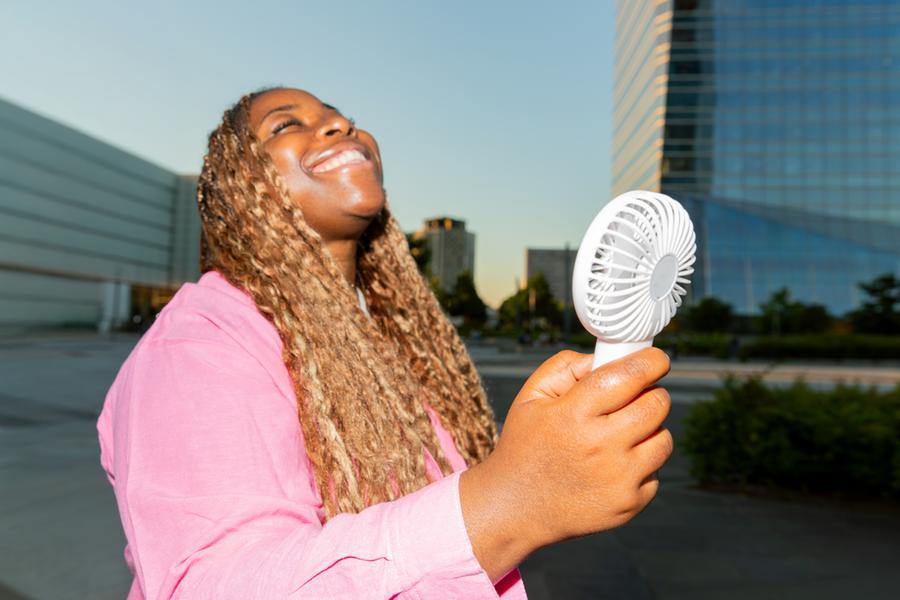
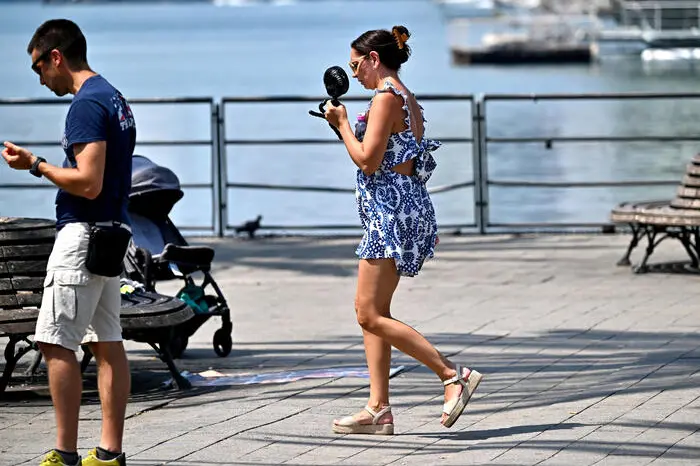
The phenomenon of USB rechargeable portable mini fans has exploded globally. It all or almost all began in 2018 in China, Japan and South Korea, during a series of exceptional heat waves that hit East Asia. Since then, the prolonged periods of heat throughout the world have transformed these small objects into a global market.
Last April Dyson presented the HushJet Mini Cool, a portable version of its famous fan without blades, to be held in the hand or hung around the neck: it costs 99 euros. Sony has launched the Reon Pocket Pro Plus, at 229 euros, a wearable thermal device that you literally carry on your person. Welcome to the era of firefighting wearables.
But the real boom, the democratic and unbranded one, happens on e-commerce platforms like Amazon and Temu, where they are found mini fans for a few euros. The technology that makes them possible — small, quiet, efficient electric motors powered by rechargeable batteries — is a byproduct of China’s industrial expansion into consumer electronics. Irony of globalization: the country that contributes significantly to global emissions also produces the fans that the rest of the world uses to survive the heat that those emissions fuel.

Artificial intelligence will not save you from the heat, on the contrary
There is something revealing in the fact that the most searched for technological product in recent weeks is not a latest generation linguistic model, nor glasses for augmented reality. It’s a cheap object that blows air. While big tech companies invest billions in data centers that consume energy like small cities — and produce heat that dissipates into the air — the concrete response to climate change still remains terribly analogous: drink water, go outside in the cool hours, take the fan out of the cellar.
It’s not cynicism. It is the observation that between the technological promise and the reality of the human body that sweats there is still an unbridgeable distance. AI can predict climate patterns with ever-increasing accuracy; can optimize the energy consumption of buildings; it can help design more resilient cities. But on that Wednesday morning with 36 degrees, in an apartment without air conditioning in Palermo or Naples, what you need is air. Moving air.
Grandpa’s old fan, which perhaps still runs on the same spindle since 1987, does not need software updates. It does not ask for personal data. Does not connect to the cloud. Works.

The structural problem remains. Italian cities were built for a climate that no longer exists. The asphalt, the covered streams, the impervious soils, the lack of urban greenery: everything combines to transform every metropolis into a heat island. A study cited by Meteo.it shows that trees reduce the heat island more than expected, but planning policies struggle to adapt.
Sewer networks and drainage systems were designed for less violent precipitation than that which falls today. And so you end up having streets flooded by rain that lasts an hour, and then drought for weeks. It is the meteorological Italy of the third millennium: extreme, irregular, unpredictable.
THE’On May 22, the United Nations General Assembly approved a historic resolution on the obligations of states in the fight against climate change, reiterating that “defending the planet is a duty”. The words are right. Times, however, are increasingly tight. And in the meantime, while waiting for the world’s greats to reach an agreement, someone will open the cellar, take out the fan, place it next to the window and settle for that little artificial breeze which, at least for tonight, makes the air a little more breathable.