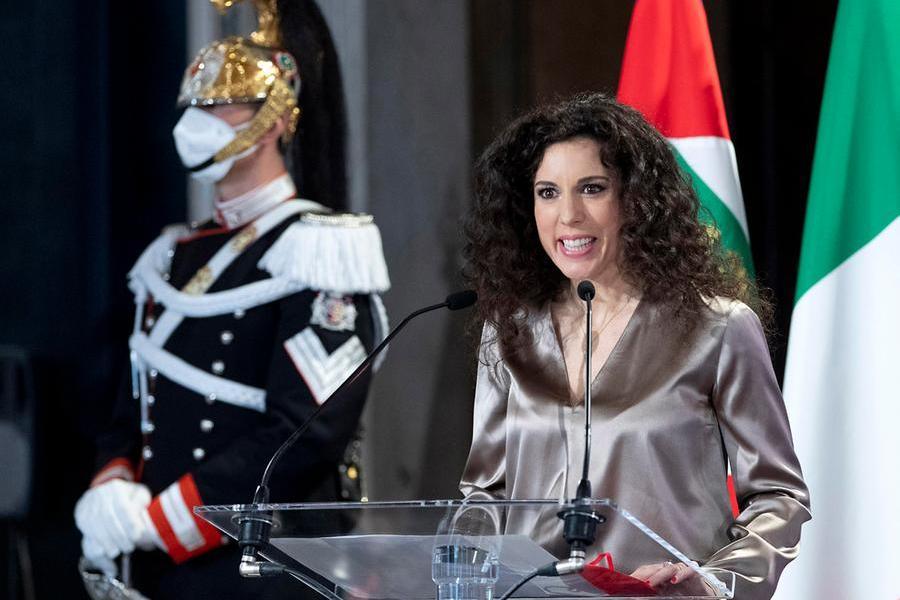





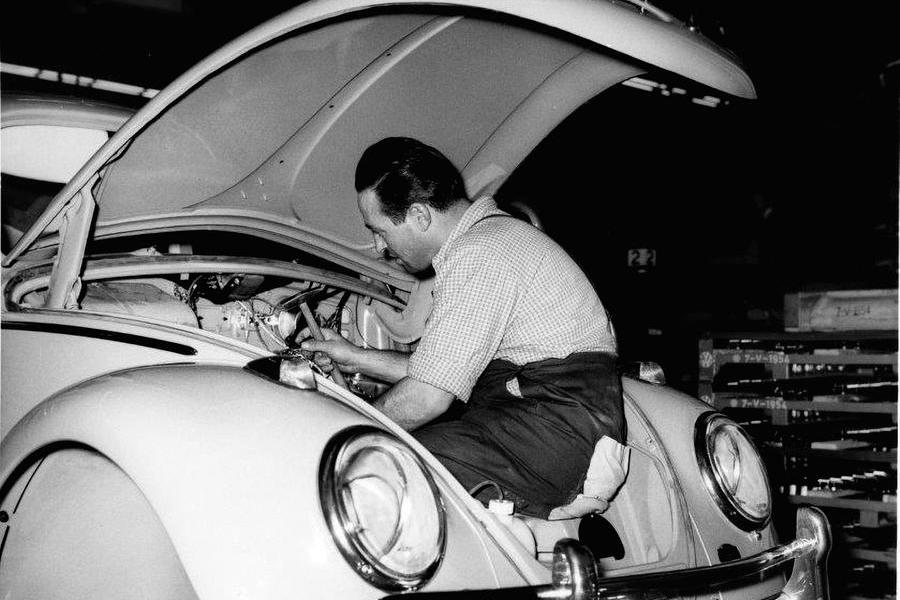
Now the Italian Daniela Cavallo is at the helm of the Volkswagen works council. But in 1961, when Lorenzo Annese became the first Italian worker hired in the largest German car factory, the situation was very different. In the documents of the time the word “emigration” could not be used, but only “labor recruitment”. And the Italians, like other foreigners, were not just workers, but Gastarbeiter, or “guest workers”. And guests, as we know, sooner or later have to leave.
The documentary An Italian Dream, in theaters from May 7, tells their storiesthose of 500 thousand compatriots who, like Lorenzo, after the bilateral agreement between Italy and Germany in 1955, left the abject poverty to find themselves alone doing very hard work in the city where the words “No entry to Italians” dominated in many places.
«I left Alberobello at the age of 21», Lorenzo recalls, «after having worked in the fields since I was a child, without owning anything». Lorenzo remembers that interminable train journey alone: the stop in Verona, where German doctors subjected him to an examination to ascertain his state of health as if he were a soldier, the sandwich with moldy cheese given to him by two nuns (“I didn’t know it was gorgonzola and I threw it away”) and finally the arrival in Bockensdorf, the village where the farm where he has to work is based. «I left with a contract in my pocket. Many others did not and found themselves in the worst places: the mines. But my work was also very heavy. I arrived there at midnight. At six in the morning the master wakes me up and orders me to go and clean the pigsty.” But most of all, loneliness weighs on him. «In Italy I had only attended evening school. So I couldn’t write letters home. I could only call, from the post office. Time to say “Good morning, how are you?” and they left two marks, almost a day’s wages.” Many times Lorenzo thought about going back. «Pride stopped me. The villagers down in Puglia would have made fun of me and I wouldn’t have tolerated it.”
Everything changes when Lorenzo meets Frida: it’s love at first sight. The two never leave each other again and little by little over many years they build with their own hands the house where they still live and from where Lorenzo speaks to us. But in the middle there was a letter that still hurts him. «At the time many Germans thought that Italians came here to get girls pregnant and leave. A few days after announcing our engagement, Frida and I received a postcard. I still remember it by heart: “You ugly prostitute, aren’t you ashamed? Don’t you have a minimum of dignity in wanting to marry an Italian?”. In the meantime, Lorenzo changed jobs and became a bricklayer. But things didn’t improve, on the contrary: «I had to carry very heavy concrete blocks all day. To reduce the risk of hurting ourselves, especially to our hands, a friend of mine and I, since we couldn’t afford protective gloves, cut the inner tubes of old car tires and made gloves that at least covered the fingers. I still have them».
But a few kilometers from there, in Wolfsburg, the Volkswagen chimneys were spitting smoke day and night and Lorenzo decides to change again. «German friends had helped me write the job application, but it had been rejected. So I snuck into the factory with a group of simple visitors and, as soon as I noticed the personnel office, I entered. I explained my situation and finally the director said: “He’s not stupid, let’s get him a medical exam and then we’ll take him.” A figure like mine was convenient because in the meantime I had learned German well and in the factory we knew that many other Italians like me would arrive.”
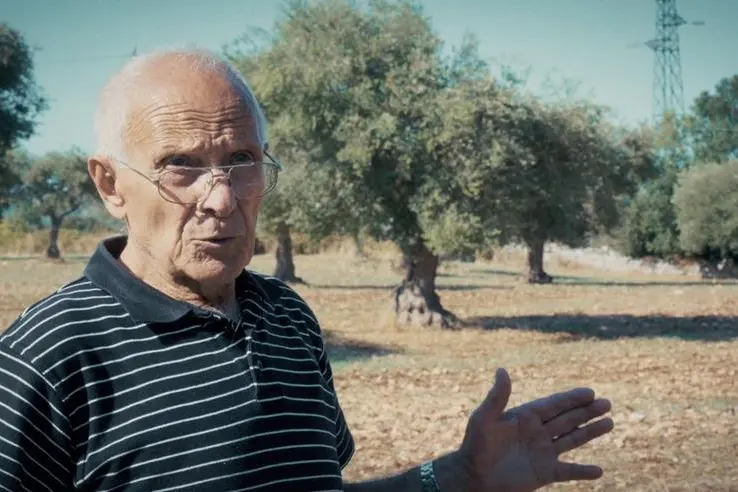
Lorenzo Annese in his Italian home in Alberobello, where he was born
After a few years in the lines, Lorenzo joins the union and from that position deals with the problems of his compatriots who live crowded together in the village (called a concentration camp) built in front of the factory, in prefabricated barracks, sleeping four in bunk beds, with wolfdogs keeping watch at night. «My brother lived there. It wasn’t easy, but at least there was hot water, a bathroom, blankets, cleaning, a change of linen: I wish we had had all these things in Southern Italy.”
The only truly great entertainment is Lupo, the football team made up of Volkswagen workers. When Lupo played, there were more spectators than those who followed Wolfsburg, renewing the eternal challenge between Italy and Germany. «I didn’t play, but I always supported the team. Once we went away to play in Senigallia.” In Alberobello, however, Lorenzo manages to return only once a year, in August. «I remember the first time I came down for Christmas. The heating on the train didn’t work. I spent all the holidays in bed with pneumonia.”
Since his retirement, the former Volkswagen worker, like many other emigrants, divides his life between his home in Germanywhere he has a daughter and grandchildren, and the one in Italy, where his brothers and sisters remained. We ask him if he feels more Italian or German: «I think in both languages. In the end I think we both gained: we Italians and Germany. This is why I cannot stand those who treat today’s immigrants badly: we, despite all the sacrifices and injustices we have suffered, have been treated better.”