




Edited by Pierpaolo Molinengo and Eugenio Arcidiacono
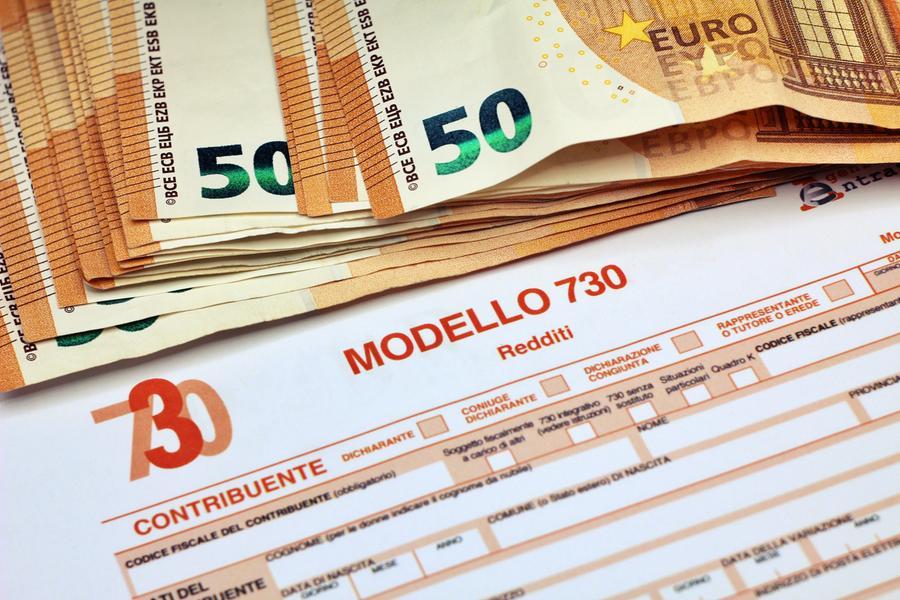
The tax return season is often experienced with apprehension, almost as if it were a remedial exam between deadlines, lost receipts and abstruse codes. What if we tried to change perspective? The 730 is not just a bureaucratic requirement, but a precious opportunity to rebalance the domestic budget. It is the moment in which the State, if the conditions are right, returns to the family a part of what has been invested during the year in health, education and solidarity. Dealing with it in an orderly manner does not only mean avoiding sanctions, but taking care of the future of your loved ones.
Because doing so is good: “oxygen” for the holidays
The 730 form is therefore the main tool with which the taxpayer can recover sums spent for basic needs. Whether it’s a specialist visit or nursery school fees, part of that money comes back in the form of a tax credit. The great convenience of the 730 remains its speed: the reimbursement is not lost in the maze of bureaucracy, but arrives directly in the July paycheck or in the August pension installment. It is oxygen for the holidays or to face the expenses of returning to school in September with more serenity.
The dates to mark on the calendar
The tax machine starts moving in mid-April, when the Revenue Agency makes the data from the pre-compiled declaration available. From that moment, families have until September 30th to send it definitively. However, the advice is one: don’t leave it to the last minute. Relying on a Caf or a professional well in advance allows you to correct any shortcomings and avoid the long summer queues which inevitably lead to errors dictated by haste.
The geography of the family burden
The taxman recognizes the value of care. But who can be considered dependent? The income threshold is fundamental: a family member is if it does not exceed 2,840.51 euros per year. An important exemption concerns children under 24 years of age, for whom the threshold rises to 4,000 euros. Furthermore, elderly parents, if they live with the family unit (or if they receive maintenance payments not resulting from provisions of the judicial authority), can generate deductions that transform family solidarity into concrete tax savings.
Smart spending: what do you get back?
This is where the “document bag” becomes economic value. The list is long, but some items are pillars for every family:
Health: not only medicines (for which a talking receipt is needed, with precise information on the purchase), but also dental expenses, prescription lenses, physiotherapy sessions and prostheses. Remember: the 19% deduction occurs above the deductible of 129.11 euros;
School and sport: education is a protected investment. From nursery fees to university fees, through to school attendance costs (canteen and trips included), savings are guaranteed. For children (5-18 years), it is also possible to deduct membership in gyms, swimming pools and sports associations;
Home: the furniture bonus and deductions for building renovations or energy saving remain active, albeit with variable percentages. They are an opportunity to make the home safer and more sustainable;
rent: there are specific benefits for young people between 20 and 31 who decide to go and live alone, a valuable incentive to encourage the autonomy of the new generations.
Solidarity: 8, 5 and 2 per thousand
Declaring income is also an act of democracy and active participation. Through the cards intended for 8, 5 and 2 per thousand, each taxpayer has the power to decide the destination of a portion of their taxes, without this costing a single cent more. It is a mechanism that allows you to transform a part of the tax revenue into direct resources for social, civil or religious purposes.
In particular, 8 per thousand can be allocated to the State (for purposes such as the fight against world hunger, the fight against natural disasters or the conservation of cultural heritage) or to one of the religious confessions that have entered into an agreement with the Italian State. In any case, it is a choice that finances assistance interventions, religious buildings or humanitarian projects.
The 5 per thousand, however, allows you to directly support the non-profit world: from scientific and health research bodies to voluntary associations in your area, up to the municipalities of residence for the support of social services. Finally, 2 per thousand is intended for the financing of political parties or cultural associations.
Signing these forms is not an obligation, but it is the only way to ensure that part of your tax contribution is directed towards areas that are particularly close to your heart.
The news: the 730 without worries
For those who prefer do-it-yourself, the Revenue Agency has introduced the simplified 730. There are no more pictures and lines with indecipherable names, but a guided interface that asks direct questions: “Have you incurred medical expenses?”, “Do you have dependent children?”. It is a digital dialogue that aims to eliminate the fear of complicated forms, making citizens more aware of their tax rights.
The Irpef reform with the new spending ceilings
The 2026 tax season is not just a deadline, but the first real test for the Irpef reform that has now become fully operational. Understanding this year’s technical innovations is essential in order not to miss out on savings opportunities which, in 2026, follow more stringent rules and recalibrated income parameters.
The quotient of deductions
The most impactful innovation concerns the mechanism for calculating deductions for medium-high incomes. If the three-rate structure (23%, 35% and 43%) simplifies the calculation of the gross tax, the legislator has introduced a corrective for those who exceed 75,000 euros in total income. For these taxpayers, the total amount of expenses deductible at 19% is now subject to a maximum ceiling, which is remodulated based on the number of dependent children. In practice, the higher the income, the lower the share of expenses that the State allows to discharge.
Children and single allowance: the 21 year limit
A point of extreme attention for families concerns the distinction between tax deductions and Universal Single Allowance. In 730/2026, the deductions for dependent children apply exclusively to the age group between 21 and 30 (in addition to children with disabilities, for whom there are no age limits). Under the age of 21, in fact, the financial support is entirely provided through the INPS monthly Single Allowance and no longer appears as a deduction in the Model 730. After the age of 30, unless there are conditions of disability, the deduction expires completely, pushing towards greater autonomy for young families.
The digital revolution: less paper, more clicks
The Revenue Agency has strongly accelerated procedural simplification. Thanks to the strengthening of the integration with the Health Card System, the platform that manages citizens’ health expenditure data, the flow of preloaded data has become almost total.
For those who avail themselves of the advice of a Caf or a professional, the novelty for 2026 is the light compliance visa: if the taxpayer accepts the pre-loaded medical data without modifying them, he is no longer required to physically keep the paper receipts for formal checks, since the data is already certified at source by the doctor or pharmacy. A simplification that drastically reduces the anxiety of a faded receipt.
Building bonuses: towards the new rates
The panorama of building bonuses in 2026 sees a clear distinction between first and second homes. For expenses incurred during 2025 (which are declared this year), the deduction for building renovation and furniture bonuses remains at 50% with a ceiling of 96,000 euros only if the intervention concerns the main residence. For second homes and other properties, the rate drops to 36%.
An important change concerns the elimination of architectural barriers: once the 75% superbonus season has ended, interventions for ramps or lifts now fall within the ordinary regime (50% or 36%, depending on the property).
Sustainable mobility and new incentives
Finally, 730/2026 opens new windows for those who have invested in green mobility. In addition to the classic public transport subscriptions, specific discounts have been introduced for the installation of charging infrastructures for electric vehicles in condominium contexts.
The document bag: the life-saving checklist
To avoid being caught unprepared, here’s what to keep in your drawer (or in a digital folder):
single certification (Cu): the document summarizing the income of the previous year;
receipts and invoices: it is important to keep everything relating to health, checking that the tax code is indicated;
talking bank transfers: essential for those who have renovated their home or purchased household appliances;
payment receipts: for sports, life insurance and social security contributions;
rental agreements: if you live in rent.
A fundamental warning: all these documents must be kept for at least 5 years (after submitting the tax return). The taxman may request to see it to verify the correctness of what has been declared. Organizing a small home archive is the first step to avoid having problems in the future.